



SEYMOUR TRI-21: Precision Robotics Revolutionizing Microneedle Assembly
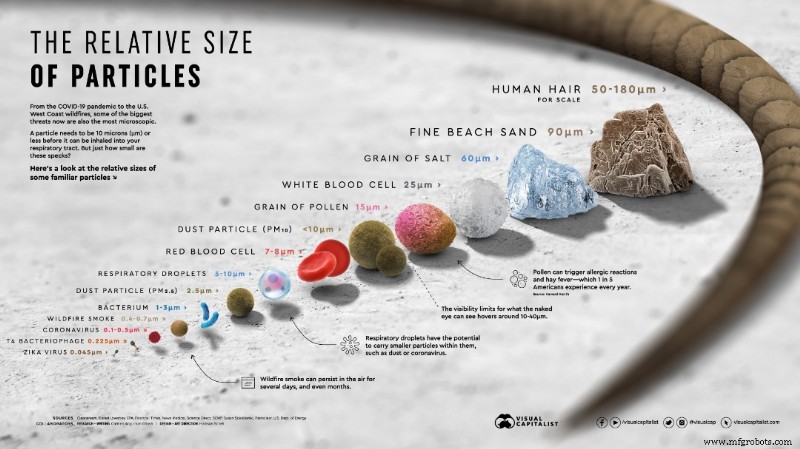
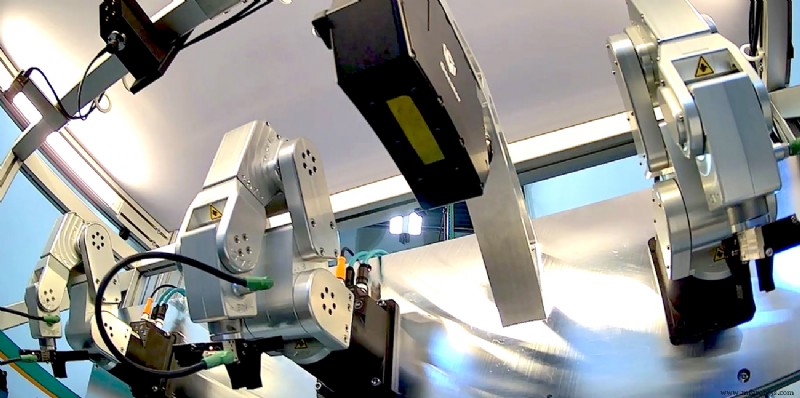
The SEYMOUR TRI-21 is a robotic semi-autonomous machine, built by SEYMOUR Advanced Technologies (SAT). It assembles microneedles used in ocular surgery 400% faster than previously. Designed for tight spaces in a cleanroom, and featuring three Meca500 six-axis robotic arms, the SEYMOUR TRI-21 can insert 25 mm long rods into a hollow cylinder with only 60 micrometers of clearance. That's about as thick as a grain of salt, or a human hair!
The pharmaceutical expects to add six additional SAT machines for a 2000% increase in throughput by the end of 2022.
Background
An ophthalmic pharmaceutical has developed a microneedle for use in ocular surgery. In the medical industry, it’s critical that assembly is both seamless and sterile, and this company recognized the need for a more efficient way to assemble these microneedles.
The goal was to significantly reduce bioburden while also increasing productivity by approximately 70%. Facing this aggressive goal, it was of the utmost importance to engage an automation engineer who could start from scratch and build an entirely new robotic solution to meet their very specific needs. After searching for an expert with this level of expertise, the company enlisted the help of SEYMOUR Advanced Technologies (SAT), an autonomous industrial technology provider, to create a one-of-a-kind robotic semi-autonomous machine that could automate an extremely precise assembly process of a surgical tool.
Challenge
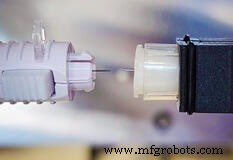
To create an automated, sterile, and precise assembly process for taking a 25mm long rod and precisely inserted into a hollow cylinder with, only 60 micrometers (0.0015") of clearance.
Click to see image source
In the current manufacturing environment, this process is performed manually using a high-powered magnifying glass and human hands. This is extremely tedious and time-consuming—an average of only 63 microneedles per hour can be accurately produced this way. There is also a significant amount of waste due to needle breakage during the insertion process. Additionally, there is an increased chance of contamination from "bioburden" (i.e. the number of contaminated organisms found in a given amount of material prior to its sterilization).
This initiative will solve many problems for the pharmaceutical, namely:
- Expedite the assembly process;
- Eliminate unnecessary waste or costs;
- Sterilize the workspace.
Solutions
In response to these challenges, SAT created SEYMOUR TRI-21, a semi-autonomous machine that delivers on precision, sterilization, and waste elimination. It contains three 6-axis Meca500 robots that take a syringe from point A to point B, inserting the 25mm wire into the needle without fail.
What makes the SEYMOUR TRI-21 solution even more reliable is that the company’s microneedle will now be produced in a fully automated environment, versus the manual and semi-automated processes used by other manufacturers.
- Powerful machine vision
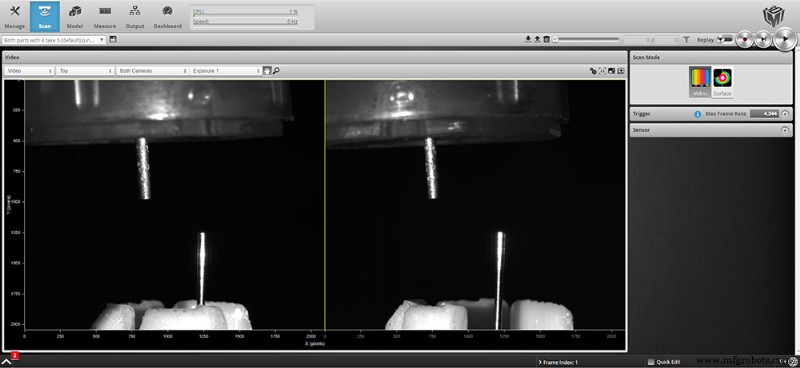
This one-of-a-kind process starts out with the object being picked up and placed under a micro resolution camera that uses variable strobing technology, also known as "structured light modularization. " This technology detects shadows in order to find where physical parts of the object are in a certain vicinity.
The thickness, length, and straightness are then calculated. Next, SAT uses this raw data to calculate the relative positional error and move the robots to a new position that allows accurate assembly. This process is critical as the internal parts "float" inside the shell that is picked up. So, even though they are repeatable, the window in which they repeat is much larger than the tolerance for assembling the parts, without probable interference.
As previously stated, the automation process had to be extremely precise due to the properties of the elements being assembled. This is why SAT implemented machine learning (ML). It allowed SAT to automatically track data, learn from previous cycles, then adjust and streamline for future cycles—ensuring each needle insertion will align the wire and needle perfectly. The target acceptable success rate is 90% or higher with a 70% increase in productivity, both of which will be achieved with the SEYMOUR TRI-21.
Design:
It was important for the design of the SEYMOUR TRI-21 to be tailored to the pharmaceutical's needs. These included:
- Diagnostic handle
SAT reconfigured the perpendicular handle to a parallel position, giving it more predominance while also allowing minimal restriction of movement for the user. SAT then established a process for data to be fed to the handle, translated through color modes that alert the operator as to the health of the machine to help them manage maintenance and upkeep. - ISO 7 level cleanroom
The Seymour TRI-21 was created with medical-grade glass to control the amount of particulate matter that can enter the machine to ensure that all units are sterile to an ISO 7 level requirement. Dry bearings were also used, removing grease contaminants from the manufacturing environment. - Internet of Things (IoT)
In line with Industry 4.0, the connected ecosystem of the IoT, SAT will provide the company with a remote computer interface, allowing them to operate the machine remotely on their phone or tablet via an app. - Monitoring
A machine that builds the parts for another machine needs to be carefully monitored. Elements such as force, torsion, velocity, acceleration, time, pressure, volume, weights and masses, translation, and rotation all need to be monitored.
The seven SI base units are comprised of:
-
- Length - meter (m)
- Time - second (s)
- Amount of substance - mole (mole)
- Electric current - ampere (A)
- Temperature - kelvin (K)
- Luminous intensity - candela (cd)
- Mass - kilogram (kg)
By monitoring these, or a subset of these that pertain to the product, the SAT solution can then verify that the product becomes both repeatable and predictable, ultimately improving and evolving technology.
SAT also monitors and provides data to support the operation and directions. There are a plethora of variables that affect product quality, but only a small window where products operate consistently. For this project, the quality window was 60 micrometers.
- Small footprint, big output
In the current 1,000 sq. ft. cleanroom space, the pharmaceutical can have a maximum of two people working 8-hour shifts. Each trained worker can produce approximately 63 units/hour or 1 unit/min. During a typical shift, this translates to an average of 500 units per person.
The new 60"w x 42"d x 77"h SEYMOUR TRI-21 and one operator will now be able to produce approximately 250 units per hour (4/min), or 2,000 units/8h shift. That's a 400% increase in throughput!
These modular robotic machines can be used for R&D as well as for Good Manufacturing Practice (GMP) commercial use. Six different pieces of equipment can now be placed in the same cleanroom, working independently, having anywhere from two to 10 operators working at one time.
What's next?
According to SAT's CEO, Rob Seymour, "once the ophthalmic pharmaceutical fully implements the use of SEYMOUR TRI-21, they will increase overall productivity by at least 70% and achieve a minimum success rate of 95%. They'll also see a significant reduction in bioburden." He continues, "over the next year, the company will be adding six additional SAT robots to their line, allowing them to increase their production by 2000% by the end of 2022."
A version of this article first appeared on SAT's official website. Reproduced with permission.
Learn more about Mecademic's products and solutions
Ready to find out how our products and solutions can increase your production throughput within the smallest possible footprint, without sacrificing precision, or reach?
➡️ Explore our products: https://www.mecademic.com/en/products
➡️ Or contact us immediately to book your demo!
Industrial robot
- Robotic Process Automation vs. Test Automation: Key Differences & Business Impact
- Precision Turned Parts: Advanced Heat Treatment for Optimal Strength and Performance
- Comprehensive Guide to Lead-Free PCB Assembly: Step-by-Step Process
- Robotic Pallet Assembly: Boosting Productivity in High-Mix Environments
- Transforming Auto Manufacturing: Advanced Robotics in Vehicle Assembly
- Optimize Production: Deploy Software for High-Speed, Precise Robotic Assembly Lines
- Optimizing Design for Efficient Robotic Assembly
- Seamlessly Transitioning from Manual to Robotic Assembly: Proven Strategies for Enhanced Efficiency
- Grand Rapids Manufacturers Gain Precision & Speed with Advanced Robotic Automation
- Robotic Assembly in Action: Seamless Integration of Automation in Modern Production