



Autonomous Mobile Robots: Leading Supplier Use Cases & Latest Industry Applications
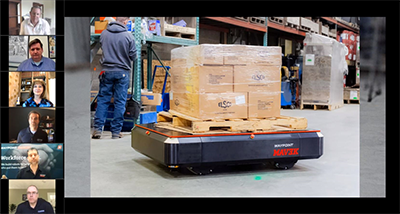
Autonomous mobile robots (AMRs) are reshaping manufacturing, logistics, and warehousing. From shuttling 1,000‑kg payloads to cleaning floors, AMRs replace forklifts, conveyors, and manual labor, delivering flexibility, safety, and rapid deployment.
On June 17, the Association for Advancing Automation (A3) hosted an executive round‑table featuring six industry leaders who shared real‑world experiences and future outlooks. The event attracted nearly 1,000 registrants and was sponsored by AutoGuide Mobile Robots, Locus Robotics, MiR, OTTO Motors, and Waypoint Robotics.
Panelists
- Rob Sullivan, CEO – AutoGuide Mobile Robots
- Aaron Prather, Sr. Tech Ops Advisor – FedEx
- Karen Leavitt, CMO – Locus Robotics
- Ed Mullen, VP of Sales – Americas – MiR
- Matt Rendall, CEO – OTTO Motors
- Jason Walker, CEO – Waypoint Robotics
Key Takeaways
Why AMRs Outperform Traditional Automation
Rob Sullivan highlighted flexibility, scalability, safety, and fast deployment as the core advantages. Unlike fixed conveyor or guided‑vehicle systems, AMRs require no infrastructure changes, allowing factories to evolve organically.
Ideal Applications and Emerging Use Cases
Matt Rendall explained that the sweet spot for AMRs is dynamic, unstructured routes that conventional automation cannot efficiently handle. AMRs excel in environments that demand rapid change, complex layouts, or high variability.
COVID‑19’s Accelerated Adoption
Jason Walker noted the surge in e‑commerce and the need for contact‑less solutions. AMRs now automate tasks that are unsafe or inefficient for humans, such as disinfecting or high‑volume picking.
Aaron Prather emphasized that the pandemic has cemented AMRs as a critical technology for logistics firms, heralding a “golden age” of autonomous shipping.
Karen Leavitt added that the labor shortage, coupled with ever‑increasing volume, has made automation a necessity rather than a luxury.
Competitive Edge Over Conventional Automation
Ed Mullen stressed the importance of educating users on LIDAR, route planning, and system limits. Clear understanding turns a good idea into a successful deployment.
Jason Walker described Waypoint’s 100 % autonomous design, with onboard computing, navigation, and wireless charging—making setup simple and scalable.
Assessing ROI and Business Value
Karen Leavitt shared a Forrester study: Locus Robotics customers achieved an average 129 % ROI in less than six months, factoring labor, benefits, and disaster mitigation costs.
Matt Rendall advises clients to evaluate hard benefits (cost reduction, throughput gains) and soft benefits (employee empowerment, resilience). COVID‑driven supply‑chain stressors should be factored into the ROI model.
Designing AMR‑Ready Facilities
Rob Sullivan recommends beginning with a clear workflow map, then aligning robot capabilities to those paths. Even when retrofitting existing warehouses, collaboration with application engineers can maximize space efficiency.
Training and Operator Engagement
Ed Mullen clarified that training focuses on understanding robot capabilities, not operating them. Intuitive interfaces reduce adoption friction, while clear limitations prevent frustration.
Interoperability and Multi‑Vendor Environments
Aaron Prather identified interoperability as a growing challenge as facilities host robots from multiple manufacturers. Jason Walker highlighted Waypoint’s wireless charging and intent to develop industry‑wide charging standards.
Scaling With Demand Fluctuations
Karen Leavitt explained that AMRs mirror temporary labor in their ability to scale up or down quickly. New units integrate within minutes, joining the fleet’s network and contributing immediately.
Future Outlook
Rob Sullivan is excited about integrating WMS data and creating a unified traffic‑control layer that prioritizes robot movements, maximizing throughput and reliability in e‑commerce centers.
Watch the Replay
Sign up here to watch the full discussion and view each company’s AMR demonstrations.
Industrial robot
- Autonomous Robots: What They Can—and Cannot—Do
- Autonomous Robots vs. HMIs: Understanding the True Differences in Modern Manufacturing
- Exploring Vision & Imaging Innovations Driving Industry 4.0 and Beyond
- Robotic Cleaners: How They Work, Where They’re Used, and Their Limits
- Autonomous Mobile Robots in Internal Logistics: Advantages, Challenges, and Market Comparison
- Exploring Cutting-Edge IoT Innovations & Real-World Applications
- Overcoming Barriers to Deploying Autonomous Mobile Robots in Industry
- Autonomous Mobile Robots: Leading the Post‑Pandemic Shift
- How Robots Are Reshaping the Job Market: Opportunities and Challenges
- Mobile Robotics: Advancing Automation on the Move