



Autonomous Robots vs. HMIs: Understanding the True Differences in Modern Manufacturing
Autonomous robots perform tasks with minimal human oversight, making them ideal for environments that change from one part to the next. Although still a growing field, they already thrive in highly structured manufacturing settings. For companies that produce variable parts or operate outside rigid production lines, true autonomy is the next leap forward.
Yet many firms, eager to tout the benefits of “autonomy,” have fallen back on Human‑Machine Interfaces (HMIs). These touch‑screen or UI‑based systems let operators set parameters for predefined operations, giving the robot a narrow scope of adaptation—typically only when every part shares the same geometry—without re‑programming.
Understanding the distinction between a genuinely autonomous robot and an HMI‑based solution—built on custom integration—is critical. Key differences include:
- Autonomous robots thrive in unstructured settings; HMIs depend on fixed workflows and explicit commands.
- Autonomous systems evolve through in‑house engineering; HMIs deliver a one‑time integration from the provider.
- Autonomous robots uncover value beyond human oversight; HMIs remain operator‑driven.
Autonomous Robots Excel in Unstructured Environments
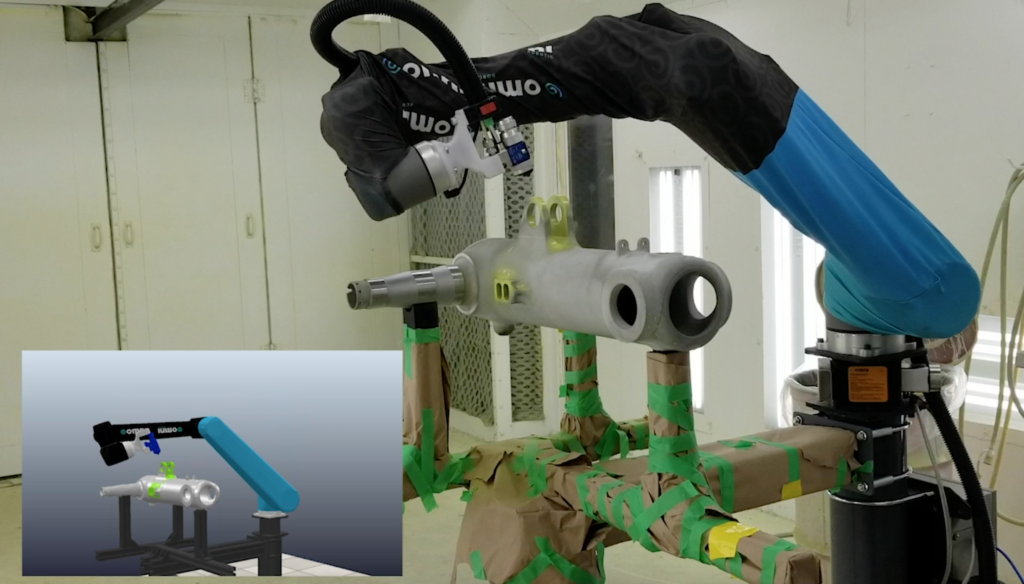
These robots rely on parameters and process models rather than exhaustive programming for each motion. They can navigate, respond to sensors, and coordinate with other industrial controls while respecting safety constraints and system limits.
For instance, a programmable access controller on a factory floor might detect parts on a conveyor and signal the line to start or stop as they approach an autonomous robot. Depending on the robot’s perception—vision, force, or touch—it can then perform painting, welding, or assembly and seamlessly switch tasks as new parts arrive.
Because the robot is fully integrated with control systems, it can act intelligently with broad, high‑level instructions instead of detailed, part‑by‑part code.
HMIs Are Tailored to Specific Workflows
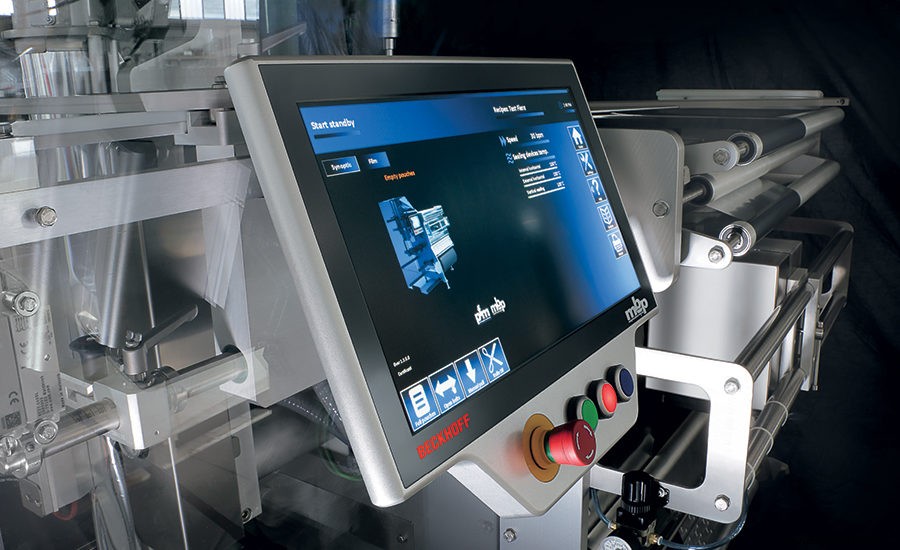
While HMIs are simple interfaces, that simplicity can limit optimization and scalability. An HMI designed for assembling or painting windows and doors may work well for parts within a defined size range—say, doors up to 10 ft tall and window frames up to 6 ft long. If an 11‑ft door or a 7‑ft frame appears, the system can fail or require costly reconfiguration.
Autonomous Robots Empower Engineers with New Process Models
The capability of an autonomous robot hinges on robust process models and seamless integration with peripheral sensors. When these conditions are met, developers can train robots to adopt new applications without a complete overhaul by the original provider.
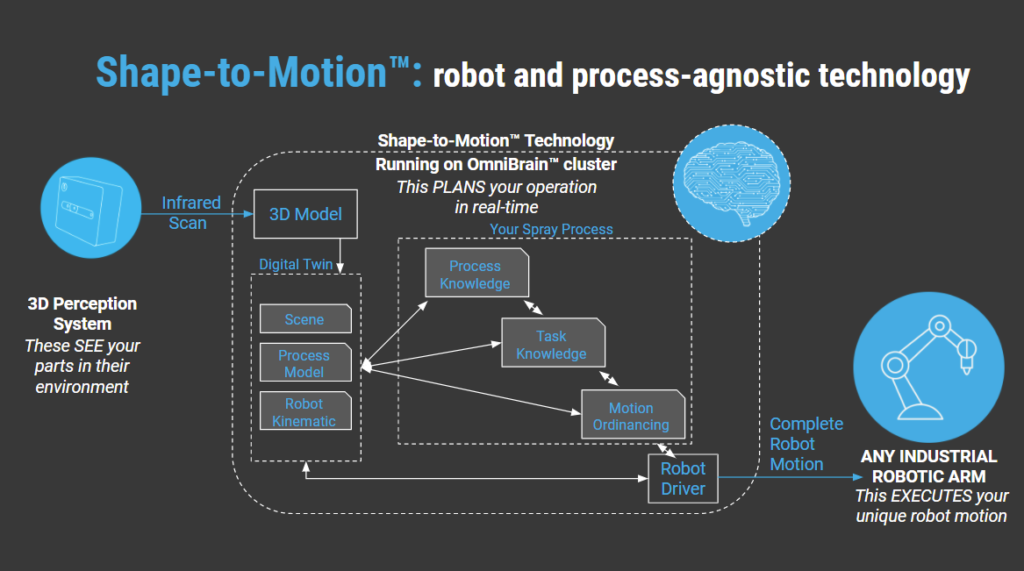
Omnirobotic’s Shape‑to‑Motion™ technology, for example, is both robot‑agnostic and process‑agnostic. The same motion‑planning logic can adapt to any hardware layout, whereas an HMI would require a fresh motion plan and programming for each new part or layout.
HMIs Are Built Solely by the Original Provider
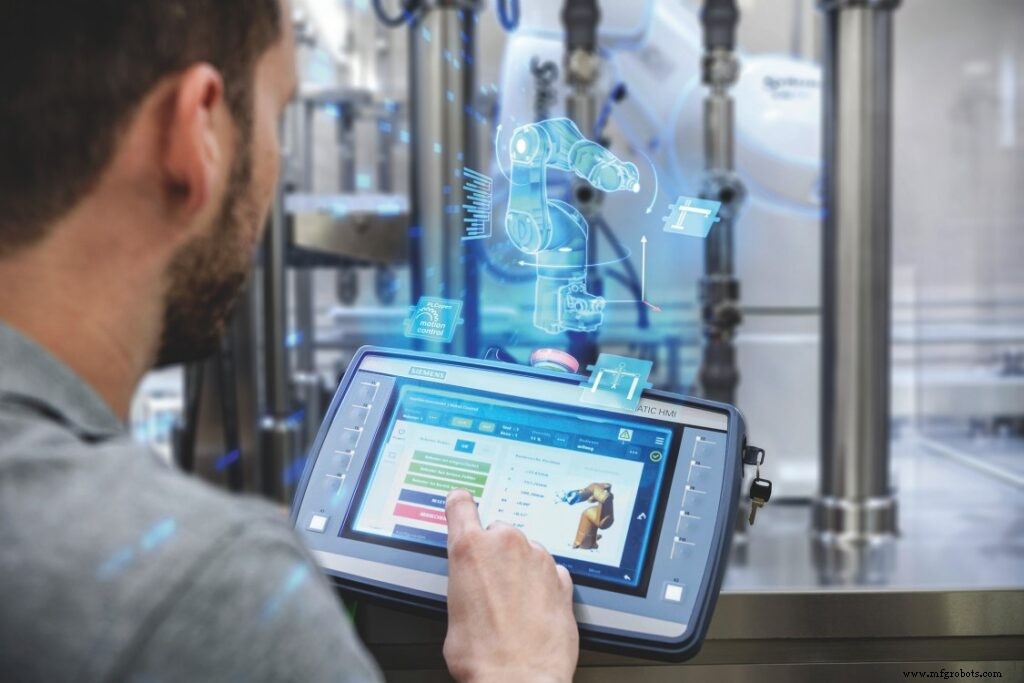
HMIs typically deliver a single, narrow solution. They are rarely adaptable or improvable without replacing the entire interface. In an industry where product specifications shift rapidly, clinging to a fixed HMI can leave a manufacturer trailing competitors.
Most HMIs can only be modified by the original integrator. Attempts to retrofit them for new layouts often render the system ineffective. In a world demanding flexible manufacturing, such rigidity is a liability.
Autonomous Robots Deliver Value Beyond Human Oversight
The heart of autonomous manufacturing is autonomous motion generation. Robots can calculate and execute precise, infinitesimally accurate motions for curved surfaces in seconds—something point‑to‑point programming struggles with.
Traditional tools often rely on discrete points and fixed radii, which can introduce errors and rework. Autonomous robots, by contrast, model the entire surface and generate continuous motion, ensuring higher quality and consistency.
HMIs Automate Operations, but Value Is Operator‑Driven
HMIs execute instructions based on explicit sequences. They do not self‑optimize or adapt beyond the programmed scope. While some vendors market “autonomy,” they are typically delivering a sophisticated HMI that still limits engineering flexibility.
If throughput, consistent quality, and rapid market adaptation are priorities, HMIs may offer a stop‑gap solution. For long‑term competitiveness, autonomous robots provide the definitive advantage.
Omnirobotic provides Autonomous Robotics Technology for Spray Processes, enabling industrial robots to see parts, plan motion, and execute critical coating and finishing operations. See what kind of payback you can get from it here, or learn more about how you can benefit from autonomous manufacturing systems.
Industrial robot
- Autonomous Robots: What They Can—and Cannot—Do
- Cloud vs. Virtualization: Key Differences & Business Impact
- Sensors vs. Transducers: Clear Differences & Practical Applications
- FRP vs Fiberglass: Understanding the Key Differences and Industrial Benefits
- Bolts vs. Screws: How to Choose the Right Fastener for Your Project
- Understanding the Difference Between Tube Steel (TS) and Hollow Structural Steel (HSS)
- Python vs PHP: Key Differences, Strengths, and Choosing the Right Language
- Python 2 vs Python 3: Key Differences and Choosing the Right Version
- Six-Axis, SCARA, and Cartesian Robots: Key Differences Explained
- Robots vs. Machines: Understanding Their Distinct Roles in Modern Technology