



Sensors vs. Transducers: Clear Differences & Practical Applications
In electronics, the terms “sensor” and “transducer” are frequently used together, yet they describe distinct functions. Knowing the difference is key for engineers and hobbyists alike.
What Is a Sensor?
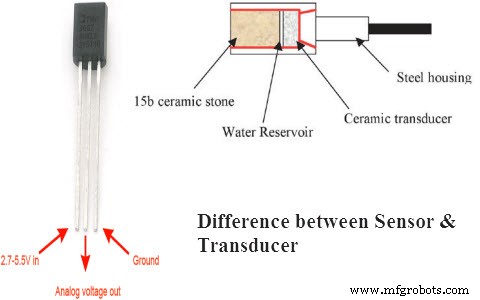
A sensor is a device that detects a physical quantity—temperature, pressure, light, motion, etc.—and converts that change into an electrical signal. The output is typically an analog voltage, current, or digital value that can be read by a microcontroller or display. Common examples include thermistors, photoresistors, and motion detectors that emit infrared or ultrasonic waves.
What Is a Transducer?
A transducer converts one form of energy into another. Unlike a sensor, its primary role is the energy conversion itself; the resulting electrical signal is usually in a standard form (0‑10 V, 4‑20 mA, etc.) ready for use by control systems. Classic examples are microphones (sound to voltage) and speakers (voltage to sound). An antenna, which turns electrical power into electromagnetic waves, is another transducer.
How They Relate
Many sensors contain a transducer as an internal component. For instance, a temperature sensor might use a thermocouple (a transducer) to produce a voltage that the sensor’s circuitry interprets. In such cases the sensor’s job is to sense and provide a readable output, while the transducer does the energy conversion.
Common Types
- Analog sensors: Output a continuous voltage or current proportional to the measured quantity.
- Digital sensors: Provide discrete values or binary signals.
- Input transducers: Convert physical stimuli into electrical signals.
- Output transducers: Convert electrical signals into physical actions (e.g., a motor).
Illustrative Examples
Motion Sensor
A motion sensor emits waves—ultrasonic, infrared, or laser—and monitors their reflection. The change in reflected energy is detected by an internal transducer, which converts it into an electrical signal that triggers a relay or light.
Audio Communication
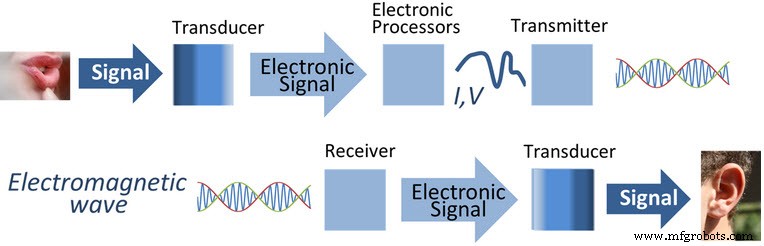
In a typical voice‑communication chain, a microphone (input transducer) captures sound and outputs a voltage waveform. A signal processor or amplifier then drives a speaker (output transducer) to reproduce the sound.
Applications in Projects
Programmable Digital Temperature Controller
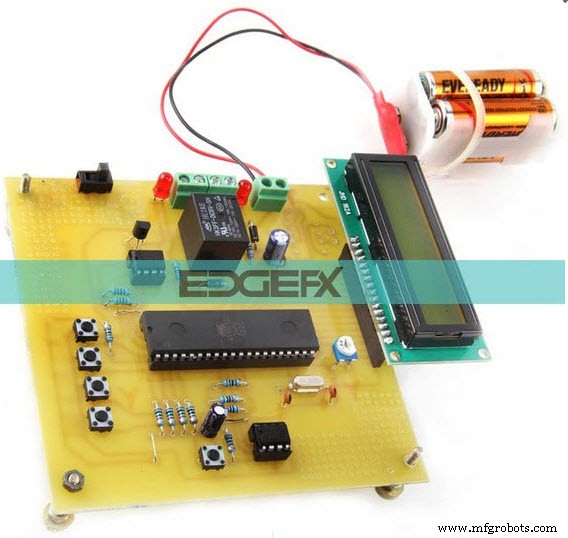
This embedded‑system project uses a 9‑bit digital temperature sensor to monitor industrial equipment. An 8051 microcontroller reads the sensor, displays the value on an LCD, and triggers a relay through a transistor driver when a preset temperature is exceeded. User‑defined limits are stored in EEPROM.
Touch‑Controlled Load Switch
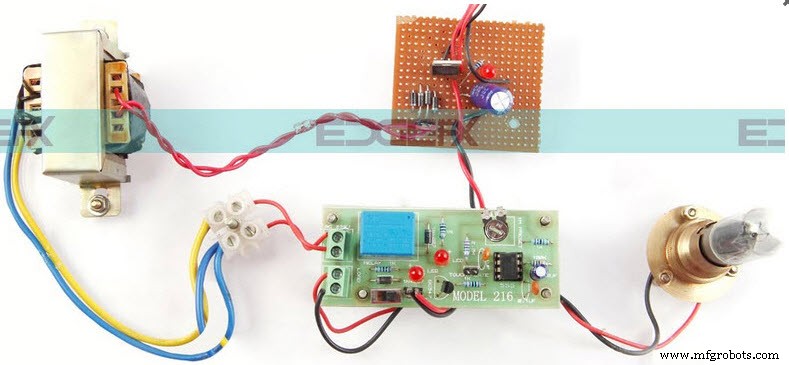
Here a piezoelectric plate serves as the transducer that converts a touch into a brief voltage pulse. A 555 timer in monostable mode is triggered by this pulse, energizing a relay that powers a load for a predetermined time. The timer’s RC network sets the duration.
Key Takeaways
• A sensor measures a physical variable and outputs an electrical signal for interpretation. • A transducer converts energy from one form to another, often providing a standardized electrical output. • Sensors may embed transducers, but not all transducers are part of sensors. • Understanding the distinction helps in selecting the right component for a given application.
Have questions or need help choosing the right sensor or transducer for your project? Drop a comment below!
Sensor
- Cloud vs. Virtualization: Key Differences & Business Impact
- Motion, Position, and Proximity Sensors: Key Differences and Practical Uses
- FRP vs Fiberglass: Understanding the Key Differences and Industrial Benefits
- Bolts vs. Screws: How to Choose the Right Fastener for Your Project
- Understanding the Difference Between Tube Steel (TS) and Hollow Structural Steel (HSS)
- Python vs PHP: Key Differences, Strengths, and Choosing the Right Language
- Python 2 vs Python 3: Key Differences and Choosing the Right Version
- CNC vs VMC: Understanding the Key Differences
- CNC vs NC: Understanding the Key Differences in Numerical Control Technology
- Shuttering vs. Formwork: Key Differences Explained