



Motion, Position, and Proximity Sensors: Key Differences and Practical Uses
In modern electronics, sensors are the backbone of intelligent systems. They enable devices to sense motion, measure distance, and detect nearby objects without contact. This guide focuses on three common sensor types—motion (infrared) sensors, position sensors, and proximity sensors—highlighting their principles, advantages, drawbacks, and real‑world applications.
Understanding the Core Differences
While all three sensor families serve to interpret physical changes, they operate on distinct principles:
- Motion (IR) Sensors detect movement by sensing changes in infrared radiation.
- Position Sensors measure absolute or relative position, often using linear or angular displacement techniques.
- Proximity Sensors sense the presence of objects—metallic or non‑metallic—within a set range without physical contact.
Motion Sensors (Infrared)
Also known as IR sensors, these devices emit infrared light or detect ambient IR radiation. They are commonly classified as:
- Active IR: emit light and detect reflections.
- Passive IR (PIR): sense changes in infrared radiation from moving heat sources.
Typical applications include security systems, automatic lighting, and gesture recognition.
Working Principle
An IR LED emits light that reflects off objects. The photodiode detects the reflected light; variations in voltage correlate with motion intensity. The sensor’s internal circuit amplifies these changes and outputs a digital signal.
Position Sensors
Position sensors quantify displacement relative to a reference point. They come in several varieties:
- Resistive (potentiometric)
- Capacitive
- Inductive (eddy‑current)
- Hall‑effect
- Optical (fiber‑optic or laser)
- Magnetostrictive
- Linear voltage differential transformers
These sensors are critical in automotive drive‑by‑wire systems, aircraft fly‑by‑wire controls, industrial automation, and medical equipment.
Working Principle
Position sensors measure distance traveled from a starting point, providing either absolute or incremental data to a controller. The output is usually a voltage or frequency proportional to displacement.
Proximity Sensors
Proximity sensors detect nearby objects without physical contact. They are divided into:
- Inductive – for metallic targets.
- Capacitive – for both metallic and non‑metallic materials.
- Magnetic – using magnetic fields.
- Optical (laser, infrared)
- Eddy‑current, Doppler, and other advanced types.
Common uses include assembly line safety, touch‑pad detection, speed control, and automated quality inspection.
Inductive Proximity Sensor Example
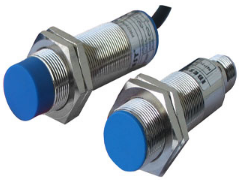
Inductive sensors employ a coil driven by a high‑frequency oscillator. When a metallic target enters the magnetic field, energy is absorbed, altering the oscillation frequency. A threshold circuit translates this change into an on/off output.
Advantages & Disadvantages
- Advantages: High accuracy, rapid switching, robust in harsh environments, sensing range >6 cm.
- Disadvantages: Limited to metallic targets, fixed operating range.
Typical Applications
- Metal detection in manufacturing.
- Automated assembly and packaging.
- Speed and position monitoring.
- Safety interlocks and proximity warnings.
Choosing the Right Sensor for Your Project
When selecting a sensor, consider:
- Nature of the target (metallic vs. non‑metallic).
- Required measurement precision and speed.
- Environmental conditions (temperature, vibration, dust).
- Power consumption and form factor.
Feel free to reach out with specific project questions—our expertise spans sensor selection, integration, and troubleshooting.
Frequently Asked Question
What is the function of a sensor? A sensor converts a physical phenomenon—such as motion, distance, or temperature—into an electrical signal that a control system can process, enabling automated responses and data acquisition.
Photo Credits
- Motion sensor – sproboticworks
- IR sensor working – cluster006
- Proximity sensor working principle – katlax
Sensor
- Cloud vs. Virtualization: Key Differences & Business Impact
- Sensors vs. Transducers: Clear Differences & Practical Applications
- FRP vs Fiberglass: Understanding the Key Differences and Industrial Benefits
- Bolts vs. Screws: How to Choose the Right Fastener for Your Project
- Understanding the Difference Between Tube Steel (TS) and Hollow Structural Steel (HSS)
- Python vs PHP: Key Differences, Strengths, and Choosing the Right Language
- Python 2 vs Python 3: Key Differences and Choosing the Right Version
- CNC vs VMC: Understanding the Key Differences
- CNC vs NC: Understanding the Key Differences in Numerical Control Technology
- Shuttering vs. Formwork: Key Differences Explained