



Is Your Manufacturing Business Stuck on Legacy Machines? Discover the Hidden Costs
Perhaps support has run out for your legacy machines. It’s becoming harder and harder to find replacement parts.
Perhaps their software interfaces are older than almost everyone on your team. Getting them to play nicely with your new computing systems will take forever.
But, upgrading your operation is far too costly, right? It doesn’t just mean purchasing one new machine. It means altering your entire process to suit the way that modern manufacturing machines work.
Finally, it means changing everything.
If it was just a case of switching out one machine for another, that would be fine. But, perhaps they no longer even make the types of machines that are starting to cause you problems.
More and more, machines of the past are being replaced by IoT-compatible, flexible automation. You don’t want to change everything just because one or two legacy machines are starting to cause you trouble.
According to a report by consulting firm Avanade, an average of 31% of the technology in companies is legacy. Their definition of “legacy” was “aging parts of the IT environment that add risk and cost to the business.” As manufacturers, it’s not just our IT systems that are at risk of becoming dangerously out of date.
Think about your own business.
How many of your manufacturing machines are probably “past their best?”
How many of them are becoming a potential liability?
The longer you wait to upgrade, the more likely it is that one of your legacy machines could jeopardize the integrity of your manufacturing operations.
Can You Just Extend the Life of Your Existing Equipment?
You might think that the best solution is just to extend the life of your existing machines. That way you can keep going as you have been without spending a lot of time and money to upgrade.
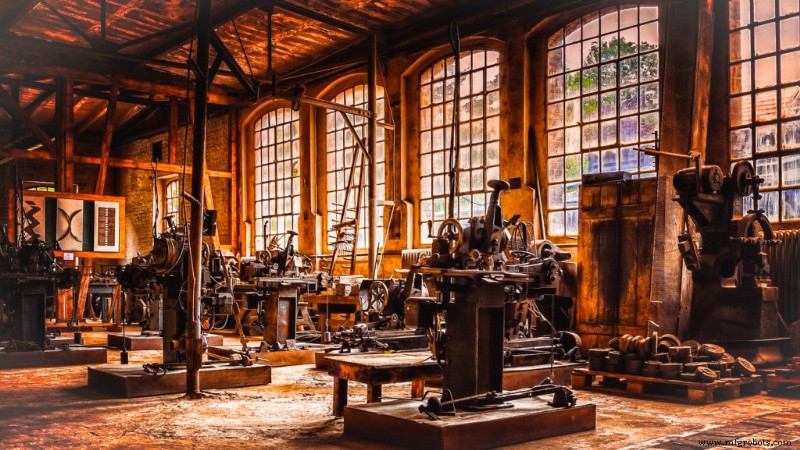
In some situations, it is possible to extend the life of a legacy machine.
But, is it really the wisest choice?
Techniques for integrating old machines with newer technology are far from ideal. They include: using video cameras to read analog dials (when communicating with the machine programmatically is impossible); patching old serial ports over Ethernet; and finding customized industrial computers to handle legacy interfaces.
While such solutions may be necessary in some rare cases, they are usually like putting a gold-plated Band-Aid over a broken limb — it will cost you a lot and the problem isn’t going to go away.
As Manufacturing Global explained recently, sticking with legacy systems “is invariably a false economy, with huge financial costs, security compromises, commercial consequences, and operational barriers.” A huge 60-80% of an IT budget is typically allocated to keeping legacy systems running.
But, it’s not just about cost. There are also many added benefits to upgrading.
One lost benefit when you stick with legacy machines is the huge flexibility that comes with modern automation. Robots, for example, can be used for a variety of manufacturing tasks in a way that just wasn’t possible with legacy machines.
Using Robotics to Modernize Little By Little
Robots can be a great first option for upgrading your legacy systems. Their high flexibility means that robots can be applied to many manufacturing operations. They aren’t restricted to just one specialized task.
Unlike some other forms of automation, robotics can be introduced into a business little-by-little.
For example, let’s say that your legacy machine is one that automatically welds straight seams in sheet metal. The machine still works but it is becoming a liability.
You can replace the machine with a welding robot that will easily be able to complete this simple welding task. After this application is working properly, you can start to apply the same robot to other welding tasks within your business.

This approach is quite common when using robotics. You start with a single application and later grow your robotic capabilities, either by giving extra jobs to the same robot or introducing other robots. The robot becomes even more valuable to your operations.
Why Doing a Small Test Is Easier, Cheaper, and Wiser
This approach of introducing robots little-by-little is a wise strategy.
It overcomes the concern that you will have to change everything to upgrade your legacy machine.
In the past, robots sometimes required you to automate everything else in your production line to be compatible with the robot. This is definitely not true today.
Many people just start with a small test using a single robot.
There are several benefits to doing a small test first:
- It is quick to do — The time it takes to introduce just one robot can easily be shorter than the time it takes to extend the life of your legacy machine and get it to “play nicely” with your other systems.
- It’s proven by research — The technique of doing a small test has been shown by decision experts to be one of the most effective strategies for choosing the right option.
- It’s more reliable — During your small test, you will iron out the difficulties in the application early-on, improving the reliability of the application.
- It saves budget — Rather than changing everything, which is expensive and time-consuming, you will only spend as much budget as is actually necessary to replace the legacy machine’s operation.
- It helps to convince others — Many people are uncertain when they see robots entering the workplace. You can use the results of the small test application to help others to see the benefits.
How to Reliably Test Your Robot Application First
How do you get started testing a robot out for your operation?
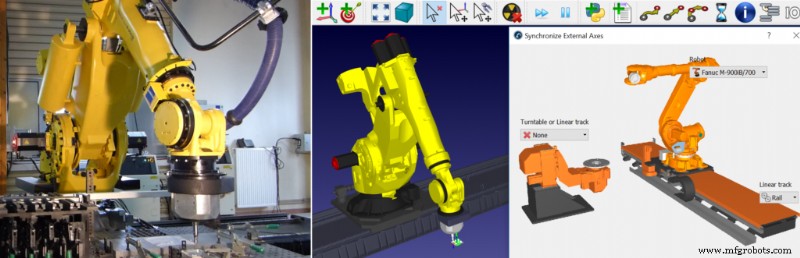
One of the quickest and most efficient ways is to start with a virtual simulation of the robot application using a good robot simulator.
This allows you to iron out any problems before you even invest in the new hardware. You can try out different robots with your task and find the best one for your needs.
Just download the simulator and get started!
What legacy applications are holding you back? Tell us in the comments below or join the discussion on LinkedIn, Twitter, Facebook, Instagram, or in the RoboDK Forum.
Industrial robot
- Can Security and Privacy Hinder the IoT Revolution?
- Effective Strategies to Promote Your Manufacturing Business During an Economic Downturn
- 4 Proven Online Channels to Boost Your Manufacturing Brand
- Expand Your Manufacturing Business: Proven Strategies to Attract New B2B Customers
- Why California Is the Ideal Choice for Your Manufacturing Business
- How to Achieve Premium Manufacturing Supplier Status: A Proven Roadmap
- CNC Turning Machines: Boosting Manufacturing Precision & Efficiency
- Transform Your Business with Smart Manufacturing Automation
- 4 Proven Strategies to Accelerate Growth in Manufacturing Operations
- Top 5 Manufacturing Automation Software for Business Growth