



Robotic Fiberglass Cutting: Enhancing Worker Safety and Efficiency
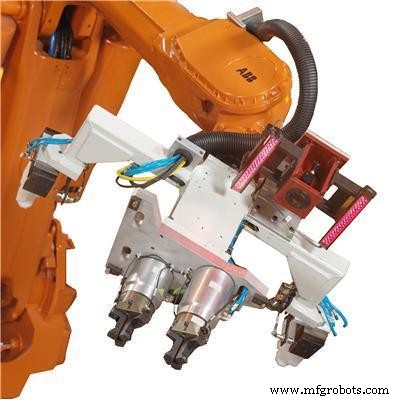
Fiberglass is used in the housing, automotive and household industries, as well as several others. While it may be useful and cost effective, it is also composed of millions of tiny glass fibers. Even a simple tap can release thousands of these fibers into the air, let alone the fibers released during the cutting process.
When a facility uses a manual process for cutting fiberglass, it can cause several health problems to workers who come into contact with these fibers, including problems with breathing and skin irritation.
Fiberglass fibers can irritate the skin, eyes, nose and throat. Workers working in direct contact with fiberglass need to wear long-sleeved shirts, gloves, goggles and pants to protect their bodies from these fibers.
Another health risk sits inside the worker’s chest. When these fibers are released during the fiberglass cutting process and inhaled, they can get lodged into the lungs and cause scar tissue and tumors. Larger fibers can also lead to upper-respiratory infections and stomach irritation.
These fibers can also get onto clothing and cause contamination to the person and others after contact. By washing with warm water instead of cold water after close contact, fibers can work themselves into pores, causing infections and other health issues.
While robotic fiberglass cutting is faster and more accurate than manual applications, the removal of these health risks is one of the main reasons manufacturers should consider automation of this process.
By taking human workers out of direct contact with fiberglass and introducing a fiberglass cutting robot to the process, the health risks are cut dramatically. Workers are moved behind the robotic fiberglass cutter, to an operator station a safe distance away from the fibers released during the cutting process.
RobotWorx, a certified integrator for Fanuc, KUKA, ABB, Universal Robots, and Motoman robotics, has an array of fiberglass cutting robot systems waiting to help you raise the safety standards in your facility. For more information on fiberglass cutting automation, contact RobotWorx today online or at 877-762-6881.
Industrial robot
- Fiberglass: Production, Materials, and Industry Outlook
- Robotic Fiber Laser Cutting vs Plasma Cutting: Key Differences & Choosing the Right Solution
- Transforming Auto Manufacturing: Advanced Robotics in Vehicle Assembly
- Precision Laser Cutting Powered by Fanuc Robotics
- Enhancing Efficiency: Robotic Welding in Window Frame Production
- Maximizing Productivity with Expert Robotic Welding Fixture Design
- Cutting Costs and Boosting Efficiency with Precision Waterjet Robots
- Portable vs. Robotic Plasma Cutters: Which Is Right for Your Business?
- Enhance Production Quality: Fanuc Robots for Error‑Proof Cutting
- Precision Laser Cutting with Motoman Robots for Automotive Manufacturing