



Mechanical Robots: Boosting Precision & Efficiency in Factories
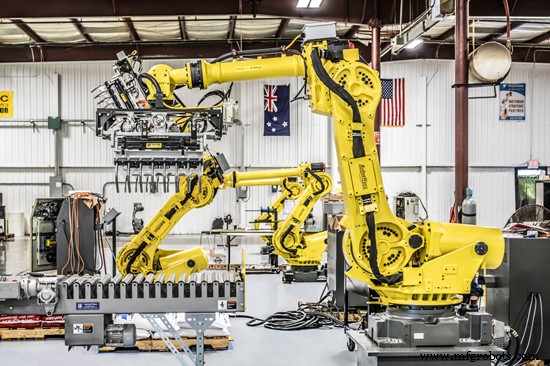
Industrial mechanical robots have been working in factories for 30+ years. They assemble cars, they drill airframes, they pack bottles and they palletize packages. They perform dozens of welding, material handling, and removal applications for manufacturers across the globe.
So, what is the draw toward automating with mechanical robots? It is simple – mechanical robotic systems do a better job at these tasks than manual operations. They are faster, they are more accurate, and they have fewer errors.
Error-proofing products are a big concern for manufacturers. When products contain errors, they could break easily or cause accidents for consumers, and those accidents reflect poorly on reputation of the manufacturer. Think about it this way – if you bought a product, and it broke or did not work, would you buy something else from that manufacturer again? Probably not.
That is why a mechanical robot is so important to many manufacturers. With the increase in accuracy and quality control tracking that the robots provide, manufacturers have less instances of errors reaching the customers.
These mechanical robotics are also invaluable in food packaging and beverage bottling. These bottles and packages are tracked by robots, and a very detailed log is kept of everything leaving the factories. So, if a product is tainted, or it makes someone ill, the manufacturer can track the package back to the facility, making it easier to investigate and fix the contamination problem.
Mechanical robots are also faster than manual operations. A mechanical robot can run 24 hours a day, 365 days a year without stopping. Unlike human workers, they do not need breaks, days off or vacations. This drives down the production and labor costs for manufacturers, an advantage that they may then pass on to consumers. If it costs manufacturers more to make something, the price is raised. So, in the inverse, if it costs manufacturers less, the price may be lowered, benefiting the consumer.
RobotWorx, a certified integrator of mechanical robots for Fanuc, KUKA, ABB, Universal Robots, and Motoman, has several new and refurbished mechanical robots in stock available for customization and purchase. Many have the ability to be fitted with sensors and vision-guidance systems to further enhance the error-proofing and quality control methods.
Industrial robot
- Industrial Robotics 101: Master the Basics of Automation
- Robot Integration in the Workplace: Benefits and Challenges
- Robots, Visionary Enterprises, and the Future of Work
- Mechanical Brakes Explained: Types and Key Differences
- Jackson, Michigan: Premier Plating & Pump Services for Automotive Manufacturing
- Unlocking Industrial Robot Potential: Efficiency, Precision, and Versatility
- Robots Tackle High-Heat Foundries Safely
- How Robots Are Reshaping the Job Market: Opportunities and Challenges
- How Pick‑and‑Place Robots Revolutionize Food Production
- How Industrial Robots Drive Productivity Gains