



High‑Beam Welding: Expert Fusion for Joining Dissimilar Metals
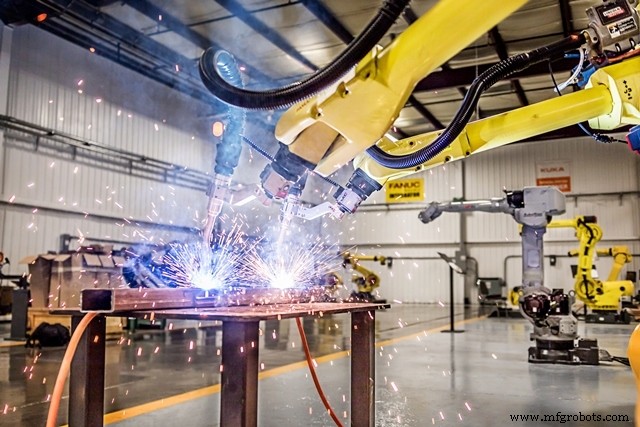
High beam welding, a fusion welding process, uses a high-velocity beam to join two materials. This process uses kinetic energy, which causes work pieces to melt and flow together to form a joint. A high beam welder is able to take two different metal pieces and join them, something that is unable to be done with several other welding processes.
It isn’t usually possible to join metal pieces that have different properties and alloys when welding. However, by using high beam welding in a vacuum, this task can be performed. Basically, the high beam welder lowers only one piece to the melting point, while the other work piece remains in a solid state.
One of the advantages of using high beam welding is that you can localize the heating process with precision and control, putting the energy exactly where it is needed for the process. The vacuum also contributes to a quality weld of the two parts.
Of course, high beam welding may also have some drawbacks. With the cooling of the melted piece, solidification may cause cracking, deformation and a change in the shape of the work piece, depending on the conditions of the piece during solidification.
Overall, high beam welding is one of the only processes available to properly weld dissimilar metal pieces, making it a necessary application in the manufacturing industry.
RobotWorx has several models available for high beam welding, including the Fanuc M series, the Motoman UP series and the KUKA Arc series. If you are interested in learning more about high beam welding, and you want to automate your process, contact RobotWorx online or at 877-762-6881.
Industrial robot
- Electron Beam Welding Explained: Definition, Process, and Benefits
- Advanced Automation in Welding: Enhancing Precision & Efficiency
- Mastering Plastic Extrusion: Process, Materials & Key Applications
- High Pressure Die Casting (HPDC): The Precision Process for Complex Parts
- High vs Low Friction Materials: Key Differences & Their Impact on Performance
- Electron Beam Welding Explained: Definition, Process, and Benefits
- Welding vs Brazing: Key Differences in Joining Techniques
- Choosing the Right Resistance Spot Welding Electrodes: Key Factors & Best Practices
- Orbital Welding: Precision Circular Welding with Robots
- Advanced Electron Beam Welding Robots for Reliable Dissimilar Metal Joining