



Mechanical Engineering: Crafting Robots for Precision Tasks
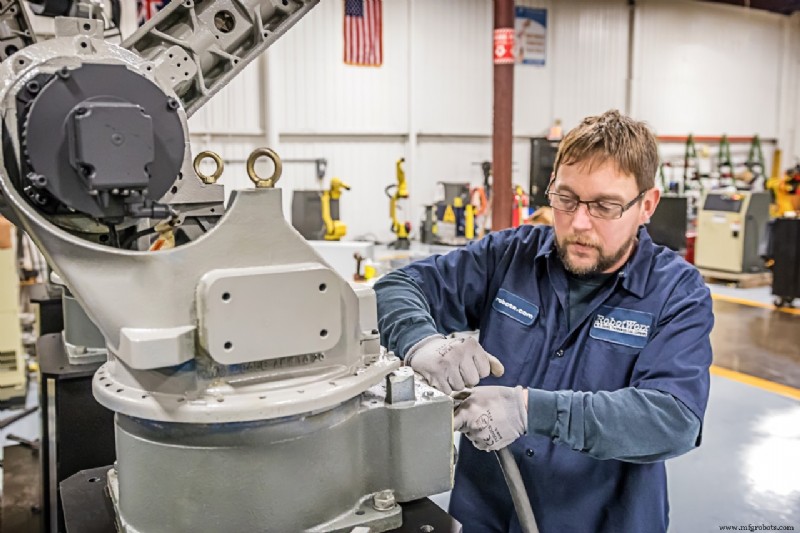
Before robots are capable of dispensing medications, deburring plastic edges, or packaging parts, they have to be created! Engineers get to take the credit for designing the robots to do what they are programmed for. Mechanical engineers design the robot’s structure, joint mechanisms, bearings, heat transfer characteristics, etc. Electrical engineers take care of the control electronics and power amplifiers, while computer engineers design the robot’s computing hardware. As these types of engineers work together, they build a complete robot.
To become a mechanical engineer focusing on robotics, most people obtain a four-year engineering degree and then continue to focus on multiple engineering fields. Robotics engineers must have a complex understanding of math and science, as well as a drive to solve problems and imagination to create.
While most engineering professions have average job growth, robotics engineers tend to be in high demand, especially if they have multi-disciplinary skills. Once employed as a mechanical robotics engineer, responsibilities include working in a wide range of industries to maintain or invent robotics systems. Engineers will work with CAD and drafting software to design and manufacture specifications for robotics systems. They will program robots to perform tasks, and fine-tune designs.
A professor of mechanical engineering at the University of Maine, Mohsen Shahinpoor, created a robot version of the Venus Flytrap. Not only is this robot helpful with catching and eating bugs, but it also demonstrates a new kind of technology that could lead to medical application advances. Since this Flytrap has the ability to catch flies, it is also possible that in the future, robots could feed themselves, eliminating the need for a power supply.
Mechanical engineers play a large part in assisting the robotics industry as it progresses and expands. RobotWorx continues to sponsor multiple mechanical engineering programs to help promote the knowledge of robotics and engineering. For more information, contact RobotWorx representatives online or at 877-762-6881.
Industrial robot
- Industrial Robots Unveiled: Your Definitive Guide to Automation Across Industries
- Real-World Examples of Robotics Technology
- Industries Unlock New Growth Opportunities for Robotics Manufacturers
- Robotic Engineering: Designing and Innovating Automation Solutions
- European Robotics: KUKA's 100-Year Legacy in Industrial Automation
- Advanced Robotics Research: Pioneering Safe Automation in Manufacturing and Beyond
- Motoman Robotics Expands, Powering Global Manufacturing Innovation
- Why Investing in Robotics Accelerates Business Growth
- Exploring the Future of Robotics: Innovation Beyond Factories
- Exponential Growth of Industrial Robotics: From Painting to Automation