



How to Elevate Industrial Paint Quality and Consistency
Industrial paint quality is a nuanced challenge. While precise application is attainable, scaling that precision to 100, 1,000, or more parts introduces consistency hurdles that demand a systematic approach.
Consistency gaps arise from four main factors: the application method, the tools and their upkeep, the cleaning or change‑over demands, and the intrinsic geometry of the parts. Parts with tight crevices, complex curves, or unique surface features test even the most robust systems.
By selecting the right technology—whether skilled labor, automated booths, or fully robotic solutions—and fine‑tuning subtle process parameters, manufacturers can consistently deliver high‑quality finishes across diverse part sets.
Understanding Your Parts
Industrial paint is applied to a wide spectrum of components, each with its own functional and aesthetic requirements:
- Automotive bodies—cars, buses, trucks
- Structural steel—bridges, infrastructure, buildings
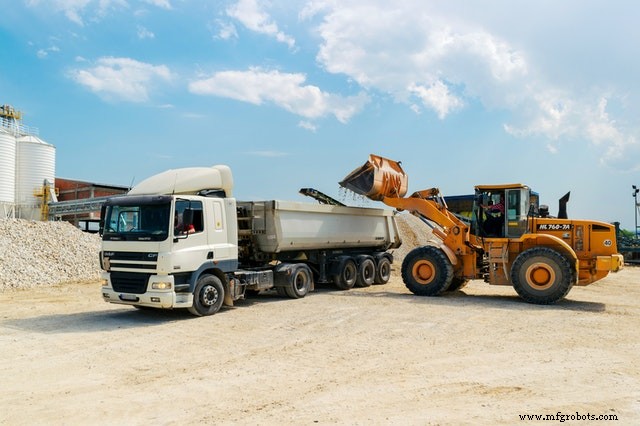
- Heavy equipment—earthmoving, construction, agriculture
- Medical imaging and technology components
- Energy infrastructure—turbines, pipelines, gas stations
- Aircraft, railcars, and other large vehicles
- Shipping containers, caskets, and metal/wooden housings
Paint not only protects against weathering but also defines visual quality that customers notice first. In many cases, small, assembly‑ready parts must fit perfectly, demanding a finish that is both uniform and reliable.
Choosing the Right Painting System
Manufacturers typically rely on one of three approaches:
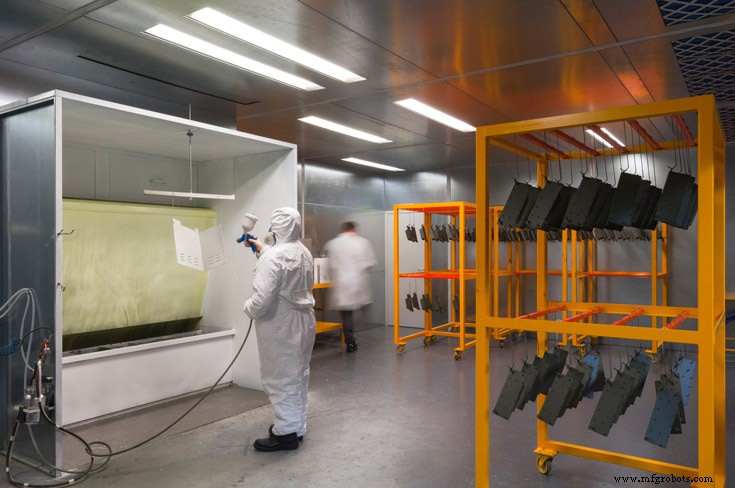
- Skilled Labor
In high‑mix, low‑volume sectors—such as structural steel or custom heavy equipment—experienced painters offer the flexibility needed for varied shapes and rapid change‑overs. They excel where robotic investment would be disproportionate to volume.
- Automated Paint Booths
These systems are suitable for large flat panels or structural sections that require a general coating level. While they can adapt to size variations, they lack the precision needed for tight curves or intricate edges, and they can’t prevent drips without additional controls.
- Paint Robots
Robotic paint application remains the gold standard in automotive and high‑volume manufacturing. Robots deliver repeatable, high‑speed coverage, but they demand detailed programming and precise fixturing, which can constrain flexibility for high‑mix lines.
Bonus: Autonomous Paint Robots
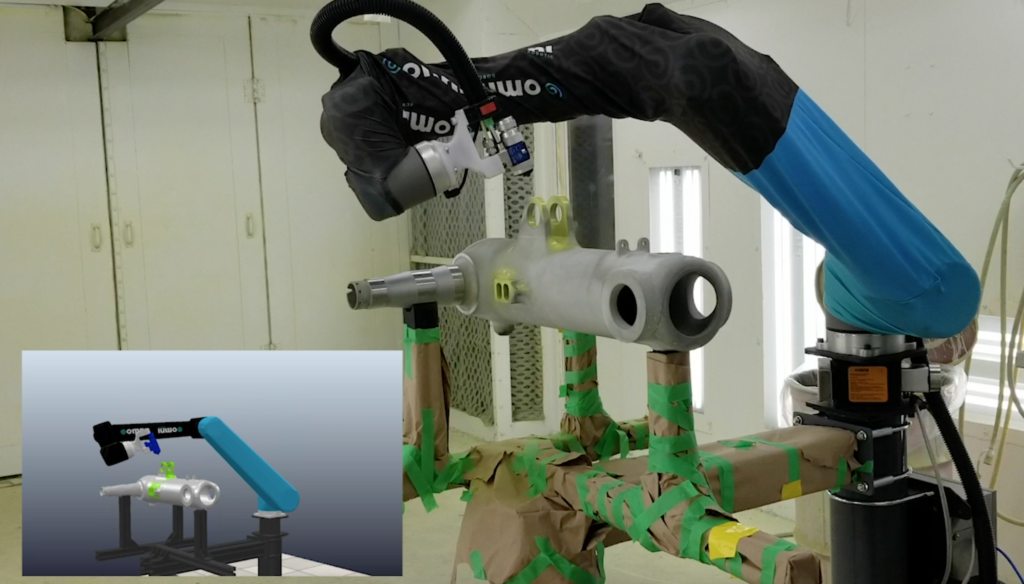
Emerging autonomous robots leverage 3D perception and AI to identify parts in real time, generate motion plans on the fly, and apply paint without the constraints of fixed fixtures. This technology dramatically expands the versatility of automated painting for high‑mix, low‑volume production.
Optimizing Techniques, End Effectors, and Flow Control
The choice of system dictates the appropriate spray techniques and tooling. Handheld guns are ideal for small, manual jobs, offering lightweight operation and straightforward maintenance. Robotic arms, in contrast, can incorporate purging or self‑cleaning mechanisms driven by air pressure, reducing manual cleaning cycles and extending tool life.
Industrial spray effectors—whether pneumatic or electric—provide the coverage and precision required for most paint jobs. In powder coating, the focus shifts to grounding, part shape, and cycle speed, while in liquid paint, balancing pressure, volume, and accuracy is key.
Maximizing Output Quality Through Autonomous Manufacturing
Recruiting skilled painters remains a challenge in many regions, with younger workers gravitating toward different careers. Autonomous robotics offers a scalable solution: by automating the paint process, you reduce dependence on manual labor, cut waste, lower energy consumption, and eliminate downtime associated with manual clean‑ups.
These benefits translate into tangible savings—fewer rework cycles, lower consumable costs, and a faster time‑to‑market—while maintaining the high visual standards that customers demand.
Omnirobotic delivers Autonomous Robotics Technology for spray processes, enabling industrial robots to perceive parts, autonomously plan their motion, and execute critical coating tasks. See what kind of payback you can get from it here, or learn more about how you can benefit from autonomous manufacturing systems.
Industrial robot
- Your Secret Weapon: Mastering Influence Over Industrial Decision Makers
- 6 Proven Strategies to Elevate Shop Floor Quality Control
- Why High Precision and Quality Must Be the Cornerstone of Industrial Production
- Expert Cast Aluminum Painting: Techniques for Durability & Beauty
- Comprehensive Guide to Industrial Brake Components
- Five Key Components of Industrial Robot Arms
- Enhancing Quality Control: The Power of Sampling Plans for Small Metal Parts
- Motoman EPX Painting Robots: Cut Waste, Boost Quality, and Save Costs
- Optimize Industrial Robot Performance: Trusted Maintenance & Support
- How Paint Protects Steel: The Science Behind Industrial Coatings