



Expanding Robotics Integration: Leveraging Autonomous Robots for Business Growth
Industrial robot integrators are the elite specialists of automation, deploying their expertise to overhaul processes for top‑tier manufacturers seeking peak efficiency.
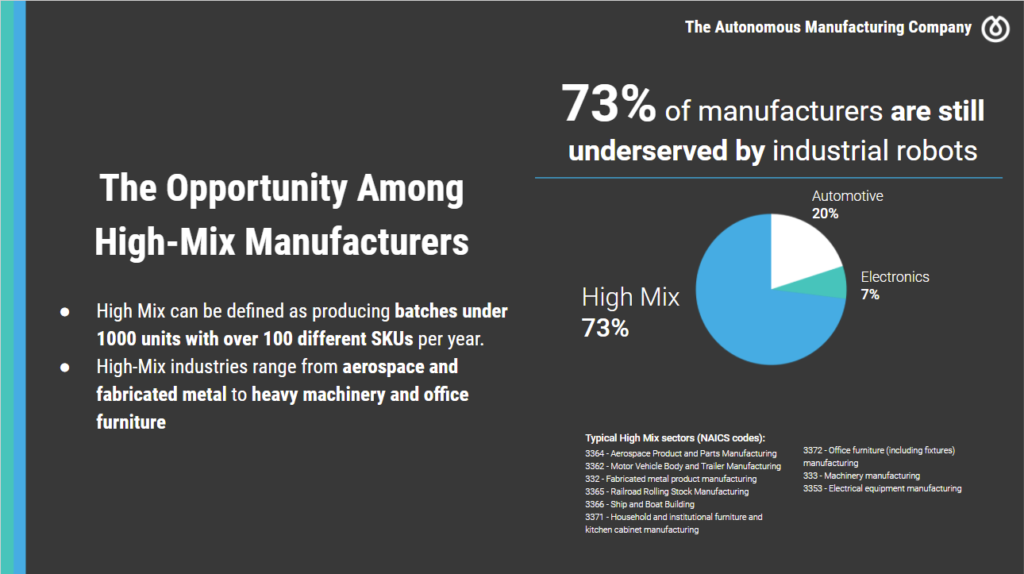
For too long, the industry has relied on large‑scale, high‑throughput deployments, leaving the high‑mix segment—over 70% of North American manufacturers that produce more than 100 batches with fewer than 1,000 parts per year—largely untapped. For these firms, traditional robotic solutions are often not cost‑effective, because the programming effort required far outweighs the benefits of a limited production run.
Autonomous robots change that equation. By adapting in real time to a manufacturer’s workflow, they eliminate the lengthy change‑over constraints that plague conventional programming. This capability unlocks the high‑mix market, allowing integrators to broaden their service portfolio, increase efficiency, and drive new revenue streams.
Robot Integrators Can’t Practically Address the High‑Mix Market Today
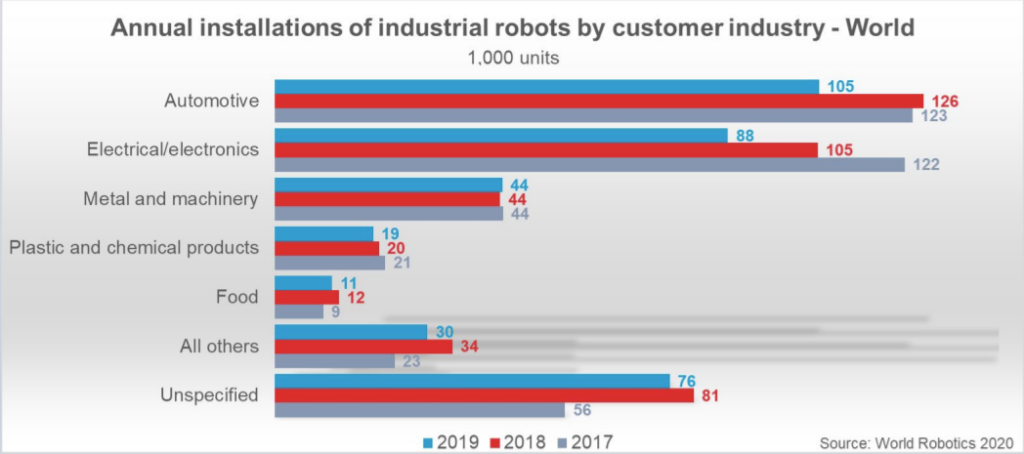
High‑mix manufacturers rarely benefit from conventional integrations. While some employ robot HMIs or machine‑tending solutions, the value proposition is limited and does not attract the top‑tier integrators accustomed to high‑throughput sectors such as automotive or consumer electronics.
The key to overcoming programming costs lies in understanding the cash‑flow and capital‑expenditure advantages of autonomous robots. In short, they represent one of the most cash‑flow‑positive investments for high‑mix operators, enabling integrators to deploy expertise at higher margins while eliminating a major cost driver: manual programming.
Because autonomous robots require no code‑based setup to become operational, integrators can focus on rapid deployment, installation, and validation—delivering immediate value to clients and fostering long‑term partnerships.
Integrations Are Slow, One at a Time, and Often Don’t Match With Control Systems
Compared to the current landscape, autonomous motion generation offers several advantages:
- It complements, rather than replaces, existing models. Traditional mass‑manufacturing work focuses on programming, whereas autonomous systems shift the effort to installation and validation—reducing overall work and allowing teams to specialize.
- High‑mix customers typically tolerate a broader range of tolerances than precision mass‑production lines, providing a forgiving environment where payback is attainable.
- While autonomous motion is most impactful in high‑mix settings, its benefits extend to mass‑customization trends, bridging the gap between high‑ and low‑mix production.
In essence, autonomous robots provide a simpler, more effective integration model that enables firms to deepen client relationships and diversify across industries.
Changing Workflows Are Becoming More Commonplace in Manufacturing
Mass manufacturers typically refresh workflows every 5–7 years, whereas high‑mix settings demand more frequent, flexible adjustments—often down to a batch size of one. Preparing now for this shift is essential; delayed adoption risks obsolescence.
Autonomous manufacturing principles apply broadly across machines and verticals. Integrators who anticipate this transition will craft differentiated solutions that elevate demand and profitability over time.
Building a Reliable Customer Base Starts With Growing It
Early growth is key. By integrating technologies that empower both seasoned and junior engineers to boost productivity without adding complexity, integrators can establish a foundation for sustained success.
Embracing autonomous robots now positions firms ahead of the curve—whether in manufacturing, services, or beyond.
Omnirobotic provides Autonomous Robotics Technology for Spray Processes, allowing industrial robots to see parts, plan their own motion program, and execute critical industrial coating and finishing processes. See what kind of payback you can get from it here, or learn more about how you can benefit from autonomous manufacturing systems.
Industrial robot
- Enhancing Consistency with Autonomous Spray Robots
- Cutting Waste and Energy Costs with Autonomous Robots
- IIoT: Driving the Shift from Products to Outcome‑Based Services
- How Mobile Robots Can Drive Business Growth and Efficiency
- Robotic Precision Advances Expand Their Role Across Industries
- How CNC Machines Can Drive Business Growth and Boost Efficiency
- Boost Business Growth with a Smart Networking Strategy
- Manufacturing Software Explained: Boost Efficiency and Drive Business Growth
- Adopt Eco‑Friendly Manufacturing: A Business Guide
- How Industrial Robotics Drive Efficiency and Profitability