



What Is a Self‑Programming Robot and Why It Matters
The convergence of AI, autonomy, and robotics often evokes cinematic visions like “The Terminator” or “Her.” In reality, self‑driving robots are unlikely to dominate the world; instead, they will perform essential tasks, freeing humans for higher‑value work and enhancing overall freedom.
MIT defines autonomous robots as intelligent machines that perform tasks independently of explicit human control. While human oversight can constrain their operation, the real question is what limits remain.
To attain true autonomy, a robot must first be able to self‑program: translating objectives into executable actions without human intervention.
Subsequent milestones are qualitative, encompassing the quality of services delivered, processes executed, and data generated—these elements bring autonomous capability to fruition.
Programming Robots: A Labor‑Intensive Challenge
Modern robots are often perceived as ‘dumb’ because programming them is arduous. Yet, when properly programmed, they deliver powerful performance. The entire robotics sector is focused on simplifying robot use, with many companies aspiring to self‑programming capabilities.
Simplifying programming is a top industry priority because the process is laborious and consumes a large portion of integration budgets.
Robot programming involves managing up to six degrees of freedom, numerous tool paths, and kinematic constraints, making efficient motion planning a complex task even for seasoned engineers.
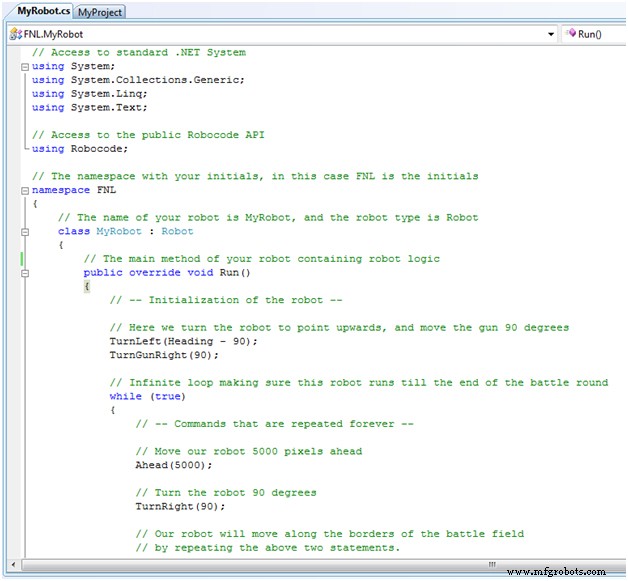
Moreover, motion plans must be tailored to each part and environment, limiting robot applicability to high‑volume sectors such as automotive and consumer electronics. For most manufacturers with diverse product mixes, robots remain impractical.
Self‑programming can disrupt this paradigm. By automating motion generation, robots can adapt to varying parts and environments, reducing programming and layout costs. This unlocks robotics for manufacturers regardless of product mix.
What Does It Take to Achieve “Self‑Programming”?
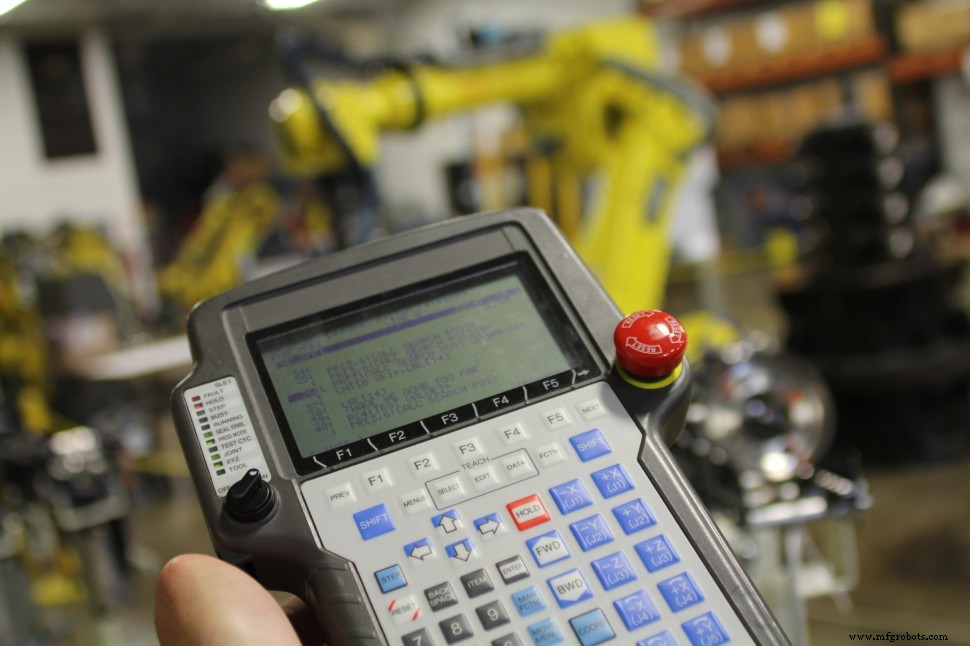
Over the decades, tools like teach pendants, kinematic instruction, and offline programming have eased robot setup. These solutions streamline tasks for engineers and integrators.
While these tools automate portions of the workflow, generating and validating a full motion plan still demands hours, days, or weeks, especially within rigidly structured settings.
Enabling robots to self‑program requires emulating human sensory perception. Humans learn from senses that interpret and respond to environments, often unconsciously and instinctively.
Equipping robots with sensors to perceive 3D geometry and textures allows them to collect the data necessary for autonomous motion planning toward defined goals.
The crux lies in automating the translation of goals into executable programs, mirroring the human capacity to script robots using conventional tools.
The Process in Spray Operations
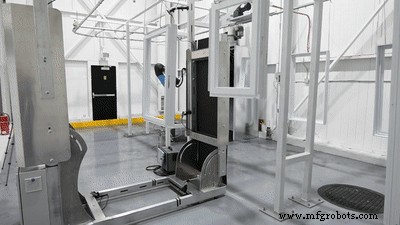
For spray applications, the first step is precise part detection and spatial interpretation. With that information, the robot can autonomously generate a program to apply coatings, heat treatment, or abrasive finishes.
Accuracy must be within one millimeter to match human precision. Infrared sensors, combined from multiple viewpoints, can capture the necessary data to build a 3D digital twin.
This capability enables automation of repetitive, hazardous tasks, freeing workers from monotonous labor and allowing them to focus on more engaging, higher‑value responsibilities.
Unlike conventional programming, self‑programming adapts to diverse parts across production runs, eliminating the need for costly re‑programming and expanding robotics beyond automotive paint lines.
After Sense, What Comes Next?
Once the robot perceives its surroundings, it must process standard industrial robot parameters while also interpreting process‑specific constraints.
It may incorporate process knowledge—such as optimal motion paths or safety zones—and user‑supplied quality objectives, all without manual coding.
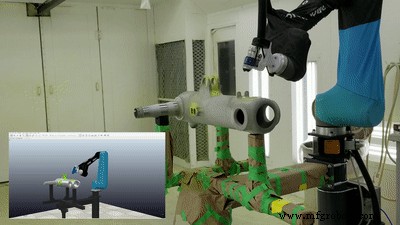
Omnirobotic’s Shape‑to‑Motion™ Technology exemplifies this workflow. Using 3D cameras, it builds a digital twin of the cell, connects to process controllers, and factors robot constraints to run parallel task planning. The system evaluates thousands of scenarios within the digital twin to select the optimal motion plan.
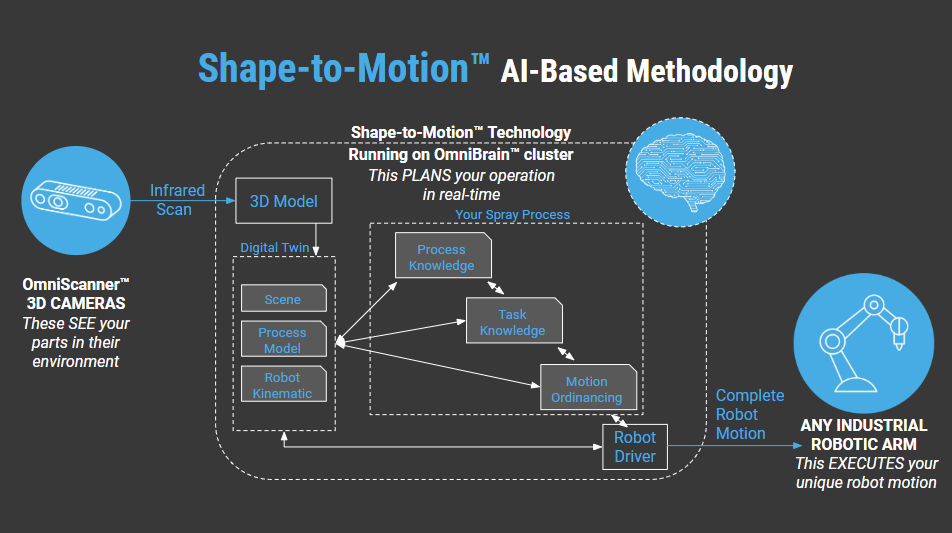
Task prioritization enables the robot to compile a full motion sequence. With their inherent consistency and endurance, self‑programming robots deliver superior reliability and repeatability.
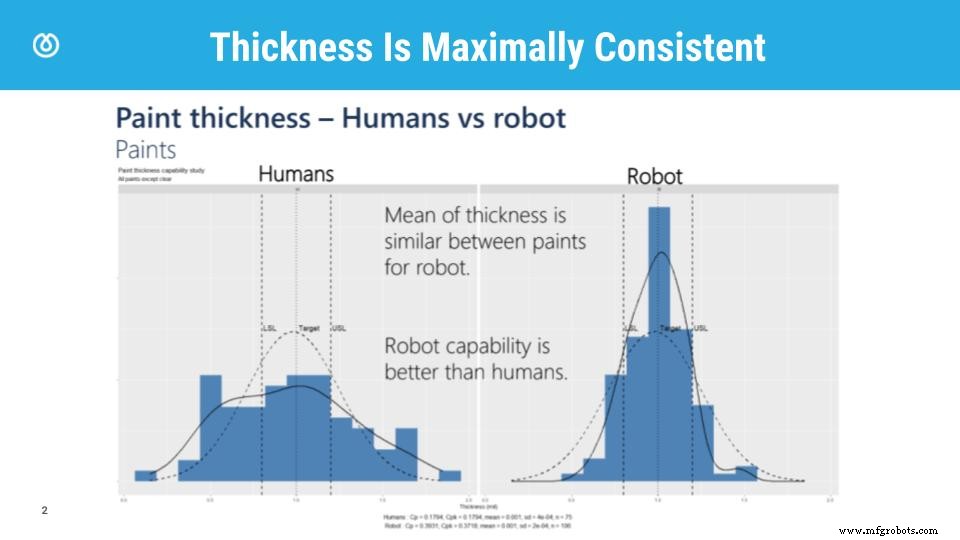
If You Make Something, You Have To Have A Purpose
While AI can displace certain roles, it also unlocks new opportunities for creative and strategic work. Automating routine tasks frees humans to pursue higher‑value activities, and the creative output of machines remains distinct from human ingenuity.
Self‑programming technology is both visionary and practical, offering tangible cost savings and efficiency gains.
Efficient production remains essential, and the skilled‑labor shortage continues even amid record unemployment.
Deploying robots boosts productivity and profitability, which in turn supports job creation, wage growth, and shared prosperity.
To learn more about the growing importance of robotics, watch the Robo Business Direct talk by renowned roboticist Rodney Brooks.
Explore how self‑programming can enhance your spray operations by visiting our website.
Omnirobotic is the sole provider of self‑programming, autonomous robotics for high‑mix spray finishing. For detailed information on the benefits for industrial manufacturers, email sales@omnirobotic.com or try our payback calculator.
Industrial robot
- Autonomous Robots vs. HMIs: Understanding the True Differences in Modern Manufacturing
- Robot Vision in Industry: From Vision to Self‑Programming
- Unlocking Efficiency: The Key Advantages of Deploying Industrial Robots in Manufacturing
- Understanding Collaborative Robots: Definition, Applications, and Benefits
- Emerging Careers: The New Jobs Created by Robots
- Fanuc Robotics: Leading Innovations in Industrial Automation
- KUKA Robotics: Pioneering Innovation in Industrial Automation
- Understanding the True Cost of Industrial Robots: Price Breakdown & Hidden Expenses
- Discover the Power of Motoman Six-Axis Robots for Versatile Automation
- Discover the CR-7iA: Fanuc’s Latest Collaborative Robot