



Predictive Analytics: A Key to Tesla’s $100/kWh Battery Pack Target
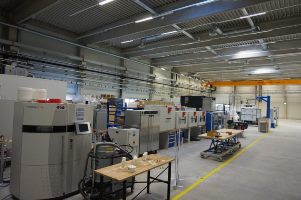
“Yes,” confirms Kari Terho, director and head of the Smart Factory at Elisa Smart Factory. He explains how his team increased the production yield of lithium‑ion battery cells by 16 % through Predictive Quality Analytics at eLab, the electromobility research center at the University of Aachen.
Achieving a battery pack cost of $100 / kWh (≈€90.8 / kWh) is a top priority for Tesla. To reach this milestone, the company must push the limits of volumetric energy density while simultaneously slashing manufacturing costs.
In a 2017 earnings call, Elon Musk asked, “Can someone please come up with a battery breakthrough? We’d love it!” That question underscores the magnitude of the challenge Tesla faces. Elisa’s data scientists responded by applying predictive analytics to forecast manufacturing quality and raise yields.
Quality Challenges in Battery Cell Production
While the process of building lithium‑ion cells—assembling anodes and cathodes, sealing them with electrolyte, and finalizing the cell—seems straightforward, the real hurdle lies in verifying quality. End‑of‑line testing can take up to three weeks, and only after this period can a cell be deemed fit for pack assembly or earmarked for scrapping.
Scrapped cells cannot be recycled, leading to the loss of scarce, expensive raw materials such as lithium, cobalt, nickel, copper, aluminium, and graphite. With a global first‑time yield (FTY) of roughly 15 %, the sector faces significant cost and time inefficiencies.
Strategies to Boost Yield
At eLab, the quality bottleneck was identified as a major barrier to cost‑effective production and wider EV adoption. To address it, eLab partnered with Elisa Smart Factory’s data science team.
Predictive Quality Analytics in Action
Predictive Quality Analytics extracts real‑time process data, identifies patterns, and predicts quality outcomes—making it an ideal solution for eLab’s needs.
The team employed the CRISP‑DM framework, a proven six‑step data‑mining methodology, as follows:
- Business Understanding: Defined the production context, identified quality drivers, and pinpointed critical data points.
- Data Understanding: Conducted a gap analysis and added a high‑resolution camera to capture missing data.
- Data Preparation: Cleaned, harmonised, and synchronised timestamps to prevent data loss.
- Modeling: Tested multiple algorithms to discover the best predictive model for cell quality.
- Evaluation: Validated model performance to ensure reliable quality predictions.
- Deployment: Implemented optimal parameters—such as viscosity settings—into production equipment for consistent quality.
Result: 16 % Increase in Yield
After deploying the analytics solution, the scrap rate dropped by 16 %. Sub‑standard cells were identified earlier, allowing raw materials to be re‑cycled rather than discarded after a three‑week test.
Implications for Tesla
Assuming Tesla’s Gigafactory 1 processes 23 GWh of 2170 cells for the Model 3, the facility could produce 1.3 billion cells annually. A 16 % yield improvement equates to over 200 million additional cells—enough for 49,000 Model 3 Long‑range vehicles—and could save approximately $400 million (≈€363 million) if the current cost is $111 / kWh, as estimated by UBS.
These gains underscore the necessity for continuous improvement in battery manufacturing. Efficient use of rare‑earth metals is essential to meet the rapidly growing demand for electric vehicles.
The author is Kari Terho, director and head of Smart Factory at Elisa Corporation.
About the Author
Kari Terho leads the Smart Factory division at Elisa Corporation, an ICT services provider in Finland. Prior to Elisa, he held senior roles in service management, sales, and business development at tier‑one wireless carriers and global technology firms, including Hewlett‑Packard. He holds an MBA in Business and Administration.
Elisa Smart Factory specializes in artificial intelligence and industrial IoT solutions for manufacturers. By connecting to diverse data sources and applying advanced analytics and machine learning, they deliver outcomes such as higher uptime, improved production quality, and increased yields. Leveraging decades of experience in managing automated networks and preventing disruptions, Elisa aims to be the leading provider of factory digitalisation solutions in Europe and beyond.
Internet of Things Technology
- Cellular IoT: Weighing Cost, Battery Life, and Data Use
- How Preventive Maintenance Paves the Way for Predictive Maintenance Success
- How IIoT & Data Analytics Transform EHS: Boosting Safety, Efficiency, and Savings
- Empowering Domain Experts with Data Science for Smarter Manufacturing Insights
- Revolutionizing Retail: How Big Data Analytics Drives Success
- Predictive Analytics: A Key Solution to the Global Container Crunch
- Industrial IoT & Predictive Analytics: Accelerate Manufacturing Efficiency
- Predictive Analytics Demystified: Forecasting the Future with Data Precision
- Predictive Maintenance: Harnessing Continuous Intelligence for Unmatched Asset Reliability
- Integrated Predictive Analytics: Transforming Maintenance into Proactive Strategies & New Business Models