



Harnessing IoT to Bridge the Digital Divide in Education
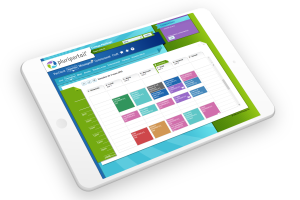
When the COVID‑19 pandemic forced schools worldwide to close, many were ill‑prepared to pivot entirely to digital instruction. Plurilogic’s online learning portal experienced a 200% surge in usage as schools rushed to a full‑remote model, according to President Andre Beauchamp.
By deploying Actian Zen, a hybrid‑cloud data platform, we upgraded our content management and mobile publishing layer, enabling a two‑fold increase in device connectivity and boosting teacher‑student interaction by 50%.
As lockdowns ease, schools confront a dilemma: reopen in sub‑optimal conditions or risk students falling behind without robust remote options. EdTech can address both challenges—supporting distance learning while promoting social distancing, thereby safeguarding health as students return to campus.
The pandemic has expanded the scope of school operations beyond the classroom—administrative tasks, admissions, student records, after‑school programs, and more. Managing these services efficiently, especially from a distance, demands integrated technology.
Our experience helping schools transition to full‑time distance learning demonstrates the profound impact of IoT data and tools in keeping educators and learners connected.
Remote Access Is Essential
Successful remote learning hinges on ubiquitous, reliable devices—laptops, tablets, or smartphones. A unified platform that delivers curriculum, courses, and resources from a single portal, accessible on any device, made the sudden shift from classroom to 100% online possible.
Plurilogic’s Integrated Campus Management system exemplifies this approach. As remote education evolved from optional to mandatory, school districts across North America turned to solutions that ensure consistent access even with limited bandwidth, helping bridge the digital divide.
With many families already adjusting to new home routines, a seamless remote learning rollout is crucial to minimize disruption.
Mobile Solutions Support Social Distancing
Mobile technology has long prepared schools for IoT integration. In 2023, we introduced RF‑ID tracking at school entrances and exits, allowing parents to scan a card to signal pickup instead of entering the main office—reducing foot traffic and contact.
Real‑time messaging and geolocation enable instant notifications of a parent’s arrival, further tightening crowd control and supporting social‑distancing protocols.
Future‑Ready IoT for Education
Looking ahead, we are exploring additional IoT layers that can be seamlessly added to our platform to lower risk and liability for schools.
One possibility is integrating low‑cost Raspberry Pi units into the RF‑ID framework. Coupled with camera systems equipped with facial‑recognition algorithms, schools could verify mask compliance as students enter and exit.

Additional sensor arrays could track restroom usage versus soap dispenser activations, providing insight into hand‑washing adherence.
While features like mask detection and hand‑washing monitoring are not yet in widespread use, an extensible campus‑management system—augmented with mobile and IoT capabilities—enables schools to scale functionality as needs evolve.
In this new normal, IoT empowers institutions to close the technology gap, create resilient distance‑learning environments, and maintain safe, healthy campuses.
The author is Andre Beauchamp, president of Plurilogic.
Internet of Things Technology
- Web‑Enabled DDS: Bridging IoT, Cloud, and Real‑Time Connectivity
- The Tempest and the Digital Grid: How Smart Technology Cuts Outage Times
- Uniting IT and OT for Seamless Industrial IoT Success
- How IoT is Driving the Next Generation of Manufacturing
- How 5G Fuels IoT: Current State, Opportunities, and Key Challenges
- Strategic IoT Integration: A Proven Path to Business Growth
- AIoT: How Artificial Intelligence Amplifies the Internet of Things
- 5 Transformative IoT Applications Revolutionizing Education
- Driving the Future: How Digital Transformation & IoT Revolutionize Automotive Manufacturing
- Accelerating Digital Transformation in Manufacturing with Advanced Analytics