



How Standards Unlock the Connected Home: A Blueprint for Service Providers
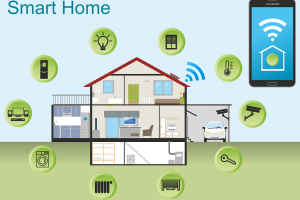
Amid the ongoing pandemic, ABI Research projects a 30% year‑over‑year surge in connected‑home device sales. Daniel Egger of Axiros GmbH notes that smart‑home devices are poised to eclipse smartphones by 2021, with the total Internet of Things (IoT) inventory expected to exceed 50 billion units, according to Strategy Analytics.
To capture this lucrative market, broadband operators must first create a truly interoperable ecosystem that elevates the user experience across all connected services.
A Challenging Task for Service Providers
Smart devices are flooding homes and offices, driving demand for faster, more reliable connectivity. Delivering ubiquitous coverage while ensuring seamless device management is essential for an optimal end‑user experience.
Managing, monitoring, and upgrading these devices presents a significant operational hurdle. As consumers increasingly rely on their broadband provider for smart‑home support, the complexity—and associated security risks—intensifies.
Consequently, operators are often held accountable for device performance issues, as consumers conflate “Wi‑Fi” with the broader internet service. Many customers purchase Wi‑Fi equipment independently, yet still expect a cohesive broadband experience.
The Connected Key
To unlock the full potential of the connected‑home ecosystem, operators must rethink how they measure and deliver broadband services at home and in business settings. TR‑069, adopted by more than one billion installations worldwide, has long driven broadband innovation and subscriber uptake.
Its evolution—TR‑369, also known as the User Services Platform (USP)—provides remote IP‑network CPE management. By bridging the IoT explosion, USP introduces a unified framework for deploying, managing, and controlling home devices.
Evolving Requirements
USP’s architecture introduces unique identifiers for every participant, enabling precise routing of data between endpoints. Operators can configure agents—such as gaming consoles, Wi‑Fi modules, or streaming services—to communicate with multiple controllers (e.g., handheld devices, computers), each receiving tailored data streams.
Through record‑based routing, USP allows operators to target specific controllers, add new ones via discovery, and apply dedicated configurations and commands. Multiple message transfer protocols (MTPs) give operators flexibility to select the most efficient connectivity for each controller, while controller‑trust settings enforce granular access controls.
Greater Security
As data volumes from new applications grow, so does the attack surface. Operators must adopt forward‑looking security measures to safeguard devices against malicious actors. USP’s design inherently supports robust, future‑proof protection, helping providers reduce costs, enhance support, and differentiate their brand.
Superior Experience

USP not only streamlines the rollout of new applications without disrupting existing installations but also opens new revenue streams. By facilitating large‑scale broadband deployment, USP creates a stable ecosystem that empowers operators to deliver a superior connected‑home experience and monetize the smart‑home ecosystem.
For more insights and videos on the Broadband Forum’s perspective on the connected home and USP’s role, visit the official Broadband Forum resources.
Author: Daniel Egger, Axiros GmbH and Project Stream Lead for Broadband User Services (BUS) Data Modeling Project Stream.
Internet of Things Technology
- How Industry Standards Drive Success in IoT Development
- Securing Home Workers: Tackling the IoT Threat Landscape
- Augmented Reality: Transforming Connected Field Service
- Can YouView Become a Trusted Guardian for the Connected Home?
- Securing the $6 Trillion Future: Why IoT Standards and Regulation Matter
- IoT & Home Automation: Shaping the Smart Living of Tomorrow
- Strong Connections: Unlocking IoT's Full Potential Through Strategic Partnerships
- AI and Viztech: A New Era of Safer Online Content
- Revolutionizing Industry: The Future of Connected Devices
- Unlock Customer Service Excellence with AI