



Achieving ISO 26262 Certification for Automotive Software Components

Automotive safety has long relied on ISO 26262 as the benchmark for functional safety in electronic systems. The standard, first published in 2011 and updated in 2018, now governs an industry that increasingly depends on software for driver assistance, brake control, engine management and more. Modern vehicles contain millions of lines of code, and ensuring that this software is safe has become more critical than ever. While many designers and suppliers have accumulated five years of ISO 26262 experience, the growing complexity, tighter integration, and heightened automation demand higher compliance standards. In September 2016, the U.S. Department of Transportation issued a federal policy for safe testing and deployment of automated vehicles, striking a balance between innovation and regulation but adding further compliance work for manufacturers and suppliers.

Historically, automotive companies and suppliers performed a form of “self‑certification” for their systems, hardware, and software. No pre‑market approval process existed, and government oversight entered only after production. While a pre‑market safety review for road vehicles would be impractical, future designs will need to place additional emphasis on rigorous software design and verification practices. ISO 26262 addresses these needs, and specialists like RTI are ready to support designers in meeting its software requirements.
ISO 26262 mandates functional safety across system, hardware, and software layers. Full compliance requires that software be integrated onto the target hardware and within the overall system before approval. This creates a challenge for suppliers who rely on commercial off‑the‑shelf (COTS) software such as operating systems or communication stacks, as they must carry an extra certification burden for components they did not develop. RTI and Verocel have tackled this issue by providing certification evidence and a framework that lets integrators use approved COTS components while achieving ISO 26262 compliance at ASIL‑D. The approach is detailed in the whitepaper ISO 26262 Compliance Using Approved Software Components for Road Vehicles, available for download on the RTI and Verocel websites.
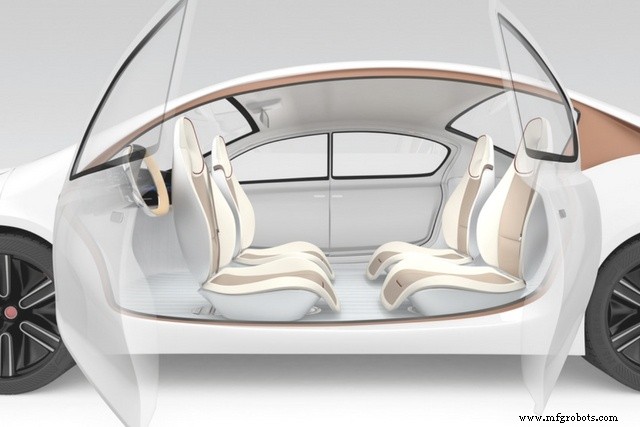
The whitepaper offers a comprehensive overview of ISO 26262 processes and clarifies which parts of the standard apply to COTS software. It also summarizes key characteristics of COTS components suitable for road‑vehicle designs and provides documentation and evidence to help integrators secure ISO 26262 certification. For example, RTI Connext DDS Cert supports the DDS (Data Distribution Service) family of standards and is a fully certifiable middleware solution with a complete, commercially supported certification package that meets ISO 26262, including ASIL‑D. Connext DDS Cert delivers an architecture and hardware‑independent software layer that can be deployed on virtually any system, accompanied by certification evidence covering sections 2, 6, and 8, plus guidance for retaining certification credit during integration.
Automotive designers and suppliers must prepare for a future where heightened regulatory compliance for software becomes the norm. The era of autonomous self‑certification is ending; suppliers will need to rely on a robust ecosystem of partners who can meet current and emerging ISO 26262 requirements. With extensive experience delivering certified software across multiple industries, RTI and Verocel are positioned to assist you in navigating these challenges.
Internet of Things Technology
- Is an AWS DevOps Certification Worth It? Benefits & Career Impact
- Should You Pursue Azure DevOps Certification? Benefits & Career Impact
- Robust Cloud‑Based Software Updates for IoT Devices
- Preventing Catastrophes: Mastering ISO 26262 for Autonomous Vehicle Safety
- Cadence LPDDR4/4X Memory IP Earns ISO 26262 ASIL C Certification, Enabling Safer ADAS and Autonomous SoCs
- IXON Earns ISO 9001:2015 Certification, Strengthening Quality Commitment
- Certified Reliability Engineer (CRE): The Essential Credential for Plant Reliability Professionals
- UL’s Comprehensive Testing for Flame‑Resistant Plastic Components
- Veo Robotics Earns ISO Safety Certification for FreeMove Robot Safeguarding System
- Invar 36 Components: Materials, Properties, and Trusted Purchasing