



Bosch Reveals AI‑Powered Autonomous Shuttle Prototype at CES
At the heart of Bosch’s CES booth stood a prototype of an autonomous electric shuttle boasting a host of cutting‑edge features. Passengers can unlock the vehicle via the Perfectly Keyless smartphone app, and once inside, a concierge service informs them of flight cancellations and offers alternate itineraries. Equipped with camera sensors, the shuttle detects when a rider may have left an item behind and also monitors interior cleanliness, enabling timely maintenance.
Experimental prototypes are vital for Bosch’s engineering culture, as they reveal which features resonate with the public, city officials, and other stakeholders. Mike Mansuetti, President of Bosch North America, explained that the shuttle “paints the picture of what could be.” By gathering user feedback, the company refines its roadmap, ensuring that AI and IoT solutions address real‑world needs rather than just showcasing novelty.
Internet of Things World — industrial enterprises showcase IoT innovations. Register now to secure a discounted pass and receive a free expo ticket.
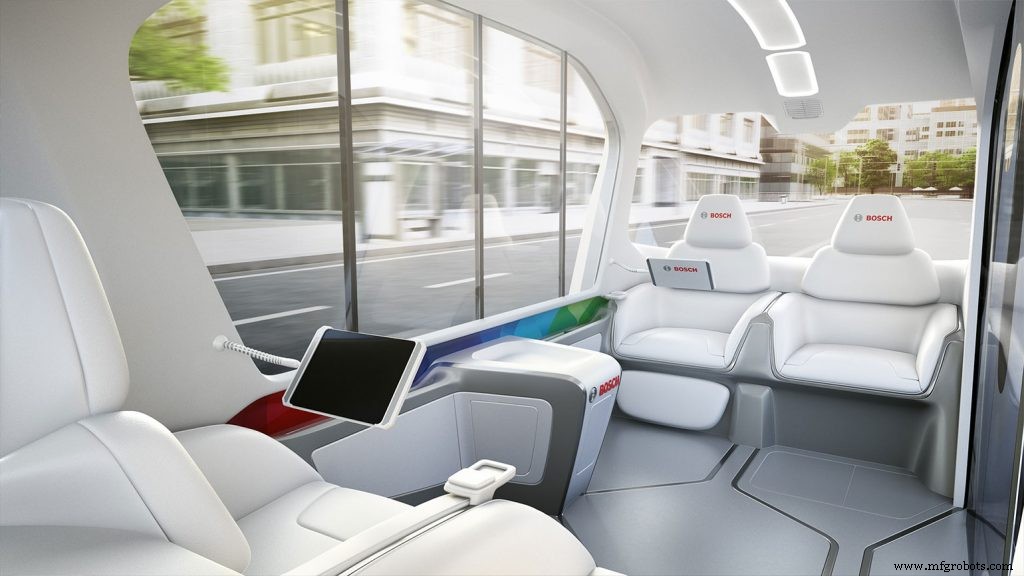
Mansuetti emphasizes that AI and IoT unlock limitless possibilities, yet engineers must prioritize solving customers’ pain points over flashy tech. A core focus at Bosch is user experience—capturing prototype feedback and posing open‑ended questions like, “What is your biggest challenge?”
Such inquiries can yield surprising answers. City officials may identify crime, high school dropout rates, or infant mortality as top concerns, then ask, “How can you help us?”
These insights fuel new ideas for Bosch’s engineers and executives, prompting them to explore how transportation solutions could address those challenges. Mansuetti calls it a “mindset shift” across the organization.
AI and IoT are fostering deeper collaboration across Bosch’s four core divisions—mobility solutions, consumer goods, industrial technology, and energy & building technology—leading to more cross‑functional initiatives, Mansuetti noted.
With autonomous shuttles poised to become mainstream, Bosch engineers explored how to manage incidents when no operator is on board. Mansuetti explained that in‑vehicle sensing emerged from this challenge: “When transportation is offered as a service, we must anticipate scenarios—lost belongings, unclean interiors, passenger disputes—that could arise without a human presence.” This mindset drove the development of prototype solutions addressing such issues.
Bosch aims to enable the commercial launch of autonomous shuttles, but will partner with manufacturers for final production. Mansuetti clarified, “We’re not pursuing the shuttle business itself—just as we don’t build cars. Our focus remains on electronics and technology; sheet metal isn’t in our portfolio.”
Thus, Bosch deliberately steers away from direct involvement in vehicle manufacturing.
Internet of Things Technology
- Variscite Partners with Sequitur Labs to Deliver End‑to‑End IoT Security for i.MX8 Modules
- Why eSIM Is Poised to Transform Consumer IoT and M2M Markets: 3 Key Drivers
- Industries Poised to Lead the IoT Revolution – Why They’re Winning
- Why Battery Life Matters for Real‑World IoT Applications
- Consumer IoT Market Surge: 2023 Outlook, Tech Innovations & Global Growth Trends
- Why IoT Projects Often Fail – Insights & Practical Strategies
- HPE Highlights the Need for End‑to‑End Solutions in Industrial IoT Projects
- Microsoft Azure IoT Recognized as Industry Leader in Forrester's Latest Industrial IoT Wave
- 5G & IoT: Driving Next-Gen Supply Chain Resilience
- Industry 4.0 & IoT: The Driving Forces Behind Advanced Industrial Transformation