



Cyber‑Physical Security: Why Hacking Risks Are Expanding Beyond the Virtual Realm
We live in a cyber‑vulnerable world – one dominated by data. Every facet of our personal and public life is digitized, shared, stored, and accessed, making it a constant target for malicious actors. High‑profile breaches such as Target, Yahoo, and Ashley Madison illustrate that data leaks and misuse are inevitable in an increasingly connected, data‑centric society.
While these attacks are alarming, their primary damage remains in the virtual realm. Physical harm is not a direct outcome, yet the threat landscape is evolving.
See also: The U.S. VA protects your hacking cough from hacking
Today’s shift toward a cyber‑physical world—where software and hardware are inseparable—changes that equation. A cyber‑physical system is one in which physical components are controlled by, and in turn control, electronic components. Modern cars, for example, allocate roughly 60% of their cost to electronic engineering and contain more than 100 electronic modules that directly influence critical functions such as braking, steering, and door locks.
Similarly, manufacturing plants are now monitored and often operated remotely via wireless interfaces, blending software with physical processes. Other sectors—intelligent transportation, medical devices, and smart homes—exhibit the same integration.
Cyber‑Physical Systems vs. IoT
Cyber‑physical systems are closely related to, but distinct from, the Internet of Things (IoT). IoT devices typically act as controllers, using connectivity technologies like cellular or Bluetooth to interact with the physical world. For instance, a vehicle manufacturer’s smartphone app lets you unlock your car or start the engine remotely, while an Amazon Echo app can dim your living room lights.
In these scenarios, user control ends at the IoT controller. The controller communicates with physical objects via sensors (which report physical conditions to the controller) and actuators (which execute commands from the controller). Software—code and data—binds this interaction together.
Unfortunately, software is inherently error‑prone. Even with the most optimistic estimates, a vehicle containing 100 million lines of code could harbor several thousand exploitable vulnerabilities, creating a “hacker’s paradise.” However, not all vulnerabilities translate into life‑threatening exploits. A comprehensive risk assessment—considering attacker motivation, access vectors, and system architecture—is essential before drawing conclusions.
Historically, markets have prioritized feature rollouts over security. Early Internet adopters ignored inherent insecurity because it did not directly impact the bottom line. Over time, antivirus solutions and firewalls emerged, preventing a complete collapse of the PC ecosystem.
The Next Wave of Connectivity
Modern smartphones and evolving IT infrastructures have followed a similar pattern: security is often an afterthought, while feature development pushes faster. The same trend is visible in the IoT sphere, where the tolerance for errors shrinks as we rely more on software.
We have weathered data losses on personal computers and mobile devices and have faced large‑scale breaches of credit‑card and personal data. The pressing question is whether we can manage a catastrophic hack that directly compromises physical safety.
Investing in security by design is no longer optional; it is imperative. Experienced security professionals argue that embedding protection from the outset will be the key to safeguarding the next generation of connected systems.
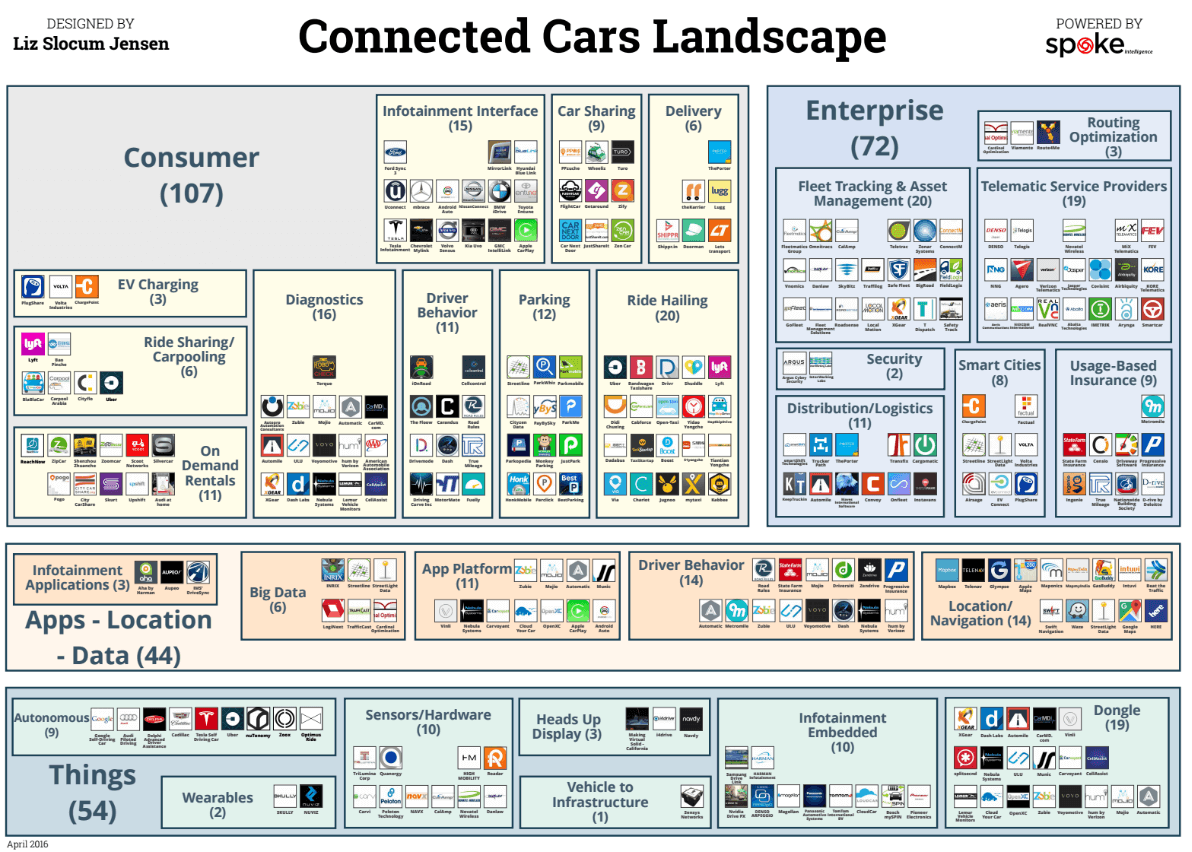
This article is part of our connected cars series. You can download a high‑resolution version of the landscape featuring 250 companies here.
Internet of Things Technology
- Mastering IoT Management: Overcoming Connectivity and Bandwidth Challenges in 2024
- Global Dye Industry’s Evolution: Eco‑Friendly Shifts, Regulatory Rigor, and Technological Innovation
- Virtual Reality Revolutionizes Design: From Immersive Modeling to Rapid 3D Printing
- Augmented Reality: Transforming Connected Field Service
- Predictive Maintenance: Harnessing Industry 4.0 for Uninterrupted Production
- G.hn: Powering the Industrial IoT Revolution for Cost‑Effective, Reliable Connectivity
- Software AG Projects the Next Wave of IoT Growth
- Five Key AgTech Innovations That Transformed Agriculture in 2016
- Industry 5.0: Redefining Manufacturing for the Future
- The Brave New and Old World of Manufacturing: AI, Design, and Innovation