



How Facebook’s F8 AR/VR Announcements Reshape Marketing Strategy
At last week’s F8 Developer Conference, Meta unveiled a suite of AR and VR innovations that are poised to redefine how brands connect with consumers. With 2 billion active users and a clear commitment to leading next‑generation tech, the industry is watching closely.
See also: Adobe sees VR as the next great travel disruptor
Marketers often wonder whether AR or VR is the better fit for their campaigns. The choice hinges on creative intent, audience context, and distribution potential. Below, we break down the key considerations and practical examples.

When to Use AR vs. VR
AR overlays digital content onto the user’s real surroundings, making it ideal for experiences that rely on the physical context—think product demos or location‑based games. VR, by contrast, transports users into a fully fabricated world, allowing brands to guide the narrative and control the environment.
Example: For the release of a blockbuster film, an AR campaign might let fans pose as a character in their own homes, while a VR experience could place viewers inside the movie’s setting, allowing them to interact with iconic scenes.
Current Reach: Where Are the Eyes?
Despite its potential, AR’s distribution remains limited because most digital content is consumed on flat screens rather than through lenses. In contrast, 360° VR video has a mature delivery ecosystem—publishers like The New York Times, Time Inc., and Vice Media host immersive content that reaches engaged audiences.
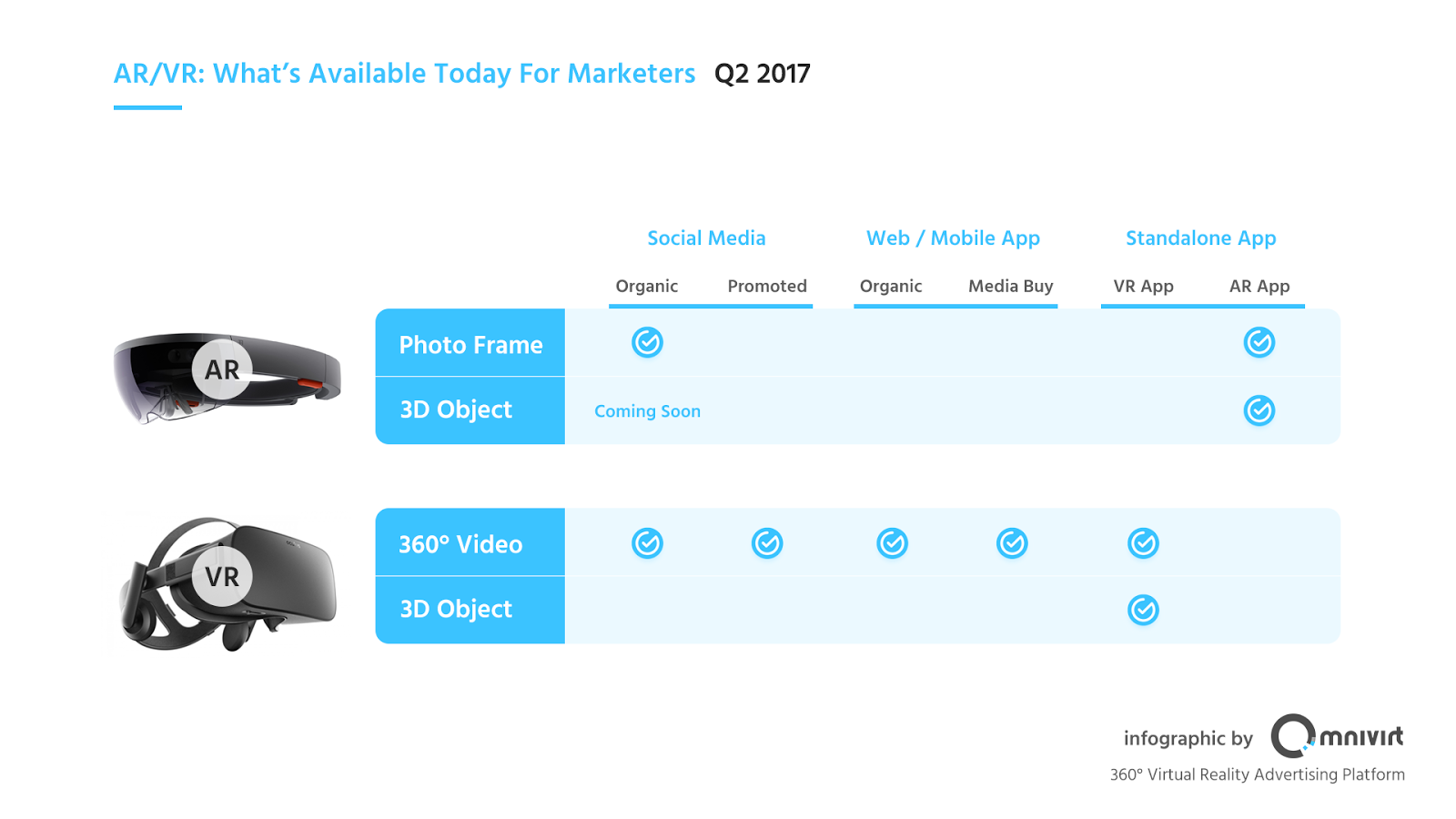
Future Outlook
VR is evolving into the next interactive media platform, akin to television’s rise over print. Meanwhile, AR is advancing beyond static overlays, providing richer contextual information similar to the shift from text to voice search.
As an advertising partner deeply involved with brands and publishers, we’re excited to help marketers unlock the full potential of both technologies.
OmniVirt is a 360° video and VR advertising platform founded by former Google and YouTube engineers. Backed by top VCs such as Andreessen Horowitz and First Round Capital, OmniVirt distributes immersive content across leading publishers—The New York Times, AOL, Time Inc., Gannett, The Wall Street Journal, Vice Media, and more. Its interactive campaigns offer detailed performance metrics and have powered high‑profile brands like Toyota, Infiniti, Samsung, Chevron, Universal Pictures, and Johnnie Walker.
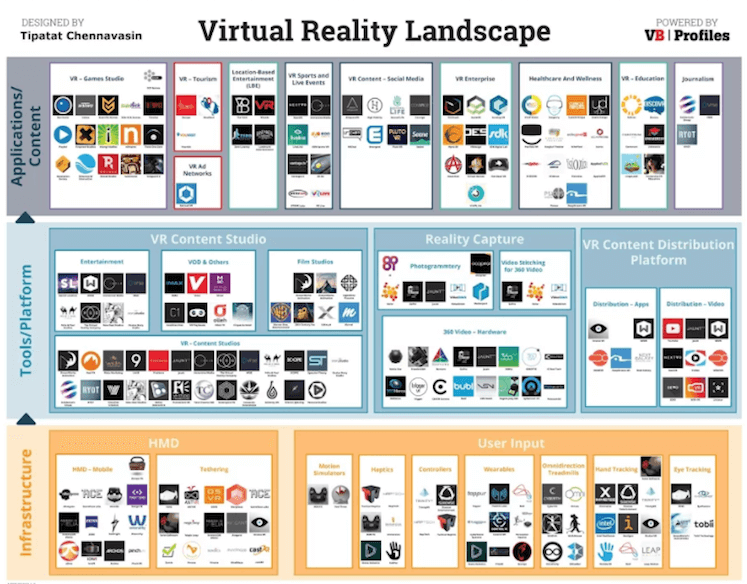
Explore the high‑resolution landscape of 431 companies here.
Internet of Things Technology
- Deferred Maintenance: How It Impacts Your Facility—and How to Stop It
- OSGi Explained: How Modular Java Architecture Drives IoT Innovation
- How Industry 4.0 is Revolutionizing CNC Machining
- How the Energy Independence and Security Act (EISA) Shapes Your Electric Motor Strategy
- Fog Computing Explained: Transforming IoT Data Flow and Reducing Cloud Load
- Understanding the WPA2 Vulnerability and Its Impact on IoT Devices
- Understanding the Tier 4 Engine Adoption Program: Impact on Your Operations
- How IoT is Revolutionizing Smart Factory Operations
- How 5G Will Revolutionize Machining: Insights from Industry Experts
- Understanding CNC Axis: How 3‑, 4‑, and 5‑Axis Machines Drive Precision Manufacturing