



AI‑Driven Log Analytics: The Future of IT Operations and DevOps
IT operations and DevOps teams are constantly navigating a shifting landscape of processes, technologies, and tools. While the core of their role is problem‑solving, the speed at which the environment evolves has made this task increasingly demanding.
Business users now expect instant resolution—often via a single tap—yet behind the scenes, diagnosing an issue can be a complex, time‑consuming exercise. The biggest hurdle? Sifting through vast volumes of log data to locate the subtle, high‑impact problems that can cripple applications.
See also: How machine learning is revolutionizing digital enterprises
Imagine receiving a midnight call from a disgruntled customer or a senior executive reporting a failed transaction. You launch your log‑management console and discover over 100,000 entries for that interval—an overwhelming dataset for a human analyst.
In such scenarios, real‑time, centralized log analytics becomes essential. By aggregating and correlating logs, teams can quickly pinpoint the root cause, streamline troubleshooting, and proactively anticipate future incidents.
AI’s Impact on IT Operations and DevOps
Artificial Intelligence, once a buzzword, is now a practical enabler across industries. By marrying big data, AI, and domain expertise, organizations can extract actionable insights from data streams that would otherwise be impossible to analyze manually.
As IT environments grow more agile and complex, the human brain cannot keep pace with the velocity, volume, and variety of daily operations. AI bridges that gap, delivering operational intelligence and speed that dramatically reduce the burden of troubleshooting and real‑time decision‑making.
How AI Helps You Find the Needle in the Haystack
Companies need a solution that enables DevOps teams to quickly locate the critical log entry among millions of records. Rather than manually filtering for a specific error type, AI can learn the patterns of known incidents and automatically surface relevant entries.
One approach is to build a platform that aggregates public incident data, learns from how similar systems were resolved, and scans your own logs for analogous problems. Think of it as a specialized recommendation engine for log data, inspired by Amazon’s product suggestions and Google’s PageRank.
Introducing Cognitive Insights
Cognitive Insights is a cutting‑edge machine‑learning solution that merges human domain knowledge with log data, open‑source repositories, discussion forums, and social threads. It creates a knowledge reservoir that contains actionable solutions for the critical issues faced by IT and DevOps teams.
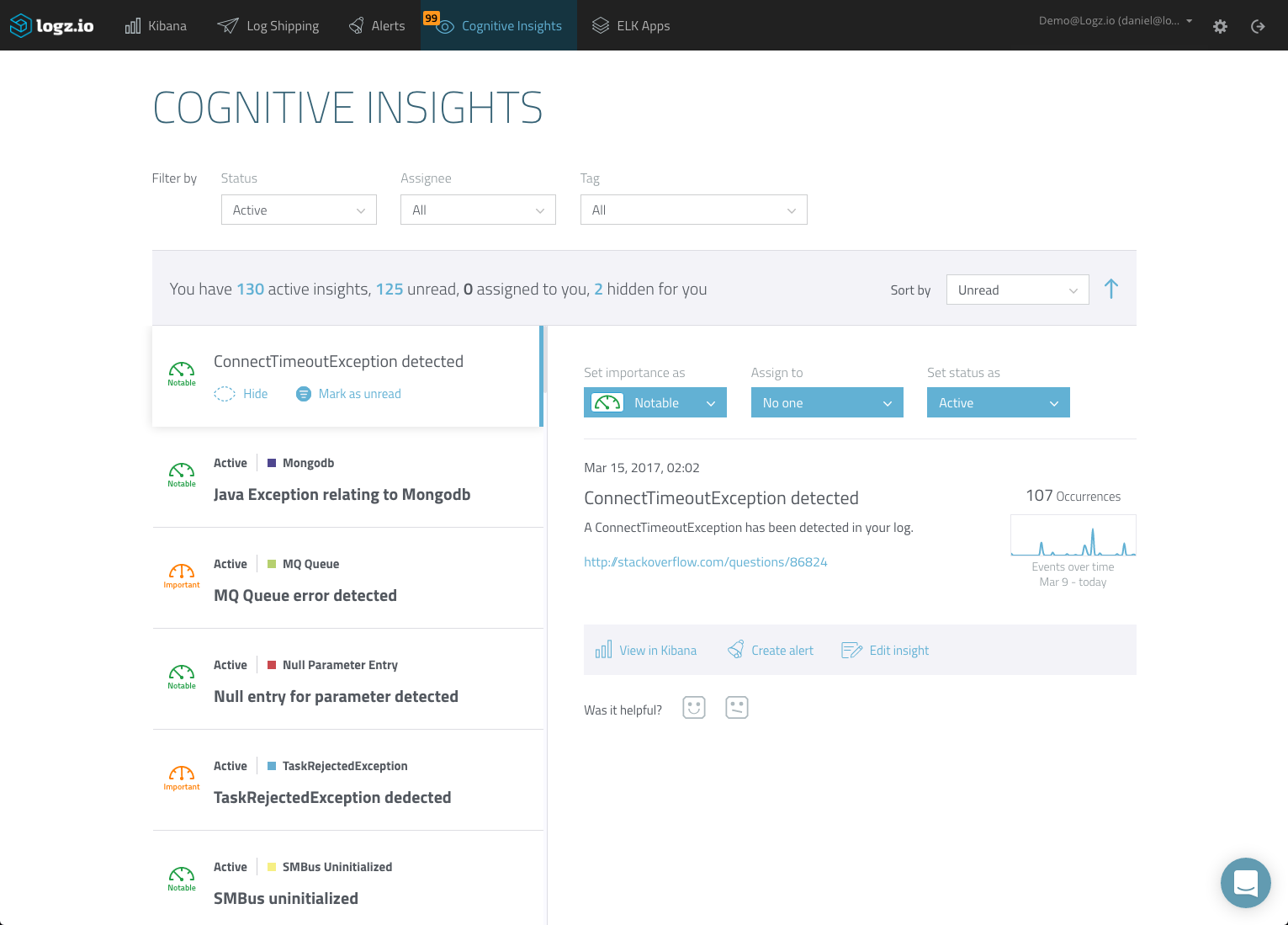
Real‑World Challenges Addressed by AI
DevOps engineers, IT operations managers, CTOs, VP of engineering, and CISOs confront numerous obstacles that AI can mitigate, especially through log analysis. The two primary use cases are:
- Security – DDoS Detection
Distributed Denial‑of‑Service attacks are no longer limited to high‑profile targets. Small‑to‑medium businesses now face the same threat. A centralized logging architecture that identifies suspicious activity is essential. Cognitive Insights has proven highly effective in anti‑DDoS strategies, with organizations such as Dyn and British Airways employing ELK‑based solutions to protect their operations. - Operational Efficiency
Consolidating logs into a single, searchable repository clarifies process flows and enables cross‑application queries. By leveraging the ELK stack, Cognitive Insights simplifies data, providing a clear operational picture. Companies like Asurion and Performance Gateway have adopted this technology to elevate their IT performance.
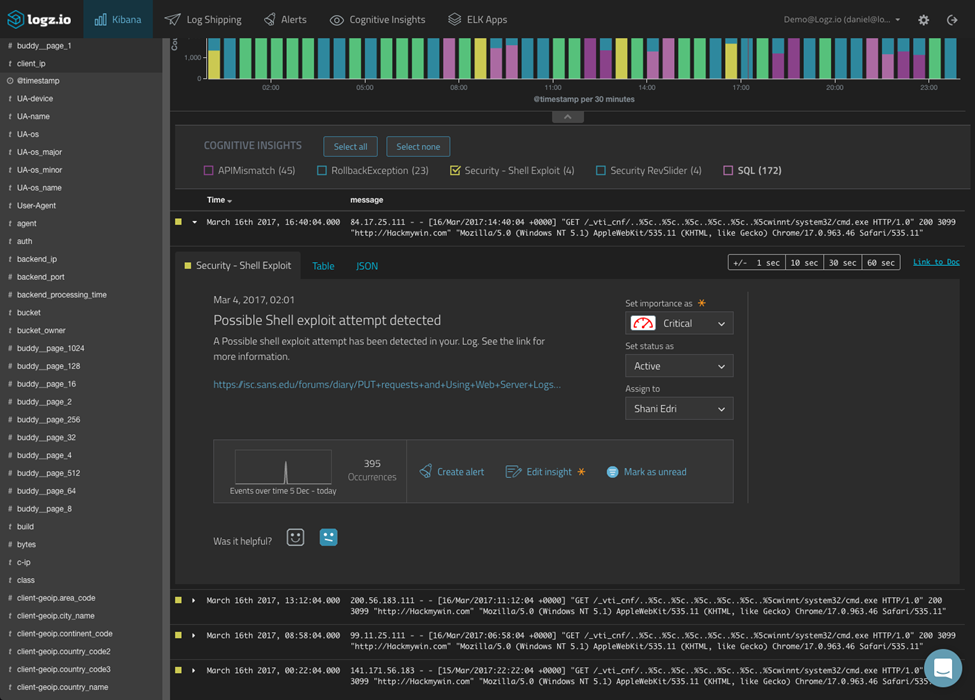
Benefits of AI‑Driven Log Analytics
Integrating AI into log management delivers tangible value across the organization:
- Improved customer success
- Enhanced monitoring and support
- Reduced risk and optimized resources
- Maximized efficiency through accessible log data
In essence, Cognitive Insights and similar platforms streamline log management and troubleshooting, freeing teams to focus on strategic initiatives.
Rent‑A‑Center (RAC), a Fortune 1000 company with 3,000 stores and 2,000 kiosks across North America and the Caribbean, previously managed two separate ELK stacks and struggled with 100 GB of daily data. Transitioning to Cognitive Insights enabled RAC to detect anomalies, scale effortlessly, and benefit from dedicated on‑prem and off‑prem ELK support.
The Role of Open‑Source in Log Management
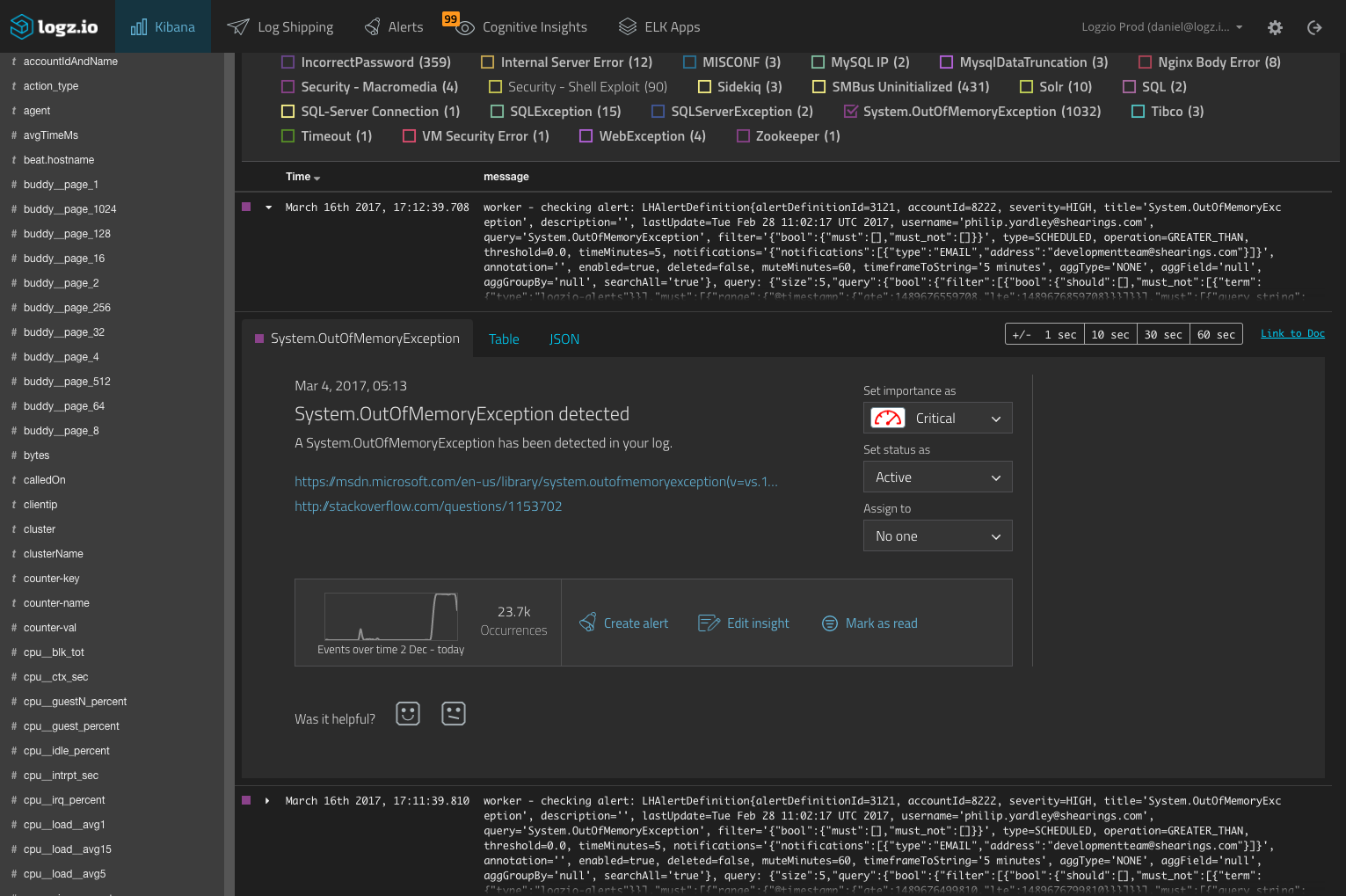
Leading vendors are actively researching AI enhancements for log management. ELK remains a popular, cost‑effective choice, offering essential graphing and search capabilities. However, the latest AI‑driven tools—like Cognitive Insights—allow organizations to quickly locate critical issues within massive log datasets.
Join the conversation about AI in your industry. For deeper insights on Artificial Intelligence and Big Data, connect with Ronald van Loon on LinkedIn and Twitter.
Internet of Things Technology
- How AI and ML Revolutionize Asset Tracking: Enhancing Accuracy, Efficiency, and Insight
- How AI Accelerates the Internet of Things Revolution
- AI is Reshaping SOCs: Tackling Talent Shortages and the Surge of Cyber Threats
- Exploring 6G: The Future of Ultra-Fast Connectivity
- Harness Automation & AI to Strengthen Cybersecurity: Faster, Smarter Defense
- Industrial AIoT: Merging AI and IoT to Drive Industry 4.0 Innovation
- AI: Benefits, Risks, and Industry Impact
- Big Data vs AI: Synergy Behind Digital Transformation
- Automating Data Quality to Accelerate AI & ML Success
- Artificial Intelligence: Evolution, History, and Real-World Applications