



The Hidden Health Risks of Poor Indoor Air Quality
Air pollution isn’t just about being outdoors.
Indoor air pollutants such as carbon monoxide (CO), volatile organic compounds (VOCs) and particulate matter (PM), to name a few, are not good for our health. Poor indoor air quality is linked to a range of illnesses including asthma, pneumonia, lung cancer, and 3.8 million deaths globally.
Poor indoor air quality can negatively impact people who may feel and experience fatigue, headaches, reduced mental and physical performance (productivity, and ability to process information). With people estimated to spend 90% of their time indoors (working, studying, sleeping, commuting) it is important that businesses consider the impact air quality has on the health and wellbeing of their employees in the workplace.
So how can you monitor indoor air quality?
Indoor air quality monitoring is about achieving a healthy indoor environment to include:
- Adequate ventilation (introduction and distribution of clean air)
- Comfortable temperature and humidity levels
- Controlled contaminants
Indoor Air Quality Sensors
The Internet of Things (IoT) allows organisations to exploit the “Power of Now”, collect data in real-time and analyse it to predict, alert, and prevent errors leading to better business outcomes. Environmental sensors placed within a building can do just this, by monitoring the indoor air quality through sensors such as temperature, humidity, formaldehyde, VOCs, particulates, and others. The sensors can detect and alert users in real-time of any changes in the physical environment. This ensures that corrective action is taken to control certain pollutants, provide reassurances to employees following the COVID-19 pandemic, and improve the productivity and wellbeing of employees.
Our favourite saying at IoT Horizon is you don’t know what you can’t measure. We help customers move towards a healthier and more productive indoor environment through our MPWR:Sense range which will allow you to remotely monitor a variety of air quality sensors. Through our dashboard, you will be able to access real-time data, receive alerts and see visual insights into your building’s environmental conditions.
Example Case Study
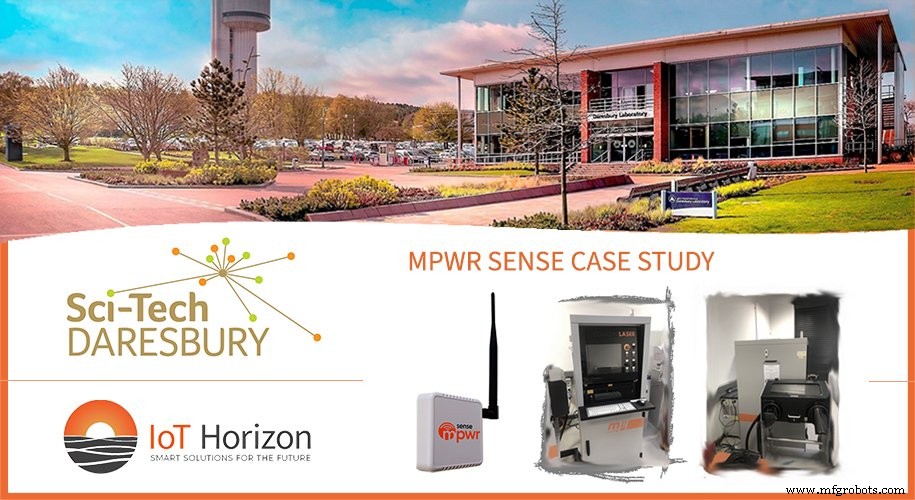
Sci-Tech Daresbury required a secure solution to monitor the air quality within their lab environment to:
- Monitor machinery (to maintain and protect the warranty terms)
- Understand whether the storage of printer consumables (for a 3D printer) and indoor air quality could impact on a final product
- Protect lab technicians from harmful particulates in the atmosphere
As a result of IoT Horizon’s MPWR:Sense solution, the technicians now access real-time data on the environmental conditions (Temperature, Humidity, CO2, and Particulates) in the atmosphere and are able to maintain a good healthy working environment.
Contact us to find out more
References:
https://www.who.int/news-room/fact-sheets/detail/household-air-pollution-andhealth#:~:text=3.8%20million%20people%20a%20year,18%25%20from%20stroke
https://www.birmingham.ac.uk/research/global-goals/igi/clean-air/indoor-air-quality.aspx
https://uk-air.defra.gov.uk/air-pollution/uk-eu-limits
https://www.gov.uk/government/publications/air-quality-uk-guidelines-for-volatile-organic-compounds-in-indoor-spaces
Internet of Things Technology
- Ghosting in 3D Printing: Causes, Effects, and Prevention
- How Indoor Positioning Systems (IPS) Work: A Practical Guide
- Measuring Air Quality with OpenSensors: An Arduino & Python Guide
- Smart Indoor Air Quality & Waste Monitoring System
- Advanced Indoor Air Quality Monitoring System with Arduino & IoT
- Why Routine Maintenance Is Critical for Superior Laser Cutting Quality
- Leveraging IoT to Build Advanced Indoor Air Quality Monitoring Systems
- How Air Dryers Work: Keeping Compressed Air Clean & Efficient
- Advanced Carbon‑Based NO₂ Sensor Enhances Indoor Air Quality Monitoring
- Measuring Quality in Metal Fabrication: Standards & Best Practices