



Revolutionizing Grocery Delivery with Industrial IoT: On‑Demand, Smart Inventory Management
The proposed grocery system system tracks product inventories, notifies consumers when they are running low on products, and offers available purchase options from different suppliers.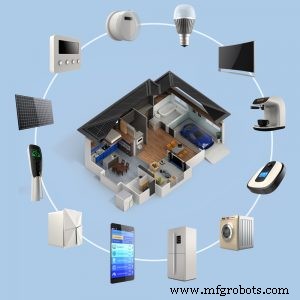
An edge technology originally developed for manufacturing shop floors may soon help you shop online at your favorite grocery delivery business.
That’s the gist of a presentation and paper presented at the recent IEEE Edge Computing conference by a team of researchers from the University of Arkansas. The team, led by S. M. Nahian Al Sunny, proposes an approach that leverages edge computing technologies from the manufacturing sector to underpin the delivery and back-end supply-chain support of online grocery orders.
Sunny and his co-researchers say a machine tool communications technology applied in industrial settings also may pave the way to faster and more efficient on-demand grocery shopping and delivery. The industrial protocol, MTComm, was developed to provide remote monitoring and operation services of manufacturing machines over the Internet.
See also: What Enterprises Want Now from Industrial IoT
Based on IoT data acquired through edge-based devices connected via MTComm, the proposed grocery system system tracks product inventories, notifies consumers when they are running low on grocery products, and offers available purchase options from different suppliers. The suppliers can connect their warehouse robots using edge- devices to the cloud by publishing their monitoring and operation capabilities and perform product delivery remotely using autonomous mobile robots. This enables users to monitor, manage, and operate their resources both locally and remotely.
“As grocery purchases are most often done on need-basis, IoT is aiding online grocery services by allowing consumers to keep track of grocery items, set up reminders for expiration, and even order directly from the built-in interface,” the researchers point out. “On the other hand, suppliers and retailers are using IoT technologies to improve management and distribution of products and promote better shopping experience. Innovations in robotics, artificial intelligence, machine learning, and transportation made product delivery from warehouses to homes by self-driving robots and drones a reality.”
Employing MTComm protocols provides several advantages over currently employed technologies in grocery delivery settings, the researchers state. “It allows cloud services to interact with users and their resources in a uniform manner. Consumers can track their grocery items through IoT devices and suppliers can monitor and operate their warehouse machines remotely. [The MTComm-based system] provides data driven matching of consumers and suppliers based on their needs and capabilities. MTComm enables efficient XML based bi-way communication between cloud and IoT resources through an edge device.”
In one experiment that emulated a hypothetical grocery shopping scenario, a refrigerator and two sensors were employed. “A full half-gallon milk carton was placed on the weight scale at the beginning. The logic was set so that when the weight was less than 25 percent of its initial weight, it would be considered as low supply. When a nearly empty carton was placed, the cloud detected this incident and notified the user about it along with available ordering options through android app.” As an order was placed for more milk, instructions were sent, via the cloud, to the back room, which facilitated the order, autonomously via robots, to move an additional milk carton to the front of the refrigerator.
The University of Arkansas team caution that more work needs to be done address security and privacy mechanisms within the system, and to better enhance performance with big data analytics and machine learning. This proposal illustrates how innovation in IoT or edge technologies developed within one industry sector can be carried over to other types of business.
Internet of Things Technology
- How 5G Will Transform Industrial IoT: Boosting Automation, Reliability, and Connectivity
- Securing the Industrial IoT: A Practical Roadmap
- IoT and Industry 4.0: How the Fourth Industrial Revolution Is Shaping Manufacturing
- The 5‑Layer IoT Technology Stack: A Product Manager’s Blueprint
- Industrial IoT Value Chains: From Device Data to Business ROI
- How IoT Is Transforming Consumer Business and Manufacturing
- Why Longevity Matters in Industrial IoT: Securing Factory Operations for Decades
- Industrial IoT Platform Buyer’s Guide: Expert Tips & Decision‑Making Checklist
- Leveraging IoT for Efficient Industrial Energy Monitoring
- Top 7 Industrial IoT Applications Powering Market Growth