



US Army Explores Smart City Technologies to Boost Battlefield Effectiveness
The Army is examining how IoT and smart city tech can be used in combat situations.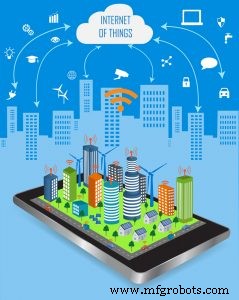
Smart cities could help the military perform better on the battlefield. The Army Research Laboratories (ARL) is studying smart city infrastructure to learn its ability to enhance military capabilities in dense urban environments.
This investigation, a spin-off of the IoT — the IoBT (Internet of Battlefield Things) — analyzes the effectiveness of using sensors and other IoT technology. The IoBT aligns with the Army’s goal to modernize, which includes providing soldiers with access to the best communications and network technology.
Long-Range, Wide-Area Network (LoRaWAN) Capabilities
A popular networking protocol for smart cities, the LoRaWAN connects large deployments of IoT devices over long distances. ARL tested its power in cramped urban situations with tall, potentially signal-obstructing buildings.
Researchers configured various IoT devices to transmit at three LoRaWAN data transmission rates, sending various size messages using the 915MHz band — a band reserved for medical, industrial, and scientific priorities. Researchers attached the devices to a car’s roof and drove around Montreal, weaving among the various skyscrapers.
The team faced several challenges including inaccessibility of several roadways. To meet its objective of getting as much comprehensive coverage as possible, researchers spread data collection over multiple routes and urban terrains. Then researchers studied the data to evaluate coverage gaps and data rates.
One short-term goal involves developing urban terrain profiles to include buildings and natural terrains, which future research will apply to analyze network coverage and capability.
IoBT: Enhancing Military Capabilities
The IoBT and IoT show significant promise in assisting military operations. “IoT infrastructures may be deployed in a variety of settings,” says James Michaelis, ARL computer scientist. “One is Army installations, which can be viewed as cities in their own right and represent a target for modernization. Such modernizations will likely include smart infrastructure and intelligent systems that operate them.”
See also: Defense Department to Extend Predictive Maintenance to Navy
Internet of Things Technology
- Smart Lighting: The Cornerstone of a Truly Connected City
- Fog vs. Cloud: Optimizing IoT Deployments for Speed and Scale
- Smart Cities: Delivering Tangible Benefits Through Proven Connectivity Solutions
- LPWA Technologies Empower Smart Cities: Enhancing Air Quality and Water Management
- How Smart Cities Harness IoT, Microservices, and Dashboards for Efficient Asset Management
- How IoT Drives Smart Infrastructure to Transform Cities
- Revolutionize Energy Efficiency: IoT-Powered Management for Smart Businesses
- Smart Farming: IoT-Enabled Comprehensive Monitoring for Future Agriculture
- Revolutionizing Urban Life: IoT-Driven Smart City Solutions for Growth and Sustainability
- Efficient IoT Sensor Provisioning: Secure Connectivity & Credential Management