



Revolutionizing Retail: Smart Shelves Transform Supermarket Shopping
The bulk of supermarket purchases are still primarily made in-store; personalized in-store shopping experiences are the next logical frontier for digital transformation.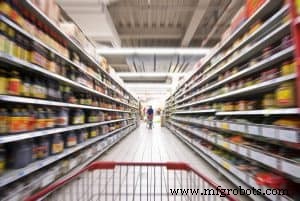
It seems that everywhere we turn, the world is being digitally transformed, and your local supermarket could be next. We’re all used to ‘non-digital’ supermarket shelves, but digital supermarket shelves are likely to be the way of the future. That’s because they can deliver benefits to both consumers and supermarket retailers, so it’s a win/win situation.
See also: Meeting Consumer Challenges by Transforming mPOS
How smart supermarket shelves could benefit consumers
The major potential benefits for consumers center around the capability of powered supermarket shelves to interact with smartphones. This can create a personalized shopping experience for consumers.
Consider these two potential applications of smart supermarket shelf technology:
- A digital sign that could display a relevant promotion to a shopper as they walked past. This promotion could be triggered by the types of groceries that the customer has bought in the supermarket in the past and by the supermarket shelf sensor interacting with the customer’s smartphone to detect when they were approaching the shelf. Consumer demographic data (like age, gender, and cultural background) could also be used to trigger personalized supermarket shelf display information.
- A smartphone shopping list feature where information on where customers can find grocery items that are on their list could be digitally and automatically provided to them by powered, smart supermarket shelving.
What about consumer privacy issues?
Of course, there are always concerns when commercial organizations collect consumer information. Those concerns usually center around how that information will be used by the organization that’s collecting it. For example, according to recent research conducted by PwC, 43% of U.S. consumers say that they would not give their personal information (such as their purchase history, location, and age) to companies to allow for more personalized experiences.
However, 63% of U.S. consumers in the same PwC study said that they would be open to sharing their personal information in return for a product or service that they truly valued. These findings demonstrate the importance of retailers, such as supermarkets highlighting the consumer benefits of smart-shelf technology.
The benefits for supermarket retailers
The potential benefits of powered supermarket shelves for retailers include:
- Data-driven inventory management that enables the automatic tracking of in-store stock levels. For example, out-of-stock alerts can be sent to relevant supermarket staff to prompt restocking and reordering. Efficient restocking and reordering can help to increase sales by ensuring appropriate inventory levels.
- Using and being able to easily and quickly update electronic price tags, saving time compared to manually pricing stock, and eliminating the need for price checks.
- The ability to use flexible digital signs to market to grocery shoppers in real-time. For example, in-store promotions that can be quickly and easily adjusted to suit changing circumstances, such as new product launches or seasonal marketing campaigns. Many supermarket purchases are impulse items, so the power of delivering relevant, personalized information to supermarket consumers should not be underestimated.
- The ability to generate detailed analytics on consumer shopping behavior to inform store merchandising by managers and other supermarket staff. For example, customer foot traffic patterns to show where stock should ideally be located to maximize sales.
- Preventing or minimizing theft.
IoT technology that enables smart supermarket shelf technology
Key IoT technology that enables the benefits of supermarket shelf technology to be delivered include:
Electronic shelf labels (ESLs): Supermarket retailers who use ESLs will no longer have to manually price items. Instead, their prices will be digitally displayed, allowing items to quickly and easily be repriced (for example, when they go ‘on sale’ at a lower price for a limited period in order to stimulate consumer demand).
ESLs can also allow retailers to reduce product waste by quickly and easily allowing the price of items to be lowered when they are nearing their expiry date. Again, this tactic can stimulate consumer demand.
Radio-frequency identification (RFID) tags: RFID tags transmit and receive data using radio waves. They can be used to help with inventory management or to alert staff if a shopper or staff member puts an item on the wrong shelf.
Weight sensors: Weight sensors also assist with inventory management by detecting when a product is replaced or removed on a supermarket shelf, or when consumers move to a certain area of the store. Machine learning algorithms can then be used to analyze this consumer movement data to assist with store decision-making.
In addition to these IoT technologies, more traditional technologies like video cameras can be used on smart supermarket shelves for store security, to monitor inventory levels, and to gain a deeper understanding of consumer behavior in-store. For example, where consumers spend most of their time and foot traffic patterns.
Power options for smart supermarket shelves
There are three main powering options for smart supermarket shelves hard-wiring via power cords, batteries, and wireless power. Let’s look at the viability of each of these options in turn.
Hard-wiring via power cords:Hard-wiring smart supermarket shelves via power cords is likely to be an expensive option because it requires cords to be installed from the ceiling to the shelves. Hard-wiring also introduces potential safety hazards for both staff and customers. Dangling cords are also ugly and not in keeping with the level of presentation that most supermarket retailers are striving for in the highly competitive grocery shopping market.
Finally, the hard-wiring option for powering supermarket shelves isn’t flexible. It won’t allow for easy reconfiguration of store layout whenever the need arises. Instead, changing the store layout to suit seasonal or other short-term promotional displays (as supermarket retailers tend to want to do) is likely to be expensive and time-consuming.
Batteries: Batteries are another power option for smart supermarket shelves. However, they can be both expensive and problematic to maintain. For example, ESLs run on coin batteries that usually need to be replaced every five years or so. They can also have an even shorter life if the ESLs (product prices) are updated regularly.
Maintaining a replacement schedule for these batteries is potentially problematic. Consider a supermarket chain like Walmart that would need to have tens of thousands of ESLs running simultaneously. The batteries would require constant monitoring (which would be a time-consuming chore), and store staff would also inevitably have to replace a small percentage of worn-out batteries every day.
Wireless power:Long-range wireless power solutions can overcome the disadvantages of both the hard-wiring and battery options for powering supermarket shelves. A wireless power solution eliminates the need for costly power installations or time-consuming battery monitoring and management.
A wireless power solution works like this:
- A transmitter sends infrared beams to a receiver located nearby. Infrared beams are safe, and they can travel with little degradation, making them a reliable wireless power generation source.
- Once the beam is received, it is then converted into electricity by a small photovoltaic cell in a similar manner to how solar panels convert sunlight into electricity.
In the smart supermarket shelf context, small receivers could be embedded to receive the infrared beams from a wireless power transmitter located on the supermarket ceiling. The smart supermarket shelves could then be set up to power:
- ESLs for digital pricing
- RFIDs for inventory management,
- weight sensors for inventory management, and
- cameras for store security, inventory management, and identifying consumer foot traffic patterns.
An alternative to embedding wireless power receivers in each device is to power the shelf directly and then power the individual electronic devices by using short wires or installing low-voltage ‘power rails’ on the shelves.
The bottom line
Smart shelf technology offers many potential benefits for both consumers and physical store retailers, especially those in the fast-moving consumer goods (FMCG) sector, such as supermarkets.
The bulk of supermarket purchases are still primarily made in-store, and personalized in-store shopping experiences are the next logical frontier for digital transformation according to the latest research from McKinsey. In time, personalized in-store shopping experiences may become as common as the personalization we’ve come to expect when shopping online.
Internet of Things Technology
- Four Phases of IoT Asset Management: A Blueprint for Digital Transformation
- When Smart Cars Go Faulty: Why Google Can’t Diagnose Vehicle Fraud
- Rethinking Talent for Digital Transformation Success
- Leverage Lean Transformation to Accelerate Smart Manufacturing
- Mastering the Unpredictable Holiday Shopping Season: Expert Strategies
- AI-Driven Social Distancing: Revolutionizing Digital Business Transformation
- Smart Offices: Accelerating a Safe, Efficient Return to Work
- Smart Glasses Explained: Capabilities, Benefits, and Future
- Automation Driving Work Transformation: 5 Proven Success Stories
- Accelerating Business Agility with Smart Manufacturing Solutions