



Smart Lighting: The Future of Intelligent Illumination
Office lights that adapt to your preferred hue, home systems that learn your habits, streetlamps that detect gunfire and alert authorities.
These innovations are no longer distant dreams; as LEDs dominate the market, every interior and exterior fixture is becoming connected to the Internet of Things (IoT), ushering in an era of truly smart lighting.
LEDs, once a niche technology, now account for a growing share of lighting solutions. A 2022 market assessment by Strategies Unlimited projects that 50% of residential fixtures will have been replaced by LEDs, up from just 5% in 2014. This rapid shift opens doors for advanced lighting intelligence across both indoor and outdoor spaces.
Read More: Smart lighting as a foundation for a smart city
Lighting can be broadly divided into indoor and outdoor categories, each evolving toward greater interconnectivity and responsiveness.
Indoor Smart Lighting
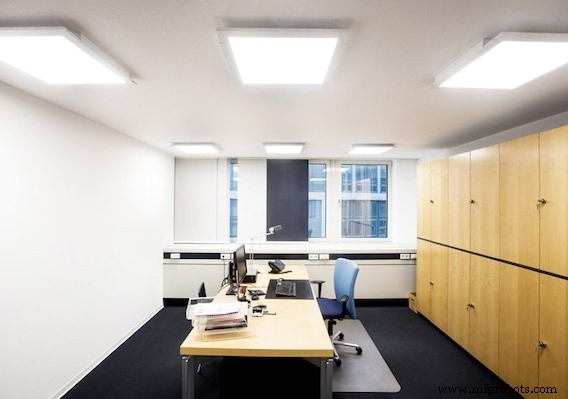
The future of interior lighting hinges on wireless control, delivering the right amount of light to occupants at the right moment. In smart buildings, natural daylight is maximized for energy efficiency, while LED fixtures automatically compensate when clouds roll in.
LEDs and Lighting Intelligence
While the switch to LED has accelerated outdoors, indoor adoption lags due to the entrenched presence of fluorescent tubes. Fluorescent technology—particularly T8 and T5 tubes—remains cost‑effective and energy‑efficient, often making LED replacements less attractive for commercial spaces. Nonetheless, LEDs offer unparalleled flexibility: each bulb is essentially a micro‑controlled chip, enabling individually addressed lighting that was unimaginable with legacy fixtures.
Upgrading during routine bulb replacement presents the optimal moment to introduce LED and IoT features, as most commercial lights remain in place until they fail.
Indoor Use Cases
- Ambiance: Philips Hue, for example, adjusts intensity and color temperature to complement TV content or work tasks.
- Simplicity: Sensors learn daily schedules, turning lights on or off automatically, much like a Nest thermostat adapts to temperature preferences.
- Color Temperature: Users can select blue‑rich or warm‑yellow light tones tailored to comfort or productivity.
- Energy Savings: Motion‑activated lighting in stairwells and corridors reduces consumption, a common practice in Europe but still rare in the U.S.
Ultimately, interior smart lighting will adapt in real time to individual habits and preferences, creating environments that feel both responsive and effortless.
Indoor Smart Lighting Networks
- ZigBee – widely adopted for home and office applications.
- 6LoWPAN – early adopters include connected lightbulbs, offering low‑power mesh capabilities.
- Wi‑Fi – feasible where a robust wireless network already exists.
Outdoor Smart Lighting
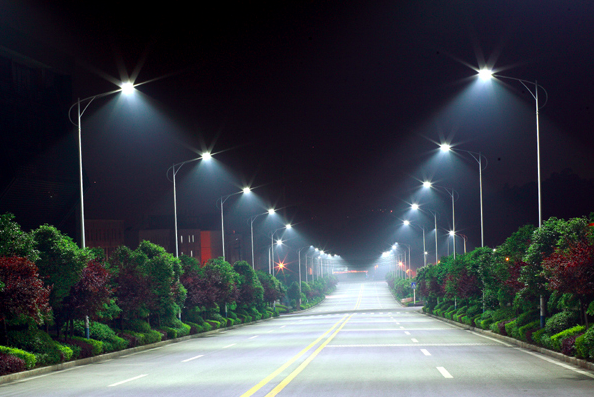
Streetlights, floodlights, campus lighting, and parking lot fixtures form the backbone of urban illumination. Their ubiquity, stability, and continuous power supply make them ideal candidates for low‑power wide‑area networks (LPWAN).
Why Streetlights Are Naturally Smart
- Height enhances range: a 5‑meter sensor atop a 60‑meter base station can communicate over 18 km, compared to 8 km from a 1‑meter sensor.
- LED conversions lower retrofit costs, allowing municipalities to add sophisticated controls without replacing entire luminaires.
- Constant power enables additional IoT functions—such as parking sensors, water meters, or Wi‑Fi hotspots—turning the pole into a multi‑purpose gateway.
Outdoor Use Cases
- Guiding emergency vehicles with dynamic lighting patterns.
- Energy‑efficient on‑off cycling when spaces are unoccupied.
- Audio detection to triangulate gunshots for faster law‑enforcement response.
- Integration with stoplight cameras and crime‑detector cameras.
- Providing on‑site Wi‑Fi coverage.
Smart streetlamps act as foundational nodes for a broader smart‑city ecosystem, enabling applications that rely on long‑range connectivity.
Outdoor Smart Lighting Networks
- Cellular – viable because power is not a constraint.
- Z‑Wave, ZigBee, and other 802.15.4 mesh networks – useful but can suffer from latency.
- Star‑topology LPWANs (e.g., Symphony Link) – offer lower cost and higher reliability than cellular or mesh.
Lighting the Path Forward
Indoor systems will continue to prioritize occupant comfort through intelligent control, while outdoor lighting stands poised to become the invisible infrastructure of future smart cities. By harnessing LEDs and IoT, these lights will provide seamless connectivity, energy savings, and critical public safety functions.
Internet of Things Technology
- Smart Lighting: The Cornerstone of a Truly Connected City
- MicroAI Launchpad: Rapid Edge AI Development & Deployment
- Maximize Recurring Revenue with Smart Consumables: A Game‑Changer for Machine Builders
- Revolutionizing IT Support with Smart Lockers: Faster, Smarter, 24/7
- Maximize ROI on Your IoT Investments: A Practical Guide
- Secure Your Smart Devices: Best Practices for IoT Safety
- Smart Procurement: Merging AI with Human Insight
- Smart Door Access System with Facial Recognition Unlocking
- GE Digital Drives Manufacturing Transformation with Smart MES
- Optimizing Mining Operations Through Smart Technology