



Leveraging Embedded AI to Convert Big Data into Actionable Smart Insights
Industry 4.0 is generating unprecedented volumes of complex sensor data—commonly referred to as big data. With thousands of sensors and ever‑expanding data streams, the digital representation of machines, systems, and processes is becoming increasingly granular. This granularity unlocks new value across the entire value chain, yet extracting that value remains a significant challenge. The key lies in transforming raw, voluminous data into high‑quality, actionable information—smart data—that drives tangible economic benefits.
Challenges
The conventional approach of collecting every data point, storing it in the cloud, and then retrospectively analyzing it is inefficient and often ineffective. Unstructured data accumulation leads to underutilized insights and complicates future solutions. A more strategic approach begins at the source: identify which information is truly relevant to the application and determine where in the data flow it should be extracted. In effect, this means filtering and refining big data into smart data throughout the processing chain. Decisions about the most promising AI algorithms for each step should be made at the application level, considering available data, sensor modalities, and knowledge of the underlying physical processes.
AI Algorithms
AI‑driven data processing automates the analysis of complex sensor streams, extracting the desired information and generating value in real time.
Two broad families of AI models exist:
- Model‑based methods rely on explicit mathematical relationships between inputs and outputs. They integrate sensor data with physical background knowledge, yielding highly accurate results. The Kalman filter is the most widely known example.
- Data‑driven methods learn directly from the data when no suitable mathematical model is available. The spectrum includes linear regression, neural networks, random forests, and hidden Markov models.
Choosing the right approach depends on the depth of domain knowledge. When expert insight is abundant, simpler algorithms suffice. When knowledge is scarce, more sophisticated, data‑centric models become necessary. The application itself often dictates the hardware constraints that shape the feasible AI algorithms.
Embedded, Edge, and Cloud Implementation
The end‑to‑end data processing chain must be orchestrated to maximize value. Implementation typically spans from resource‑constrained sensors to powerful cloud servers. Deploying algorithms close to the sensor—on the edge—offers several advantages: early data compression, reduced communication and storage costs, and simplified higher‑level algorithms. Streaming analytics techniques can further eliminate the need to store raw data by extracting the full information content on the fly.
Executing AI at the edge (embedded AI) demands a microcontroller that unites analog/digital acquisition, real‑time processing, control, and connectivity. It must also support state‑of‑the‑art AI models. The Analog Devices ADuCM4050, built on an ARM Cortex‑M4F core, delivers a power‑efficient, integrated platform for embedded AI.
Design acceleration is facilitated by silicon manufacturers’ evaluation kits. For example, the EV‑COG‑AD4050LZ combines the ADuCM4050 with sensors, an HF transceiver, and modular shields, enabling rapid prototyping without deep expertise in multiple domains. The EV‑GEAR‑MEMS1Z shield lets engineers test MEMS accelerometers such as the ADXL355, known for superior vibration isolation, long‑term repeatability, and low noise in a compact form factor.
These platform and shield combinations open the door to structural health and machine‑condition monitoring based on vibration, noise, and temperature analysis. Multisensor data fusion further refines the estimation of system states, improving classification accuracy for operating and fault conditions. Smart signal processing on the platform turns big data into smart data locally, so only relevant information is forwarded to the edge or cloud.
Communication is streamlined by dedicated wireless shields. The EV‑COG‑SMARTMESH1Z, for instance, supports 6LoWPAN and 802.15.4e, delivering high reliability, low power consumption, and a self‑forming multihop mesh suitable for industrial deployments. The SmartMesh IP network is monitored by a network manager that ensures performance, security, and seamless data exchange with host applications.
For battery‑operated condition‑monitoring systems, embedded AI dramatically reduces data traffic—and therefore power consumption—by converting raw sensor streams into smart data before transmission.
Applications
AI algorithm development platforms—along with the AI models they provide—cover a wide spectrum of machine, system, structure, and process monitoring scenarios. From simple anomaly detection to complex fault diagnostics, integrated accelerometers, microphones, and temperature sensors enable monitoring of vibrations, noise, and thermal signatures across diverse industrial assets.
Embedded AI can detect process states, bearing or stator wear, control‑electronics failures, and unforeseen behavioral changes caused by electronic damage. When predictive models exist, the system can forecast impending failures locally, allowing preemptive maintenance that avoids costly downtime. In the absence of predictive models, the platform can help domain experts iteratively learn machine behavior and build comprehensive predictive models over time.
Ideally, local data analysis should autonomously determine which sensors and algorithms are most relevant for each application, enabling smart scalability. Currently, subject‑matter experts still select the optimal algorithm, though embedded AI can scale with minimal effort across various machine‑condition‑monitoring use cases.
Embedded AI can also assess data quality in real time, automatically adjusting sensor settings and signal‑processing pipelines. In multisensor fusion scenarios, AI compensates for the shortcomings of individual modalities, enhancing overall reliability. Sensors deemed marginally relevant can have their data streams throttled to conserve bandwidth.
The open COG platform from Analog Devices provides a freely available SDK and numerous hardware/software example projects, accelerating prototype development and innovation. By combining multisensor data fusion (EV‑GEAR‑MEMS1Z), embedded AI (EV‑COG‑AD4050LZ), and a robust wireless mesh (SMARTMESH1Z), engineers can deploy resilient, scalable sensor networks with minimal effort.
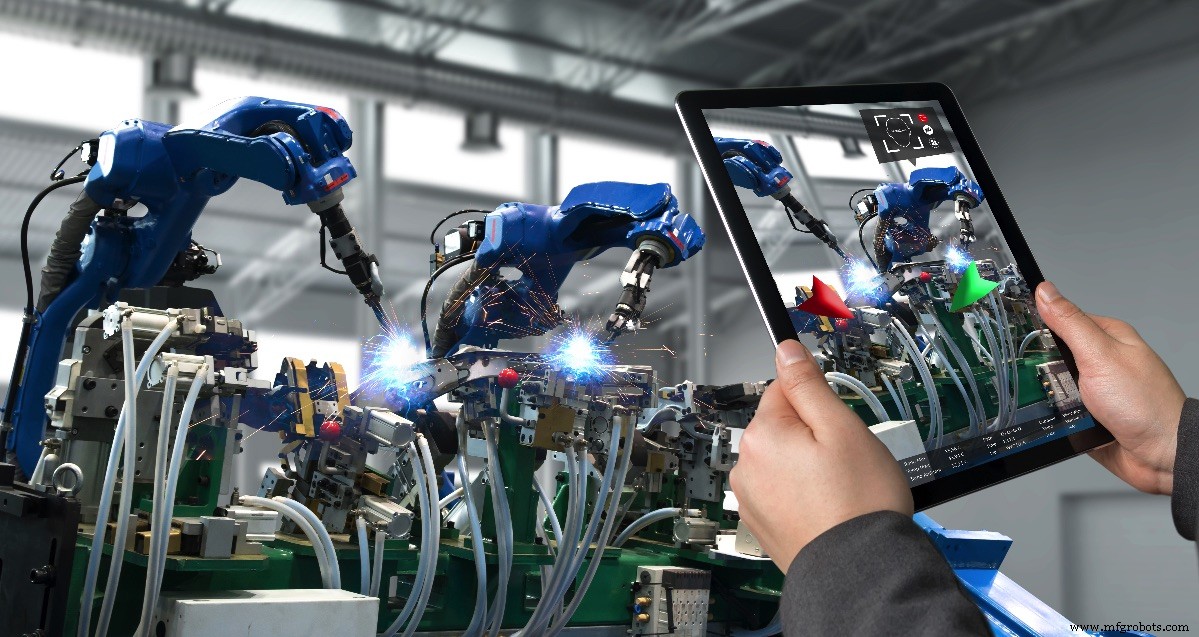
(Image source: Analog Devices, Inc.)
Embedded
- DATA MODUL Launches 23.1” Ultra‑Slim TFT Display with Smart Wi‑Fi Control
- Contrinex 2020: Cloud-Ready Sensors & Bluetooth Light Curtains for Safety
- Mastering Digital Filtering on Embedded Microcontrollers: PowerQuad’s Dual Biquad IIR Engine in the LPC55S69
- Harnessing Sound: Transforming Data Transmission Beyond Smartphones
- How Smart Cities Harness IoT, Microservices, and Dashboards for Efficient Asset Management
- How Optimal+ and Vertica Harness Big Data to Revolutionize Manufacturing
- Modernizing Legacy Plants: A Practical Guide to Building Smart Factories
- PwC Insights: Harnessing AI & Big Data to Transform Manufacturing
- From Data to Decisions: Real-Time Insights for Manufacturing
- Automated Metrology Software Powers Smart Manufacturing