



Choosing the Right IoT Connectivity: XLE vs Bluetooth Low Energy for Enterprise Asset Tracking
When selecting an IoT platform, it’s easy to assume a one‑size‑fits‑all approach. In reality, each enterprise has unique requirements that must be matched with the right connectivity solution to unlock maximum ROI.
What Are IoT Solutions?
IoT platforms connect devices, automate tasks, analyze data, and secure information flow. They enable real‑time visibility of assets, driving operational efficiency and growth.
Modern asset‑tracking systems rely on wireless links such as Ultra Wideband (UWB), Bluetooth Low Energy (BLE), and the newer Xtreme Low Energy (XLE) to transmit location data securely.
Key enterprise needs often center on long battery life and high location accuracy. Selecting the appropriate technology is critical to meeting these goals.
Connectivity Options Compared
Ultra Wideband (UWB)
UWB delivers high‑volume data transfer and exceptional precision—10–30 cm accuracy—when devices are within line of sight and readers are precisely calibrated. However, the installation complexity and cost can be prohibitive for large deployments.
Bluetooth Low Energy (BLE) vs Xtreme Low Energy (XLE)
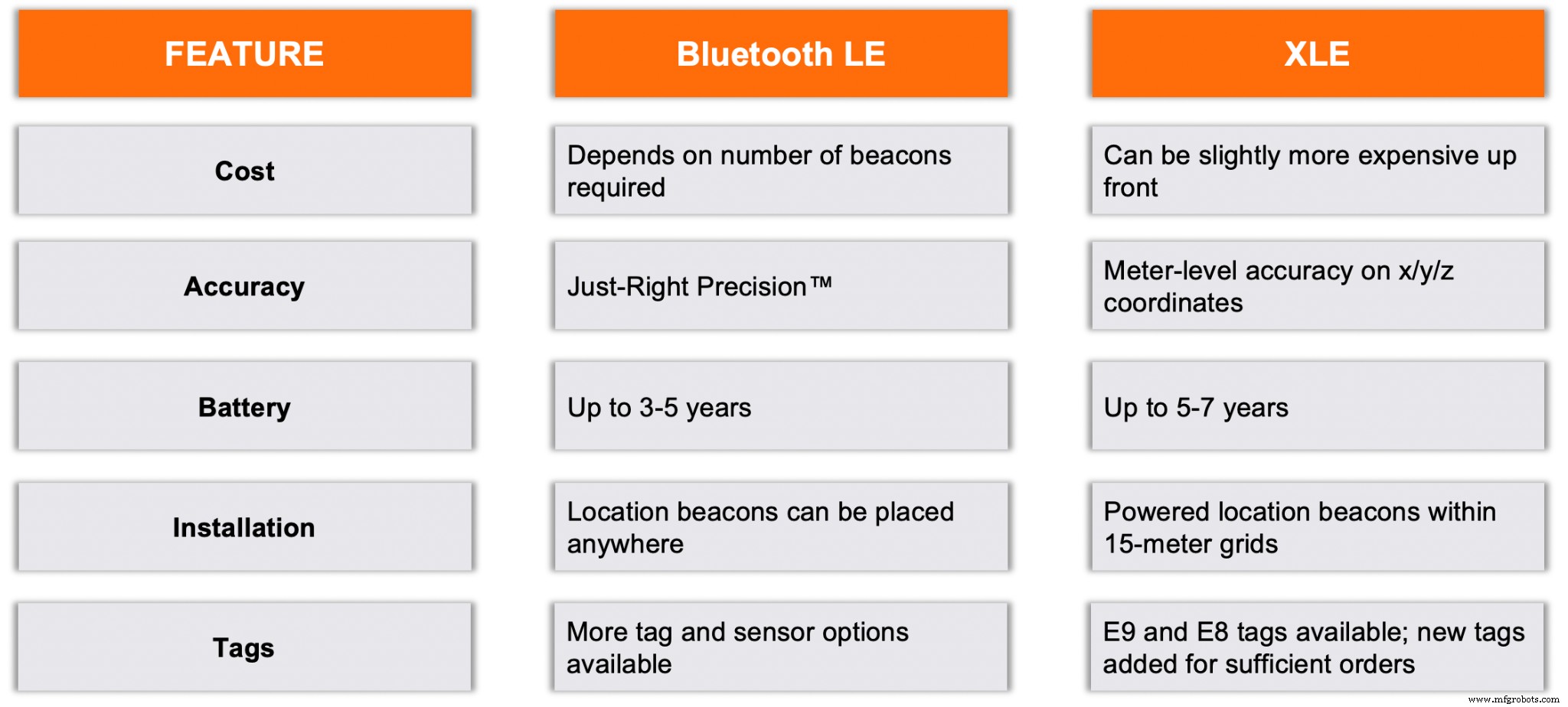
BLE has become the industry standard for low‑power asset tracking. XLE, a recent evolution of BLE, pushes battery efficiency even further, extending runtime to 7+ years on wall‑powered units.
Both technologies excel in different scenarios: BLE offers flexible placement for proximity‑based locating, while XLE provides grid‑based coverage that scales without adding hardware.
Which Connectivity Should Your Enterprise Adopt?
Consider your current situation:
- Already using BLE and looking to upgrade
- Comparing vendors for a new solution
- Seeking improved battery life or accuracy
Take ABC Company as an example: 100 shelving units in a warehouse. A BLE setup requires beacons on each unit for high accuracy, whereas an XLE grid—beacons every 15 m—covers the entire area with fewer devices.
Benefits of XLE for ABC include:
- Wall‑powered beacons eliminate battery replacement
- Battery life of 7+ years
- Enhanced accuracy across x, y, and z axes
- Scalable coverage—new shelves need no extra beacons
If these advantages align with your objectives, XLE may be the optimal choice.
Next Steps
Determine your specific use case. For meter‑level accuracy with long battery life, XLE offers compelling value. Whatever stage you’re in, Link Labs can guide you toward the best IoT solution.
Book a demo today to explore how XLE or BLE can transform your asset tracking.
Internet of Things Technology
- SuperTag: Advanced Asset Tracking & Monitoring for Modern Supply Chains
- Bluetooth LE vs. XLE: The Next Generation of Asset Tracking & Monitoring
- XLE: The Future of Bluetooth Low Energy Asset Tracking
- How Bluetooth LE Range Shapes Industrial Asset Tracking – Facts & Solutions
- AirFinder Bluetooth LE & XLE: Top IoT Solutions for Industrial Asset Tracking
- Three Key Factors for Selecting the Right Asset Tracking Solution
- Why Bluetooth Low Energy Drives Cost‑Effective Asset Tracking
- WiFi-Based Real-Time Location Tracking: Is It the Right Choice for Your Asset Management?
- How to Select the Ideal Insurance Coverage for Your Heavy Equipment
- How to Select the Ideal Compact Equipment for Your Farm