



IoT in Oil & Gas: Transforming Operations Through Connected Sensors
The oil and gas industry operates under constant pressure to reduce costs, extend asset life, and meet increasingly stringent environmental regulations. In this high‑stakes environment, connected technology is no longer optional—it’s essential for staying competitive.
For decades, companies have turned to predictive analytics and machine learning to cut downtime and improve efficiency. While many refer to these tools under the broad umbrella of the Internet of Things (IoT), a more precise definition focuses on the network of sensors, controllers, and devices that generate data or act on commands.

Advances in connectivity, lower sensor costs, and longer‑lasting batteries mean oil and gas firms can deploy more sensors across remote sites, especially in the “last mile” where traditional infrastructure was unaffordable.
In this article, we first examine how monitoring methods are evolving, then explore five real‑world use cases where low‑power wide‑area networks (LPWANs) deliver unique benefits for machine‑to‑machine (M2M) applications in the sector.
Smart Oil & Gas Monitoring Methods
Remote assets dominate the industry, and historically, companies have relied on three primary monitoring approaches:
- Programmable Logic Controllers (PLCs). These wired systems use serial standards such as RS‑232 or RS‑485. While reliable, they require costly cabling and lock teams into a fixed architecture once installed.
- Satellite Communications. Networks like Iridium and Inmarsat provide coverage to isolated sites, but the per‑message costs can be high.
- Manual Physical Monitoring. Field crews log readings by hand. Though straightforward, this method is labor‑intensive and slow, especially in hard‑to‑reach wells.
Key considerations across these solutions include:
- Cost. Wired installations can be prohibitively expensive.
- Complexity. Satellite links often require multiple gateways and coordination.
- Time. Physical checks demand significant manpower and time.
Wireless IoT solutions have emerged to address these pain points, allowing operators to add hundreds or thousands of sensors on demand without rewiring. While wireless offers flexibility, each deployment must be evaluated on a case‑by‑case basis to ensure reliability and performance.
How IoT Technology Is Shaping The Oil & Gas Industries
IoT is steadily unlocking value across the value chain by making critical data readily available for informed decision‑making. The technology enables:
- Optimized pumping schedules and operations.
- Proactive pipeline and well maintenance.
- Early detection of equipment failures and gas leaks.
- Real‑time monitoring of pipe integrity, temperature, and erosion in refineries.
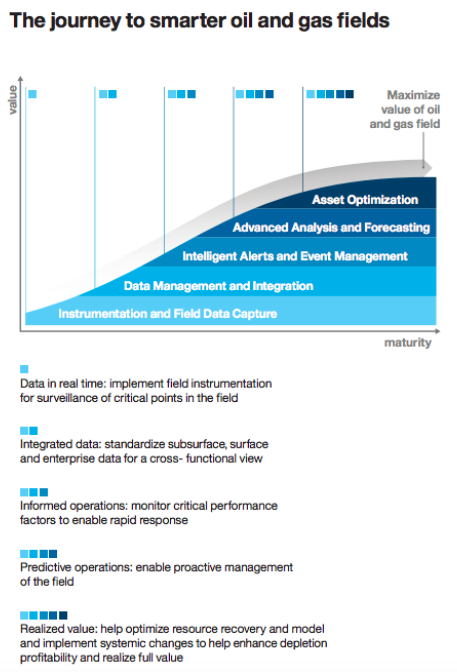
By collecting granular sensor data, companies can perform post‑production analysis, fine‑tune drilling parameters, and ultimately increase profitability.
Internet of Things: 5 Oil & Gas Use Cases
Reducing non‑productive time (NPT) is a top priority, as NPT can consume 10–20 % of drilling costs. IoT, especially LPWAN, helps operators predict failures, detect leaks, and reduce downtime.
Offshore Rig Monitoring
Offshore environments lack robust cellular or Wi‑Fi coverage, making satellite or wired solutions expensive and complex. LPWANs can connect numerous sensors—such as leak detectors and environmental monitors—across a wide area at a fraction of the cost, feeding data to a central hub that may connect via satellite or process locally.
Refinery Monitoring
Refineries often rely on manual data logging for pipe thickness, flow, and pressure. While real‑time control of valves may still require wired links, IoT sensors can increase measurement density, reduce human error, and enable higher operating capacities by providing more accurate process data.
Pipeline Monitoring
Pipelines pose significant risks from leaks and corrosion. IoT sensors deployed along the line can detect methane leaks, monitor pump and filter performance, and trigger maintenance only when performance degrades—reducing unnecessary downtime and preventing costly spills.
Wellhead Monitoring
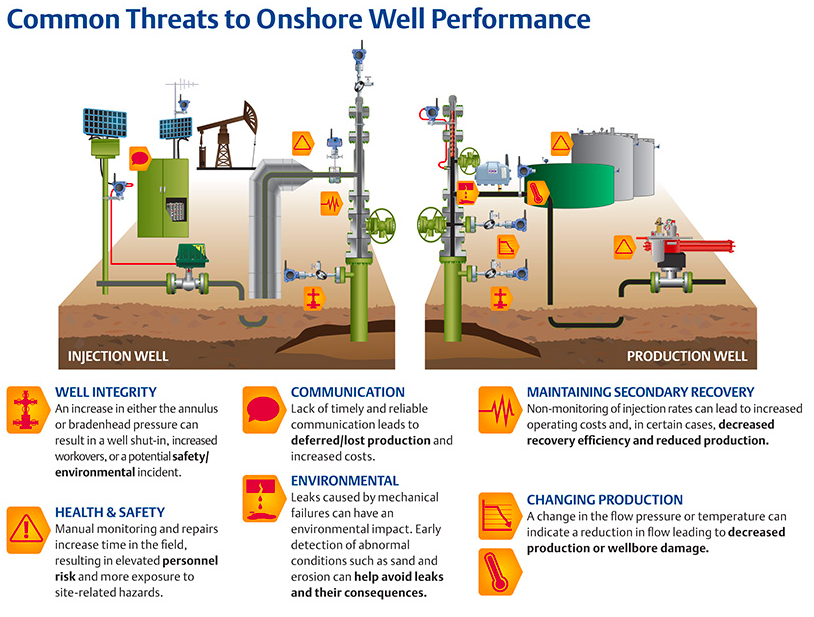
Companies like Ambyint (formerly PumpWell) and WellAware offer IoT platforms that aggregate real‑time wellhead data. By analyzing pressure, temperature, and chemical injection levels, these solutions help operators reduce operating expenses, shorten unplanned downtime, and ensure regulatory compliance.
Cargo Shipping
Oil and gas vessels rely primarily on satellite for connectivity. LPWANs can monitor non‑critical systems—such as temperatures and pressures in remote compartments—offering safety insights without the high cost of satellite backhaul.
Supply‑Chain Management
Inventory planning is challenged by volatile market conditions. Sensors can identify crude types and blends as they arrive, inform blending decisions, and support accurate inventory tracking, improving both operational efficiency and financial forecasting.
Continuous Evolution
Wireless technology is rapidly democratizing the benefits of IoT across oil and gas. While connectivity remains uneven, those who adopt LPWAN and other low‑cost, low‑power solutions can gain a competitive edge by collecting richer data and driving smarter operations.
If connectivity challenges are hindering your operations, let’s discuss how we can help you design a scalable, cost‑effective IoT solution.
Internet of Things Technology
- How IoT Is Mitigating Security Risks in the Oil & Gas Industry
- IoT in Transportation: 3 Strategic Use Cases
- Transforming Construction with IoT: Proven Innovations and Use Cases
- 7 Unexpected but Powerful IoT Applications Driving Real Business Value
- IoT Environmental Monitoring: Proven Use Cases & Why LPWAN Is the Ideal Network
- Offshore Rig Monitoring: Harnessing IoT for Safer, More Efficient Operations
- Harnessing IoT to Transform Oil & Gas Operations
- Leveraging IoT to Boost Performance in the Oil & Gas Industry
- Why IoT Is Essential for Asset Management: Top 3 Benefits
- Overcoming Challenges with IoT in the Oil & Gas Industry