



How IoT Drives Value in Industrial Automation for Oil & Gas
The Internet of Things (IoT) is reshaping industrial automation as companies across sectors adopt connected architectures that unlock real‑time insight and predictive capability.
Rockwell Automation—renowned for its industrial control systems—recently showcased how cloud‑connected sensor networks can gather, fuse, and orchestrate data from remote equipment, enabling instant decision‑making, predictive analytics, and preventive maintenance throughout the fuel value chain.
In a joint effort with Microsoft, the Milwaukee‑based company rolled out IoT solutions at three different fuel‑industry partners, ensuring that pumps, holding tanks, meters, monitors, and hoses around the globe stay online as oil moves from mining to refining to sales.
In Extraction
Hilcorp Energy, headquartered in Houston, Texas, operates electric pumps on its Alaskan offshore platforms that use variable‑speed drives. To prevent costly pump failures, the drives are cloud‑connected and monitored continuously from a command center in Cleveland, Ohio. Engineers receive real‑time dashboards populated with pressure, temperature, flow, and other key metrics, allowing them to confirm proper operation and react instantly to anomalies.
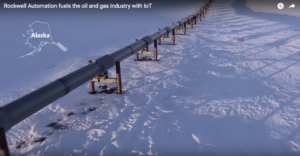
“The last time we had an offline well trip, we received a phone call within five minutes detailing what broke, what to inspect, and how to test it,” says Hilcorp’s facilities engineer Mark McKinley. “That saved us more than six hours of troubleshooting and got the well back online quickly.”
In Transportation
Once extracted, crude oil travels to refineries through an extensive network of ships, barges, pipelines, trains, and trucks. Each transfer point is equipped with sensors that feed data to the cloud, enhancing remote maintenance, product monitoring, inventory tracking, and electronic invoicing. Trigg Technologies, based in Pampa, Texas, upgraded its remote units with these sensors.
“Automating transactions across thousands of machines and miles is transformative,” says Doug Weber, Rockwell Automation’s business manager of remote application monitoring. “All parties now have instant electronic records, real accountability, immediate maintenance alerts, and deeper insight into every transfer.”
With Energy Consumers
A major oil company has launched an IoT initiative to cloud‑enable liquid natural gas sales at fueling stations. Gateway appliances at each station capture pump data and upload it to a cloud platform that monitors consumption rates and inventory levels. In the long term, the project aims to inform design improvements for pumping stations and associated equipment.
How can other industries launch an IoT solution?
The petroleum sector has long been an early adopter of IoT because the technology delivers efficiency and performance gains that are especially valuable for high‑value, remote assets, notes IoT Analytics, a market‑intelligence firm based in Hamburg, Germany.
The breadth and interconnectivity of the fuel industry underscore the need for interoperable, secure IoT systems. Only then can the full value of IoT be realized.
In a recently released white paper, IoT Analytics offers a roadmap of decision points that can guide other industries. Its 31‑page Guide to IoT Solution Development, developed in partnership with Microsoft, presents research that demonstrates the importance of navigating the complex challenges of IoT implementation.
Ensuring Interoperability
Interoperability—defined as the ability of disparate IT systems to exchange and use data—depends on communication protocols and standardization. It is essential for building resilient solutions, whether a company develops its own IoT stack or selects a vendor.
When evaluating a solution’s interoperability, assess the physical layer (how bits traverse the medium), the network layer (how data packets move securely from device to cloud), and the application layer (how data is consumed by business apps).
IoT Analytics advocates building on a standardized ecosystem, illustrating how industry‑wide specifications “ensure that devices can securely and seamlessly interact, regardless of underlying hardware, OS, chipset, or transport protocol.”
Further guidance may emerge. The white paper highlights the Open Connectivity Foundation—a consortium of technology leaders working toward global standardization that could streamline the current patchwork of specifications.
Securing the System
The guide places strong emphasis on security—critical for all sectors. It recommends mapping the entire attack surface and implementing best practices across all layers, from device to cloud. Combining hardware and software safeguards across the chain yields a more seamless security posture, the research notes.
Potential threats include:
- Spoofing identity (adopting another’s credentials to access the system)
- Tampering (replacing legitimate software with malware)
- Repudiation (altering audit trails to hide malicious activity)
- Information disclosure (exposing sensitive data to unauthorized parties)
- Denial of service (overloading devices with traffic to incapacitate them)
- Elevation of privilege (forcing a device to perform actions beyond its authorized scope)
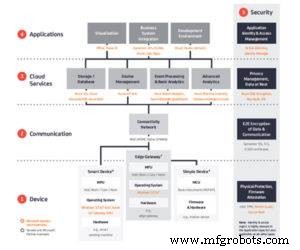
Security is one of five “layers” IoT Analytics recommends in its structured approach to development, alongside the device, communication, cloud services, and application layers.
Download the 31‑page Guide to IoT Solution Development for free on the IoT Analytics website to deepen your understanding.
This article was prepared in collaboration with our partner IoT Analytics.
Internet of Things Technology
- How IoT Is Mitigating Security Risks in the Oil & Gas Industry
- How IoT-Enabled Smart Alerts Transform Electric Motor Reliability
- Higher Standards: Automated Drones Revolutionize Oil & Gas Inspections
- Harnessing IoT to Transform Oil & Gas Operations
- IoT-Driven Downtime Monitoring for Industrial Packaging Lines
- 7 Proven IoT Benefits for Oil & Gas Inventory Management
- Asset Monitoring: Driving Efficiency in the Oil & Gas Sector
- Leveraging Industrial IoT for Oil & Gas Fleet Monitoring: Boost Efficiency and Cut Downtime
- How IoT & Industrial Automation are Powering Manufacturing Innovation
- Industrial Automation: The Key to Future-Ready Businesses