



Connext DDS in Industrial IoT: 5 Key Insights for Reliability, Security, and Scalability

Since its 2004 debut, the Data Distribution Service (DDS) standard has been the go‑to connectivity framework for aerospace and defense, proving itself in large, mission‑critical environments. Today, its high‑performance, data‑centric design is positioning DDS as the premier technology for the Industrial Internet of Things (IIoT). Despite its proven track record, the relatively new IIoT market still harbors misconceptions about DDS. Below are the five most important facts you need to know about DDS and RTI’s Connext DDS implementation in industrial settings.
1. DDS is Distinct from Other IoT Protocols
Unlike MQTT, AMQP, or CoAP, DDS was engineered from the ground up to meet the stringent demands of real‑time control systems. It addresses platform constraints, ultra‑low latency, high‑throughput reliable delivery to many recipients, dynamic application start‑up, and eliminates single points of failure. DDS’s data‑centric architecture focuses on “data in motion,” allowing precise, efficient filtering at the network layer rather than in application code. Its rich Quality of Service (QoS) settings enable reliable, real‑time delivery even over unreliable transports, making it ideal for edge‑autonomous scenarios that demand low latency, high reliability, and massive scalability.
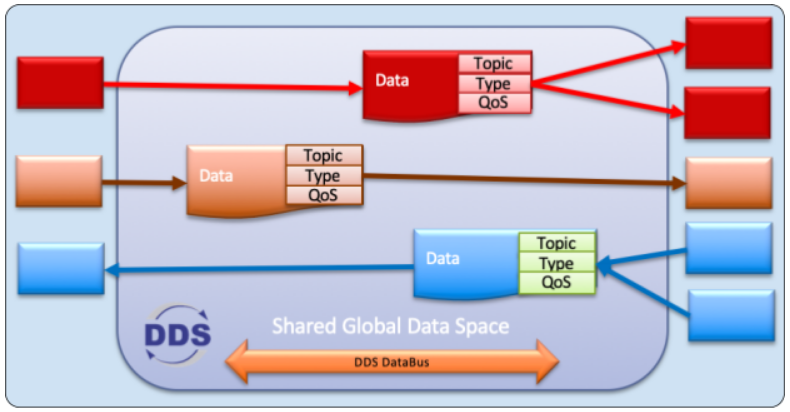
Figure 1: DDS operates on a data‑centric framework for efficient data sharing.
2. DDS Powers Critical Infrastructure Worldwide
Beyond aerospace, DDS now supports a broad spectrum of high‑stakes applications: healthcare monitoring, surgical robots, autonomous vehicles, hyperloop systems, wind‑farm controls, air traffic, mass transit, medical imaging, space launch, power generation, mining, oil & gas, robotics, and smart‑grid distribution. The data‑centric model and flexible QoS policies allow each domain to tailor communication to its unique requirements.
- Healthcare patient monitoring
- Surgical robots
- Autonomous vehicles
- Hyperloop Transportation
- Wind‑power generation systems
- Air traffic control
- Mass transit systems
- Medical imaging
- Space launch systems
- Power‑plant energy generation
- Mining operations
- Oil & gas drilling
- Robotics
- Smart‑grid power distribution
3. Connext DDS Delivers Enterprise‑Grade Security
The OMG DDS Security specification, released two years ago, defines a wire‑level protocol (RTPS) that secures data at the topic level. RTI’s Connext DDS is the first industrial‑grade software designed to architect and protect IIoT systems end‑to‑end. Developers can configure fine‑grained authentication, authorization, confidentiality, and integrity for each topic via external configuration files—no in‑source security code required. This decouples application logic from security concerns, letting programmers focus on functionality while security teams enforce policy without deep coding expertise. The security framework is future‑proof, built on a plugin architecture that can adopt the latest cryptographic and access‑control mechanisms as they emerge.
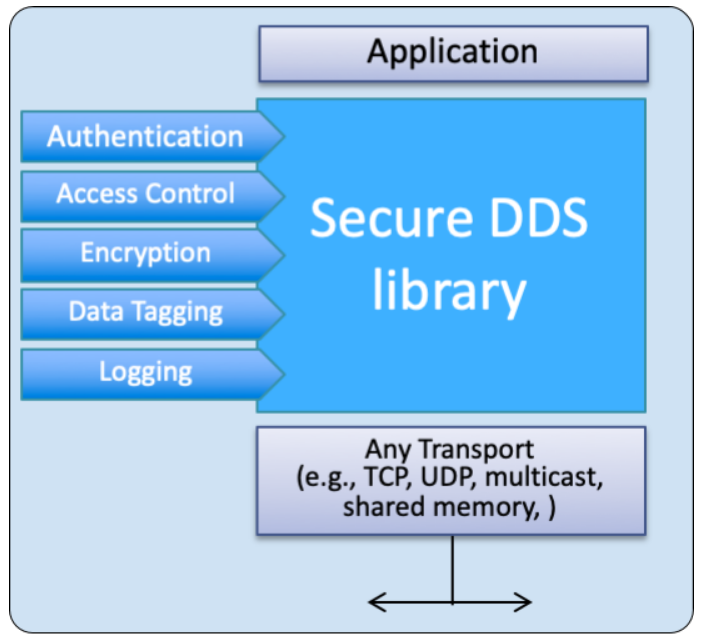
Figure 2: The DDS security framework protects discovery, metadata, and data from tampering and replay.
4. Connext DDS Supports a Wide Range of IoT Communication Patterns
Connext DDS offers around 23 high‑level QoS policies, each with multiple settings. While a typical application may need only five or six policies—depending on whether it handles alarms, events, or streaming video—RTI’s implementation provides additional, unique QoS features such as Batching, Multi‑Channel, and Flow Control. These capabilities directly address common distributed‑system challenges, including high throughput, low latency, fault tolerance, and scalability.
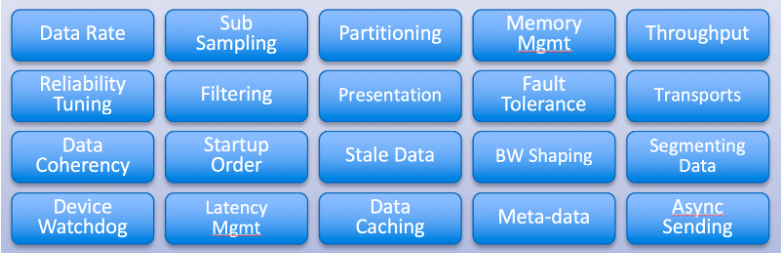
Figure 3: Common distributed system problems that Connext DDS QoS policies solve.
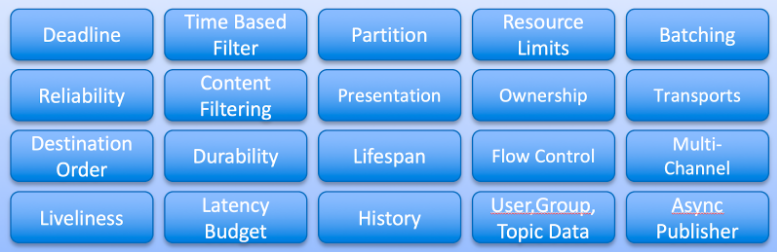
Figure 4: Overview of Connext DDS QoS policies and their impact.
Publicly available resources—including RTI’s Case + Code examples—enable developers to adapt sample configurations to their specific use cases quickly. For detailed guidance, visit the Getting Started page.
5. Connext DDS Is Built for Evolving Applications
The data‑centric model means applications evolve by defining and sharing strongly typed data topics. To accommodate future changes, the OMG introduced Extensible and Dynamic Topic Types (X‑Types). X‑Types allow developers to add, modify, or remove fields without breaking compatibility, and to mark fields as optional. Connext DDS’s support for type extensibility ensures older applications can coexist with newer ones that use updated data structures, preserving interoperability across generations.
Curious about how Connext DDS can address your real‑time communication challenges? Reach out to us or visit www.rti.com for more information.
Internet of Things Technology
- MQTT vs. DDS: Choosing the Right M2M Protocol for IoT
- Clearing the Confusion: Navigating Standards in the Industrial IoT Revolution
- Web‑Enabled DDS: Bridging IoT, Cloud, and Real‑Time Connectivity
- How IoT Data Management Drives Innovation: 4 Key Benefits
- How IoT is Driving the Next Generation of Manufacturing
- How Industrial IoT Sensors Drive Modern Factory Efficiency
- Top 3 Challenges in Preparing IoT Data for Industrial Success
- IoT: Mastering the Data Surge for Business Transformation
- Industrial IoT & Smart Pneumatics: Accelerating Predictive Maintenance in Manufacturing
- Harnessing Industrial IoT for Growth: Beyond Cost Savings