



Energy‑Saving Components Drive Industrial Efficiency
While IIoT and Industry 4.0 have traditionally focused on sensors, switches, data analytics and connectivity, the next wave of digital manufacturing is powered by energy efficiency.
Industrial plants are among the largest electricity users, and reliable power underpins every advanced process. According to the International Energy Agency, the sector consumed 41.6 % of global electricity in 2016.
Effective power management keeps industrial robots running with minimal downtime—where every millisecond counts. Beyond reliability, efficiency improvements can unlock significant resource savings.
Multiple strategies can boost energy performance, including:
- Scheduling production to align with renewable‑energy peaks.
- Optimizing robot operating speed instead of simply accelerating programs, potentially raising savings by up to 30 %.
- Using 3D printing to cut material waste.
- Adopting preventive maintenance to reduce energy spent on repairs.
- Retro‑fitting smart meters and remote controllers where feasible.
- Implementing a fully automated, “lights‑out” environment that lowers energy use on the floor and in facility systems.
- Choosing low‑power components throughout.
It is the combination of these measures—not a single tactic—that delivers real results.
Energy‑Saving Components
Several new products now offer substantial power reductions. Highlights include:
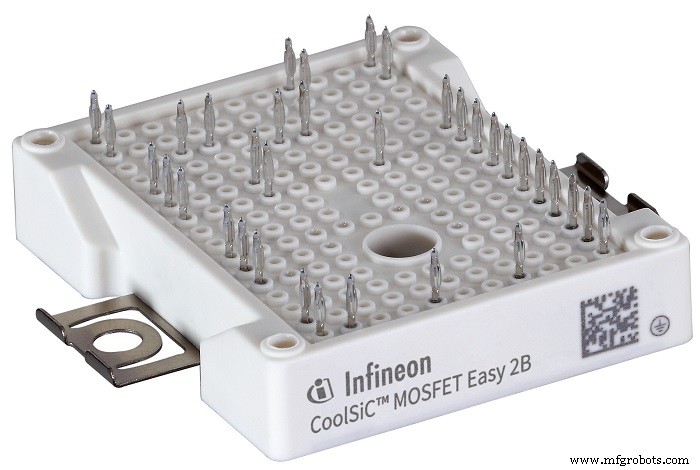
Infineon Technologies – EasyPACK 2B Hybrid SiC Power Module
Infineon’s EasyPACK 2B, part of the 1200‑V family, blends silicon‑carbide (SiC) with IGBT technology to achieve over 99 % system efficiency. With a switching frequency up to 48 kHz, it delivers higher power density and a smaller heat‑sink footprint thanks to lower SiC losses.
The hybrid EasyPACK 2B module offers higher power density and 48 kHz switching. (Image: Infineon Technologies AG)
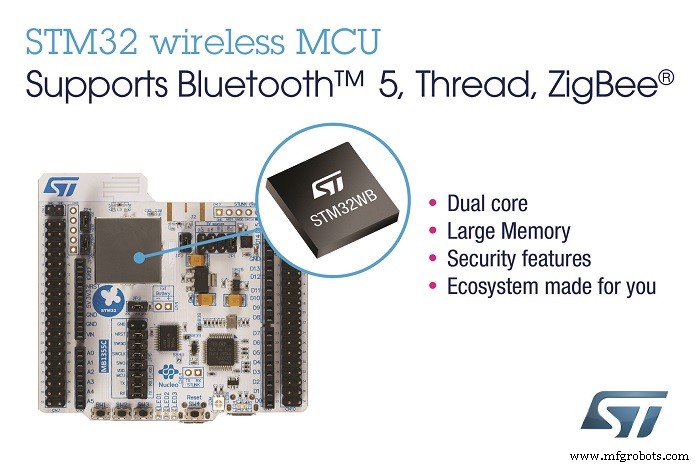
STMicroelectronics – STM32WBx5 & STM32G4 Microcontrollers
STM32WBx5 combines dual‑core processing with Bluetooth 5, OpenThread, and ZigBee 3.0 connectivity. Its 13‑nA shutdown mode, adaptive voltage scaling, and real‑time ART accelerator deliver ultra‑low power for sensors, wearables, drones, and IoT devices.
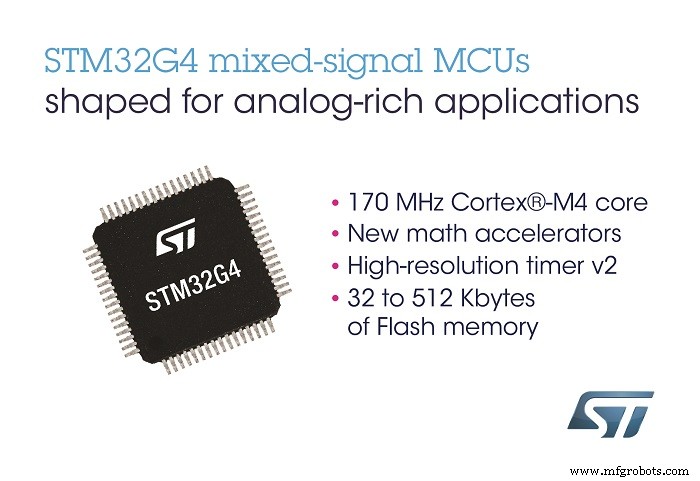
STM32G4 adds two hardware mathematical accelerators that speed CORDIC‑based calculations, enhancing motor control and signal filtering while reducing energy use in smart factory and energy‑management applications.
STMicro’s STM32WBx5 MCUs deliver ultra‑low‑power performance with integrated connectivity. (Image: STMicroelectronics)
STM32G4 accelerators improve performance and energy efficiency. (Image: STMicroelectronics)
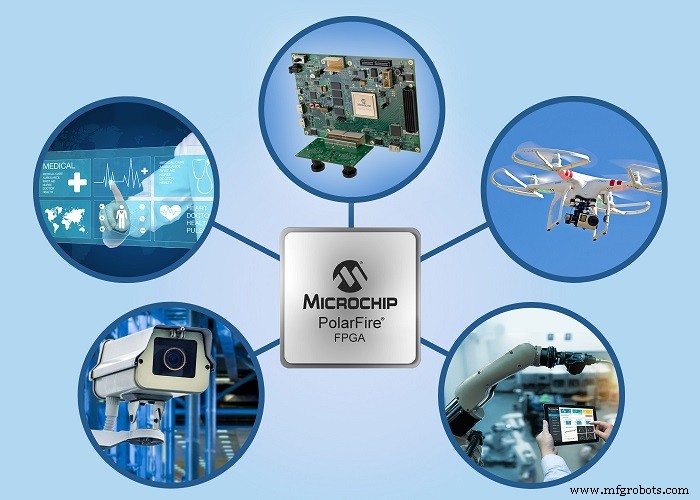
Microchip Technology – Smart Embedded Vision & PolarFire FPGAs
Microchip’s Smart Embedded Vision initiative delivers FPGA‑centric IP and tools for low‑power, small‑form‑factor machine‑vision designs. The PolarFire family offers 30 %–50 % lower power than SRAM‑based FPGAs and 5×–10× lower static consumption, ideal for edge compute and thermally constrained environments.
Microchip’s Smart Embedded Vision provides low‑power machine‑vision IP. (Image: Microchip Technology Inc.)
Renesas Electronics – RX72M Microcontroller
The RX72M family brings an integrated EtherCAT slave controller, 1 MB SRAM, and 4 MB flash—making it the first RX microcontroller with such capacity. Designed for compact industrial robots, PLCs, remote I/O, and gateways, it cuts board area by roughly 50 % compared with earlier models.
The RX72M devices reduce circuit board area by about 50 %. (Image: Renesas Electronics Corp.)

Eta Compute – TENSAI Machine‑Learning SoC
TENSAI delivers image classification, keyword spotting, and wake‑up detection in ultra‑low‑power mode. Its delay‑insensitive logic allows operation at the lowest supply voltage, and a single image classification consumes just 0.4 mJ—30× less than competing solutions.
Summary
Industrial automation will grow as IoT replaces legacy systems. Advanced robotics, AI, cloud analytics, and sensor networks—powered by vibration‑harvested or light‑harvesting supplies—will reshape manufacturing. While initial capital for Industry 4.0 is high, the energy‑efficient systems that replace older components will deliver long‑term cost savings.
>> This article was originally published on our sister site, Electronic Products: “Achieving energy efficiency on the factory floor.”
Internet of Things Technology
- IIC Launches Smart‑Grid Testbed to Accelerate Green Energy Adoption
- Amplifiers: Harnessing Active Devices to Boost Power
- The Emerging Role of IoT in the Energy Sector: Key Use Cases and Benefits
- Startups Pioneer Battery‑Free IoT with Energy Harvesting
- ABB’s Medium‑Voltage Drives Cut Pump Energy Use by 25% at German Coal Plant
- On-Site Energy Solutions for a Carbon-Free Future
- 5G Operators Prioritize Energy Efficiency for Sustainable Connectivity
- Leveraging IoT for Efficient Industrial Energy Monitoring
- Key Pillars of a Robust Industrial IoT Ecosystem
- Harnessing Hydroelectric Power: A Comprehensive Guide