



How Machine Vision Is Shaping Tomorrow’s Smart Factories
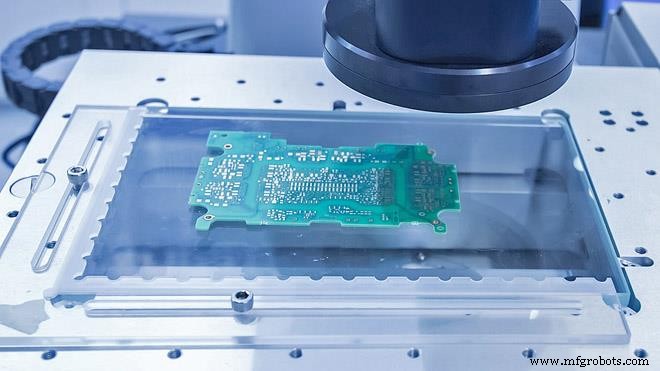 Machine vision is an image‑processing technology that automatically scans objects within a defined field of view. In manufacturing, it is being deployed to accelerate process improvement, enable intelligent robot navigation, and provide real‑time control of production lines.
The technology allows robots to “see” their surroundings, interpret visual cues, and make autonomous decisions that go beyond pre‑programmed instructions.
Drawing Conclusions
Unlike the human eye, cameras rely on pattern‑recognition algorithms to analyse data and infer conclusions based on prior knowledge. This capability is invaluable for inspecting raw materials and finished goods for defects or flaws. If a defect is detected, the part can be re‑directed or the process adjusted automatically.
Beyond defect detection, machine vision supports traceability by reading identification tags. Cameras capture tag data, which can be used to route products or log their position in the supply chain.
Smart cameras and sensors digitise captured information, decode it, and eliminate the need for manual interpretation. The system then decides whether the data should be sent to a central control system. These low‑cost, plug‑and‑play solutions are ideal for manufacturers seeking to automate and optimise production.
Smarter Factories
Machine vision is the linchpin of the smart‑factory vision—a self‑organising network that exchanges information intelligently. Acting as the factory’s eyes, image‑processing units replace manual testing, reduce human error, and give robots the flexibility to react to real‑time data.
Because image‑processing equipment continuously captures, aggregates, and shares data, it is essential for interconnected production processes. The resulting information can be transmitted up the value chain or trigger autonomous actions.
As noted by the International Vision Systems Association (IVSA) in its IVSA 2023 report, machine‑vision adoption grew 25% year over year, underscoring its strategic importance.
The technology can also monitor the condition of production machinery, identifying wear and tear before it leads to downtime. Predictive maintenance alerts plant managers to order replacement parts ahead of failure.
As machine‑vision systems shrink, accelerate, and sharpen in accuracy and resolution, their adoption is set to accelerate in the coming years, illuminating the path to the factory of the future.
About the Author
Jonathan Wilkins, Marketing Director at EU Automation, an industrial parts supplier.
Internet of Things Technology
- How 5G is Transforming Smart Factories into High‑Performance Powerhouses
- Will 5G Deliver on the 2020 Vision? Insights from the National Physical Laboratory
- Augmented Reality’s Transformative Effect on Real Estate: What to Expect
- Revolutionizing Public Restrooms: IoT Fixtures and Wireless Power for Cleaner, Smarter Spaces
- eSIMs Revolutionizing IoT: Faster, Safer, and Smarter Connectivity
- Future Factories: Revolutionizing Industry, Supply Chains, and Global Impact
- Tech Mahindra Pioneers the Factory of the Future with IoT, Blockchain, and AI
- Future Trends and Growth Strategies for the Mold Making Industry
- The Future of Prototyping: What Engineers and Designers Will See
- Factory of the Future: Mastering Industry 4.0 and Smart Manufacturing