



Internet of Packaging: Driving a Revolution in the Global Packaging Industry
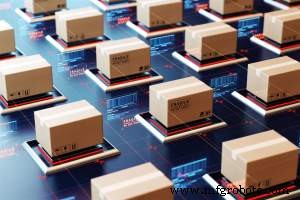
IoT is now the go‑to phrase for businesses worldwide, as it promises connectivity from smartwatches to home locks. With 20‑50 billion internet‑enabled devices already in circulation, the ecosystem is expanding rapidly, observes Abizer Shaikhmahmud, content writer and editor at Future Market Insights.
The packaging sector is embracing this shift through the Internet of Packaging (IoP), which equips products with a unique digital identity. This enables brands to track, gather, and disseminate product data throughout the supply chain, deepening customer insight.
Simply put, IoP consists of a worldwide network of machine‑readable packaging that exchanges information in real time with scanners and mobile devices. This article examines the key technologies poised to shape the future of global packaging.
How Lucrative Is the Internet of Packaging? Insights from FMI’s Special Talk Show
IoP is built on smart, connected, and intelligent packaging. In a recent talk show, Future Market Insights (FMI), an ESOMAR‑certified research firm, highlighted that the intelligent packaging market is projected to reach US$19.7 billion (€17.51 billion) by the end of 2021. By 2030, an estimated 35% of pouches, bags and boxes will incorporate intelligence, and roughly US$20 (€17.77) per US$1,000 (€888.65) spent will be allocated to intelligent packaging. These figures underscore the substantial growth potential of IoP.
Early‑stage solutions include holograms, sensor‑enabled labels, and AI‑driven analytics, mainly adopted by personal care and consumer goods sectors. More mature technologies—3D printing, temperature‑controlled packaging, AR/VR, RFID, QR codes, and absorbers/scavengers—are already driving innovation across automotive, machinery, logistics, healthcare, pharmaceuticals, and food & beverage industries. Projected adoption rates suggest AI and machine learning will represent 37% of market uptake, while AR/VR, nanotechnology, 3D printing, and chemical synthetics will together account for 63% over the next decade.
Key growth areas include bolstering cold‑chain visibility to curb spoilage of perishables, and deploying automated data capture to reinforce food‑safety compliance, streamline logistics, and enhance customer experience. Shrinkage prevention is another high‑yield opportunity, as approximately 40% of food is lost from field to fork. For deeper insights, download our Packaging eBook outlining trends that will drive the industry over the next decade.
How has Internet of Packaging benefitted key industrial sectors?
- NXP & LivingPackets launch THE BOX intelligent shipping platform
Since February 2021, NXP and LivingPackets unveiled THE BOX, an intelligent shipping parcel that redefines smart packaging through durable, connected, and sustainable design. Powered by NXP’s iMX RT1062 crossover microcontroller and NFC front‑end CLRC663 Plus, the platform delivers traceability and convenience for e‑commerce operations.
THE BOX’s design eliminates waste from packing materials, replaces physical labels with electronic displays, and allows dynamic address updates—significantly reducing the carbon footprint of logistics. The unit is fully recyclable, infinitely reusable, and features a rechargeable battery that can be reconditioned after 1,000 trips.
- Vestapack’s connected packaging tackles plastic waste
Vestapack leverages IoT to bring logistics intelligence into the home. Its biodegradable containers are equipped with alarms that trigger when contents fall below a threshold, and a mobile app tracks usage patterns and package transit, aiming to cut plastic waste by 2023. With over 8 million tons of plastic entering oceans annually, this initiative marks a significant step toward sustainability.
- Thaddeus Medical iQ‑ler advances pharmaceutical and healthcare logistics
Temperature abuse costs the pharmaceutical industry an estimated US$35 billion (€31.10 billion) per year. Thaddeus’s Medical iQ‑ler—a patented hardware‑software solution—ensures safe transport of temperature‑sensitive products, including COVID‑19 mRNA vaccines. The device offers real‑time GPS and cellular tracking, environmental sensors, and a Bluetooth smart padlock, while a cloud platform centralizes data for transparency and analytics.
The Future of Internet of Packaging: Emerging Trends and Opportunities
The potential of IoP is vast. Multi‑functionality is becoming a buzzword, as manufacturers use smart packaging to counter counterfeit products and secure supply chains. Brands are also turning to intelligent packaging to deepen customer engagement, creating dynamic touchpoints that deliver personalized product information and marketing.

Transparency is now a cornerstone of the packaging world. Efforts are underway to disclose accurate material information and to embrace circular economy principles. When packaging can communicate with storage solutions—such as intelligent cold storage—the Internet of Packaging will truly revolutionize the industry.
Abizer Shaikhmahmud, content writer & editor at Future Market Insights.
About the author
Abizer Shaikhmahmud is a content writer & editor at Future Market Insights, an ESOMAR‑certified market research and consulting firm. He writes extensively on evolving trends in packaging and related industries. Connect with Abizer on LinkedIn.
Internet of Things Technology
- Industry 4.0: The Real Revolution Lies in Business Models
- How IIoT Transforms Packaging Machine OEMs: Boost Efficiency, Reduce Downtime, Unlock New Revenue
- The Internet of Boxes: How Smart Packaging Is Revolutionizing Business
- Transforming Hospitality: How IoT Drives Guest Experience and Operational Excellence
- Top 4 Packaging Industry Trends Shaping the Philippines
- Industry 5.0: Redefining Manufacturing for the Future
- Industry 4.0: Harnessing Automation to Transform Manufacturing
- The Packaging Industry: Definition, Scope, and Economic Impact
- Understanding the Fourth Industrial Revolution: Transforming Modern Manufacturing
- Robotic Automation: Boosting Efficiency and Hygiene in Pharma