



AI Will Transform Work—Only If We Adapt
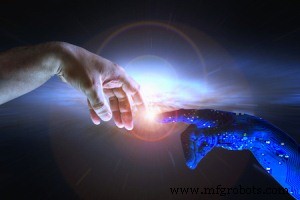
Technological evolution has always dictated the rhythm of our work. As Charles Towers‑Clark, CEO of Pod Group, notes, each leap in capability invites the workforce to acquire new skills and to build new roles. The challenge now is a technology that can communicate, analyse, and learn autonomously—much faster than any human can.
While the Internet of Things (IoT) has been reshaping industry for years, the arrival of Artificial Intelligence (AI) promises a seismic shift. This transformation will demand a new way of working, much like the steam engine did for mill owners—yet the disruption need not be catastrophic.
Two Sides of the Coin
IoT devices already permeate our daily lives, but they remain inert without an AI layer to interpret their data. Sensors and transmitters are to AI what the body is to the brain—essential, but insufficient without intelligence. While these devices generate billions of data packets each day, AI transforms that raw input into actionable insights, enabling real‑time optimisation rather than merely amassing data.
AI’s rapid growth unlocks new opportunities, roles, and entire sectors. For instance, e‑commerce has expanded dramatically over the past 25 years. In manufacturing, AI can automate equipment maintenance and proactively recommend adjustments—tasks that previously required human analysis. Successful integration of AI and IoT will hinge on a cultural shift in how we approach work.
A Whole New World
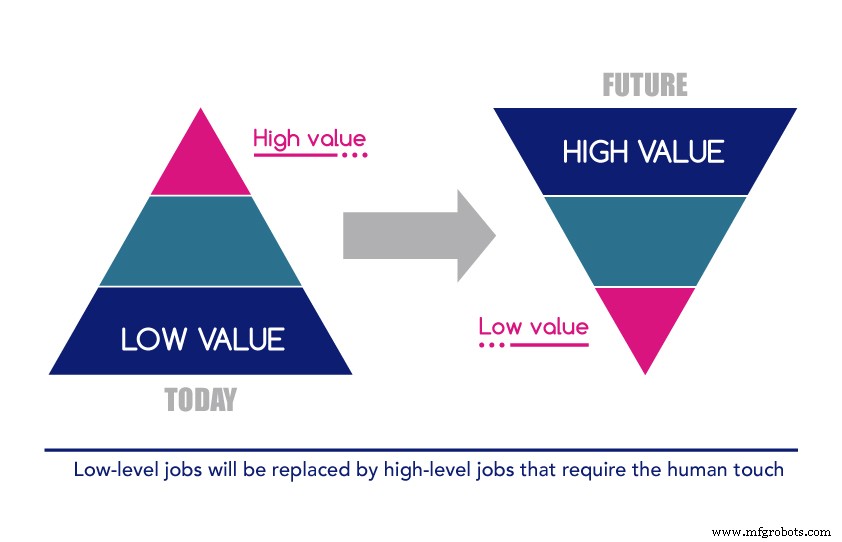
What actions should we take as these technological giants reshape our work environment? Preparation, composure, and perseverance are key. AI and IoT may replace many routine, process‑driven roles—including the programmers who built the original AI—but they will also create higher‑level positions that oversee and optimise automated workflows. According to a 2017 study by Frey and Osborne, AI could automate 70% of jobs in the energy sector and 65% in consumer staples over the coming decades. Nevertheless, tasks demanding strategic planning, abstraction, and emotional intelligence—such as crisis management or sophisticated code testing—remain inherently human.
AI operates via back‑propagation, learning from experience. This means it can’t simply repurpose a skill (e.g., picking up a bottle instead of a cup) without retraining from scratch. While AI will dramatically boost productivity, it cannot replicate the human attributes that unify and guide processes. Consequently, we must evolve our work habits to amplify our unique ingenuity.
WEIRD Times Ahead
At Pod Group, we recognised the necessity of adapting to a future where AI can manage any process more comprehensively than a human. We restructured our organisation around the WEIRD strategy—Wisdom, Emotional Intelligence, Initiative, Responsibility, and Development—highlighting what sets humans apart from computers.
By fostering a transparent environment where employees can independently decide on their work, finances, salaries, and even company direction, we empower them to take ownership. This engagement is crucial for managing robots, which lack the ability to extrapolate beyond their programmed parameters.

Even in a fully automated factory, humans will steer the ship. We will harness AI’s predictive, prescriptive, and adaptive analytics to anticipate future challenges, develop advanced technologies, and increase profitability—preparing us for the next industrial revolution before it unsettles us again.
Author: Charles Towers‑Clark, CEO of Pod Group
Internet of Things Technology
- How 5G Will Transform Industrial IoT: Unlocking Faster, Safer, and Smarter Factories
- Top 5 Metal 3D Printing Applications Revolutionizing Manufacturing
- Forrester Forecasts 2022 IT Shift: Chip Shortage, Edge Computing, and IoT Driving Sustainability and Security Trends
- 2020 Marks a Turning Point for eSIM Adoption: Implications for Connectivity Providers
- Industrial IoT: Revolutionizing Facility Management for Sustainable Efficiency
- Will Boris Johnson’s 10‑Point Climate Plan Deliver a UK Energy Revolution?
- Revolutionizing Retail, Cities, and Skies: The Impact of Drone Delivery
- Biden's $2 Trillion Infrastructure Plan Boosts Passenger Rail & Benefits Freight
- Pandemic‑Accelerated Automation: Reshaping Three Industries Forever
- Revolutionizing CNC Machining: The Industry 4.0 Transformation