



End‑to‑End IoT Testing: Why Multi‑Stage Validation Is Critical for Reliable Smart Devices

By Virendra Maheta, Project Manager at Volansys Technologies
Why IoT Needs Rigorous Testing
The Internet of Things (IoT) bridges the physical and digital realms, allowing devices to autonomously gather and transmit data. While enterprises harness IoT to accelerate time‑to‑market and boost productivity, its distributed architecture introduces unique testing challenges. A world‑class IoT product must demonstrate flawless performance across every component—from sensors to cloud services and user interfaces.
Multi‑Stage Validation: The Backbone of End‑to‑End Testing
Multi‑stage validation ensures that each element of an IoT ecosystem operates as intended before the solution reaches the end‑user. This systematic approach covers:
- User Access Layer – Mobile or web applications
- Cloud Infrastructure
- IoT Gateway
- Embedded Devices / Sensors
By testing each tier individually and then in integration, we catch defects early, verify compliance with business requirements, and deliver a seamless user experience.
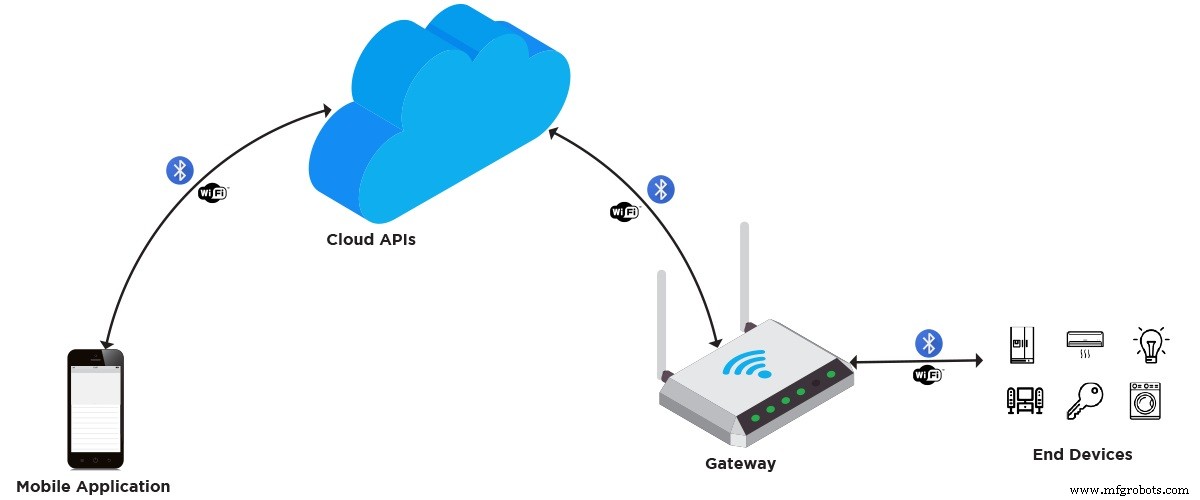
Illustrative Use Case: Smart Air Conditioner
Imagine a user setting a bedroom AC temperature from a mobile app while at work, and receiving a notification once the desired temperature is achieved. The system components involved are:
- Mobile App: Sends temperature settings via REST APIs.
- User‑Access Cloud: Receives API calls, updates the database, and logs changes.
- IoT Cloud & Gateway: Transmits “change temperature” commands to the home gateway.
- Smart AC: Receives commands, adjusts temperature, and reports status back through the gateway.
Testing Stages Explained
Stage 1 – Mobile Application Validation
Verify that the app correctly updates the AC temperature and displays the new setting.
Stage 2 – Cloud API & Database Validation
Ensure REST endpoints function as specified, database entries match user input, and logs correctly reflect the changes.
Stage 3 – Gateway Communication Validation
Confirm the IoT cloud dispatches the correct MQTT/XMPP/JSON message, and the gateway forwards it via Zigbee, BLE, or Wi‑Fi to the AC.
Stage 4 – Embedded Device Confirmation
Verify that the AC receives the command, adjusts to the desired temperature, and sends a success notification back through the gateway.
Key Benefits of Multi‑Stage IoT Testing
- Validates application architecture and integration against business requirements.
- Identifies bugs at both component and integration levels.
- Provides realistic, end‑user‑centric validation of real‑time scenarios.
Virendra Maheta brings over 12 years of QA expertise across Embedded, Networking, IoT, Telecom/VOIP, and ERP domains, with proven leadership in both manual and automated testing.
Internet of Things Technology
- Integrating Qt with DDS: Building Scalable IoT Applications
- Uniting IT and OT for Seamless Industrial IoT Success
- How 5G Fuels IoT: Current State, Opportunities, and Key Challenges
- Securing the Smart Home: Why Biometrics Are Essential for IoT Cybersecurity
- Securing the $6 Trillion Future: Why IoT Standards and Regulation Matter
- AIoT: How Artificial Intelligence Amplifies the Internet of Things
- Industrial IoT: Key Building Blocks Driving Industry 4.0
- How DevOps Enhances IoT Performance Testing and Deployment
- How IoT and Emerging Tech Are Revolutionizing Healthcare: Key Benefits & Applications
- Why Edge Computing is Essential for the IoT: Unlocking Real-Time Performance