



Understanding 3D Printer Nozzles: Types, Uses, and Expert Recommendations
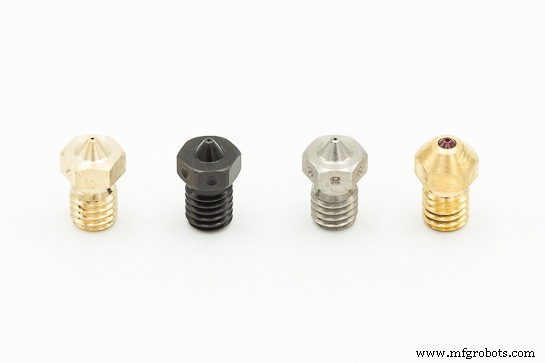
One of the big doubts that arise to users of 3D printing is what differences are there between the multiple types of nozzles available in the market, which one to use on each occasion, and which use and maintenance tips should be considered. In this and two other articles, we will try to explain and answer all those questions that arise about the nozzles of the extruders of the 3D FDM/FFF printers.
Classification of 3D printer nozzles
When classifying a nozzle we will consider two of the main characteristics: the material and the exit diameter.
Output diameter
Within the diameter there is a wide range of measures ranging from 0.20 mm (although there are already some 0.15 mm and 0.10 mm nozzles) to 1.2 mm.
Material
Brass nozzles: It is the most used material for the nozzles of the extruders, because it has a high thermal conductivity and stability, in addition to its ease of machining and economic price. Its main drawback is the fast wear to abrasive materials that contain fibers.
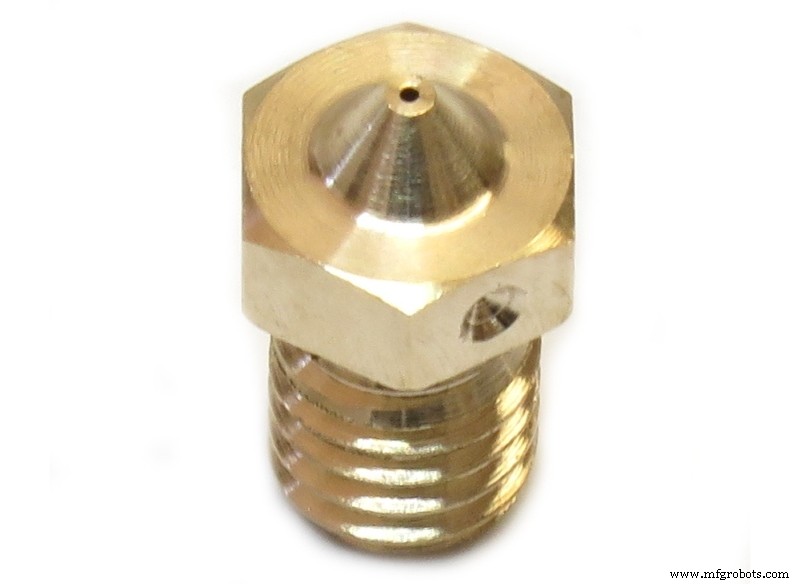
Image 1: Nozzle Brass E3D-Online. Source: E3D-Online
Hardened steel nozzles: To solve this problem of rapid wear of the brass nozzles, the hardened steel nozzles appear, being up to 10 times more wear resistant and maintaining the same qualities. As disadvantages, these nozzles have a lower heat transmission and, since they contain lead, they are not recommended to make pieces that are in contact with the skin or food.
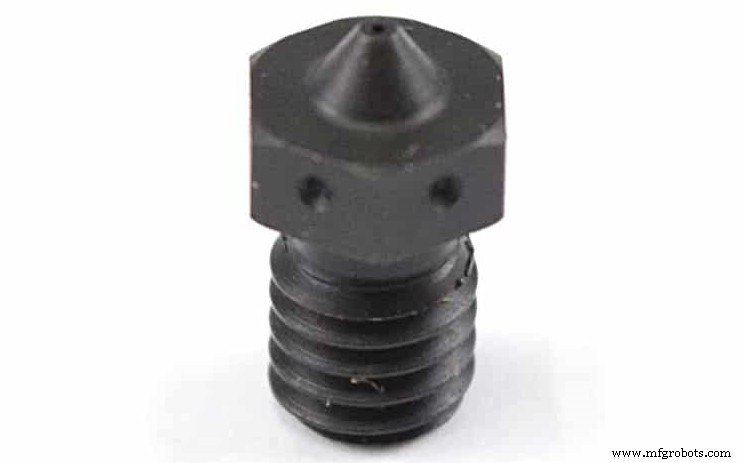
Image 2: Nozzle Hardened Steel E3D-Online. Source: E3D-Online
Stainless steel nozzles: This material presents a hardness superior to brass and has the advantage that it does not contain lead, material not allowed for the manufacture of pieces that are in contact with the skin or food. For this reason, the stainless steel nozzles are suitable for 3D printing with filaments approved for these applications so that the final pieces do not lose the approval by FDA regulations.
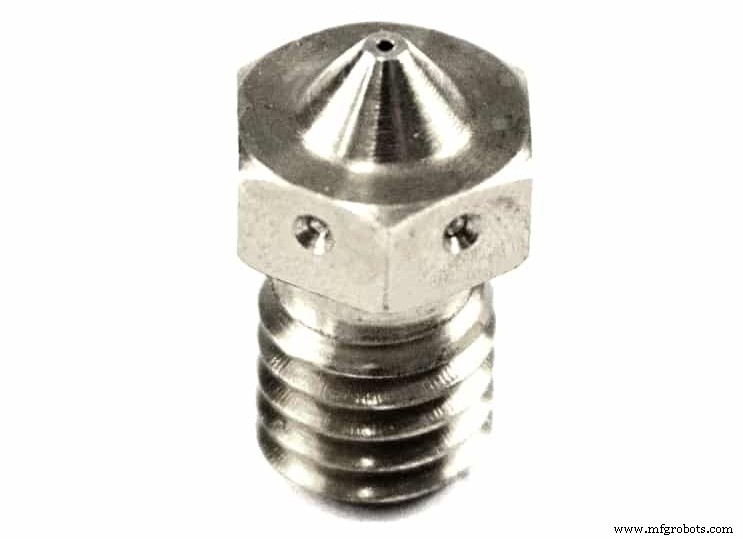
Image 3: Nozzle Stainless Steel E3D-Online. Source: E3D-Online
Nozzles Ruby: The Olsson Ruby is a special nozzle, manufactured from a brass nozzle with an inlaid tip of ruby. This combination is the ideal to have a stable temperature, a almost infinite durability and unparalleled printing precision.
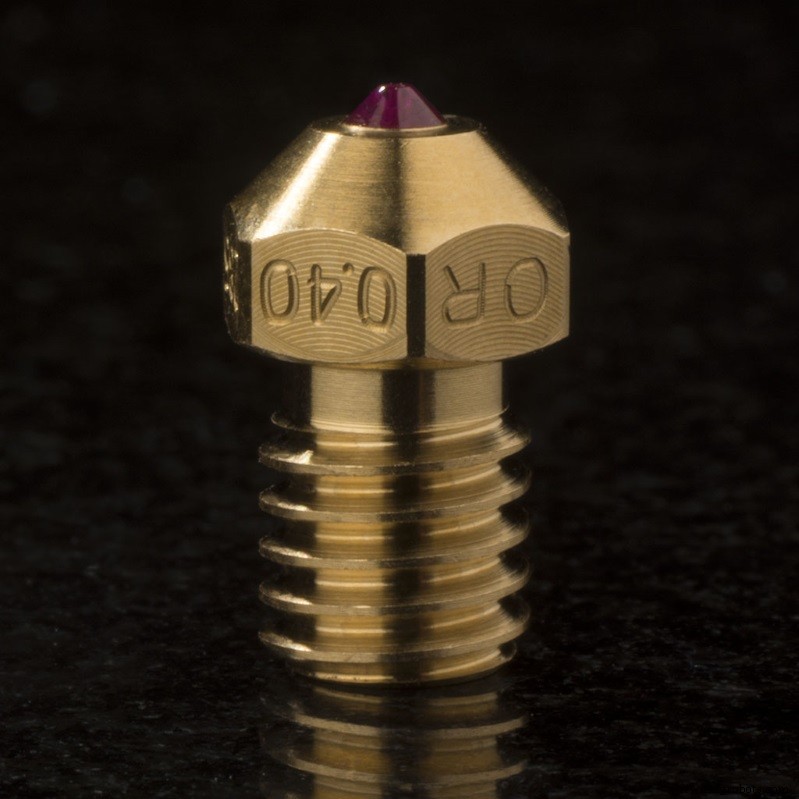
Image 4: Nozzle Olsson Ruby. Source: Olsson Ruby
Recommendations to select your 3D printer nozzle
Once presented the types of exit diameter and materials of the nozzles, our recommendation is that, each user select their nozzle according to their needs, considering the following guidelines:
- If conventional materials are used, such as PLA or ABS and pieces of intermediate size the ideal is to use a Brass Nozzle 0.40 mm. If you want to make small pieces with a lot of detail we recommend a Brass Nozzle 0.25 mm and for the opposite case, for large pieces a Brass Nozzle 0.8 mm.
- If abrasive materials containing fibers are used, such as PLA Carbon Fiber sYou should use a Hardened Steel Nozzle of 0.50 mm, never smaller diameter to avoid clogging in the extruder. If long 3D prints are made with very abrasive materials, the recommended nozzle is the Olsson Ruby.
- If approved materials are used for contact with skin and food, the only compatible nozzle to maintain this quality is a Stainless Steel Nozzle 0.40 mm. For small and very detailed pieces, we recommend a Stainless Steel Nozzle 0.25 mm and, for the opposite case, a 0.8 mm Stainless Steel Nozzle for large pieces.
| Materials conventional | Materials abrasives | Materials FDA | |
|---|---|---|---|
| Nozzle type | Brass | Hardened steel Olsson Ruby |
Stainless steel |
| Diameter (mm) | 0.25 - 0.40 - 0.80 | 0.50 - 0.80 | 0.25 - 0.40 - 0.80 |
Table 1: Recommended nozzle diameter
Once the types of nozzles have been clarified, one must take into account a very important parameter of the 3D printing configuration that is affected by this component, such as the layer height. This parameter is key to achieve the correct combination between finish and duration of 3D printing.
To begin, we must know that the recommended maximum value for layer height is 80 % of nozzle output diameter that is used. The lower the layer height, the better the surface finish but the longer the duration of the printing and vice versa. In the following table we show the recommended and maximum for each nozzle output diameter.
| Diameter nozzle exit | Layer height max. recommended |
|---|---|
| 0.25 mm | 0.2 mm |
| 0.4 mm | 0.32 mm |
| 0.6 mm | 0.48 mm |
| 0.8 mm | 0.64 mm |
| 1 mm | 0.8 mm |
| 1.2 mm | 0.96 mm |
Table 2: Maximum recommended layer height
For this parameter to be 100 % effective, leveling and calibration of the base about the nozzle it must be exact. You can visit our article "Leveling and calibration of the 3D printer base" to see how this process is done.
In the next two articles we will continue with the theme of the nozzles, explaining when to change the nozzle and how to avoid and solve the jams in it.
Do not hesitate to leave your recommendations or questions in the comments.
Related Posts
All about 3D printer nozzles (II): When to change the nozzle
All about 3D printer nozzles (III): Jams in the nozzle
3D printing
- Debunking 3D Printing Myths: Strength, Cost, Usability, and Volume Explained
- Expert Answers to Your Top 3D Printing Questions
- The Definitive Guide to Electrical Protection Systems, Devices & Units
- Interchangeable 3D Printer Nozzles: How to Choose the Right One for Your Prints
- Step-by-Step Guide to Cleaning Your 3D Printer Nozzle for Optimal Performance
- Understanding Aluminum: Grades, Applications, and Key Properties
- Hard and Exotic Materials Machining: Techniques and Applications
- Mastering Lathe Oils: Choosing, Using, and Maintaining Your Machine
- How to Prevent and Resolve 3D Printer Nozzle Jams
- When to Replace Your 3D Printer Nozzle – Expert Guide