



Speed Is Now the Baseline: Why Modern Fulfillment Infrastructure Is Essential
Consumer expectations are outpacing legacy fulfillment systems. Supply chains must modernize to stay relevant.
By Dr. Ashfaque Chowdhury, CEO at Exol
Fast fulfillment has moved from a luxury to an expectation. Today’s shoppers weigh delivery speed and options as heavily as price, quality, and availability. What began with books and apparel now spans home goods, groceries, beauty, and beyond. Five years ago, rapid delivery was a differentiator; now it’s the reason a buyer doesn’t abandon a cart.
Yet speed alone is insufficient. An erratic “fast” promise erodes trust more than a slower, reliable service. Consumers compare every brand’s fulfillment against the quickest experience they’ve had, regardless of size. Many retailers still run on infrastructure designed for a different era, risking lost market share and loyalty.
The Real Impact Happens Upstream
While the final package arrival is the most visible metric, true delivery performance is built on upstream processes: inventory positioning, dock‑to‑stock speed, and picking accuracy. Legacy systems—batch processing, heavy‑labor workflows, and bulk shipments to distribution centers—strain under today’s fast‑changing demands, amplifying operational friction.
Why Legacy Models Are Breaking Down
Complexity and consumer expectations expose the limits of traditional fulfillment. Labor shortages, a 6.1% rise in hourly wages in U.S. manufacturing (Q1 2026), and high turnover strain operations. Industrial rent for fulfillment hubs has climbed, making proximity to demand costly. Channels have multiplied—TikTok Shop, Amazon, Walmart Marketplace, dropship, B2B portals—yet many companies bolt these onto infrastructure not built for them.
With global fulfillment and logistics costs up over 20% in the last three years, modernization is no longer optional. Mid‑market firms now have access to modular automation, cloud‑based platforms, and infrastructure‑as‑a‑service models that once required enterprise budgets, leveling the playing field.
Automation as Strategic Infrastructure
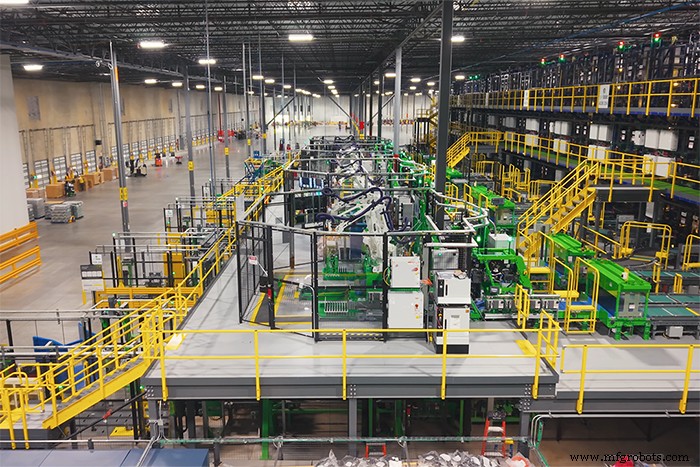
Automation drives consistency. Manual operations vary by shift, worker, season, and market conditions. Robotics, when paired with robust software, eliminate human error and deliver reliable throughput. Real‑time data platforms offer predictive intelligence and AI‑driven decision‑making, ensuring that every pick, pack, and ship aligns with demand.
Automation also removes physical bottlenecks. Machines can handle higher density, maintain speed during volume spikes, and free human talent for judgment‑based tasks. A unified, channel‑agnostic system lets a single inventory pool serve retail, DTC, marketplace, and dropship without siloed infrastructure.
Where to Begin
Transformation doesn’t require a full overhaul. Target the channel or operation that drives the most chargebacks, complaints, or internal strain. Partner with firms that already own modern automation and technology—this lowers entry costs and accelerates deployment.
Prioritize modular automation that delivers the highest value: throughput, pick accuracy, or storage density. Incremental upgrades avoid building new facilities while still improving performance.
Meeting the Next Era of Fulfillment
Speed is an ongoing commitment, not a one‑time upgrade. Without the right infrastructure, rapid delivery becomes costly—through expedited shipping, higher labor expenses, or dispersed inventory.
Success belongs to those who invest in adaptable fulfillment infrastructure that keeps pace with evolving customer expectations. Speed is now the price of admission; competitive advantage lies in combining speed, consistency, and flexibility.

About the Author:
Ashfaque Chowdhury, Ph.D., is the CEO of Exol, with over 20 years of experience scaling global supply‑chain operations. He previously led CEVA Logistics in North America and spearheaded XPO Logistics’ growth into the world’s second‑largest contract‑logistics provider, overseeing 400+ sites and 32,000 employees. A patent holder in supply‑chain technology, Dr. Chowdhury is a recognized innovator in the field.
Automation Control System
- Mazak Introduces Quick Turn 200/250 Turning Centers with Integrated Gantry Robot for Seamless Automation
- Accelerate Project Launches with Strategic Outsourcing
- ABB Unveils Advanced Visual Control Interface for Seamless Operational Oversight
- AutoStore: Leading the Future of Autonomous Warehousing
- MotionCam‑3D: Rapid, Accurate 3D Road Inspection in Any Environment
- Vecna Robotics & Big Joe Introduce Autonomous Pallet Jack for Smarter Warehousing
- MD&M West 2018 Showcases Advanced Technologies for Efficient Medical Component Manufacturing
- Wittmann Battenfeld Unveils New X Series and Primus 14 Robots
- AI vs RPA: Why Artificial Intelligence Is Dominating Business Automation
- RealBotics: Harnessing Robotics to Transform Manufacturing