



Integrating AI into Legacy Manufacturing Plants: A Practical, Low‑Risk Roadmap
Bridging the gap between legacy control systems and cutting‑edge AI without a full replacement is now possible. Learn how to connect AI to older factory floors efficiently.
By Hamza Daboul
The Rundown
- Legacy plants can adopt AI without tearing out proven automation.
- AI adds value by observing and interpreting plant behavior rather than controlling it.
- Existing data, when used selectively, is enough to support meaningful improvements.
- Progress comes from small, validated steps that respect how legacy plants usually run.
Control systems in most manufacturing plants were installed to keep equipment running safely and consistently, but they were not designed with AI in mind or to support advanced analytics at any point in their lifetime.
Despite decades of upgrades and workarounds, these factories still function, yet they remain incompatible with modern AI systems. This limits the work AI can perform today and can force some tasks to run inefficiently.
Most plants have quickly realized that it is practical and cost‑effective to connect AI to their existing factory environments instead of ignoring AI trends or replacing their systems entirely to “modernize.”
For those who haven’t yet, this roadmap focuses on how you can add AI to legacy plants instead of replacing them.
What “AI on the Floor” Means
AI is not a control system, PLC logic, interlocks, or operators, and it should not be making real‑time decisions in most manufacturing operations.
Instead, AI functions best as an analytical layer that observes plant behavior over time. It looks for patterns and early signals that traditional alarms and thresholds are not designed to detect.
When positioned this way, AI complements your existing automation systems, allowing control systems to keep executing deterministic logic while AI focuses on interpretation and insight. This distinction helps avoid resistance from operations and engineering teams when connecting AI to your legacy factory floor.
Assess What You Already Have Before Adding Anything New
Legacy plants almost always underestimate their own data. Between historians, controllers, drives, sensors, maintenance logs, and quality records, most facilities already generate enough information to support useful AI models.
If you have all this data, the real challenge is often fragmentation and context, not volume. Begin with a practical assessment by answering a few grounded questions. Some examples:
- Which assets or processes cause the most operational pain when they fail or drift?
- Where do operators rely on experience rather than instrumentation to spot problems?
- Which signals are already trusted, even if they are not perfectly organized?
- Where do small, recurring issues quietly consume time without ever triggering formal alarms?
- Which equipment requires frequent manual checks because early warning signs are easy to miss?
- Where do shift‑to‑shift handovers depend heavily on verbal explanations rather than logged data?
- Which adjustments are made “by feel” because the system provides limited context?
- Where does downtime analysis usually start with assumptions instead of evidence?
- Which variables are reviewed only after something goes wrong?
- Where does historical data exist but rarely gets revisited once the issue appears?
Answering these questions narrows the scope, which is essential because AI initiatives often stall when teams attempt to clean and normalize everything at once.
Therefore, work small and specific, not broad and theoretical.
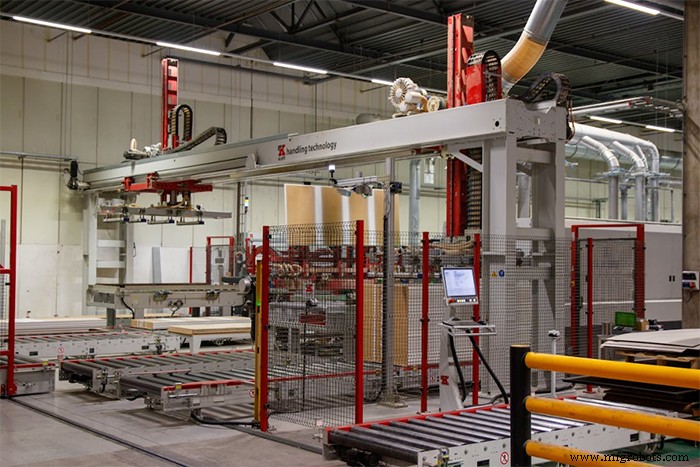
Taking the time to assess your legacy system will help you identify gaps and opportunities that AI integration can address.
Focus on Use Cases That Fit Legacy Reality
Not every AI application belongs on an older factory floor. The most effective early use cases generally support decisions instead of attempting to automate them.
Maintenance is often the first practical entry point. Rather than predicting exact failure dates, AI highlights abnormal behavior that appears before breakdowns occur, giving your maintenance teams time to investigate and plan proactively.
Process stability is another strong fit. Many throughput and quality issues develop slowly as conditions drift. AI can recognize when a process no longer behaves as it historically has, even if all values remain within acceptable limits.
Quality monitoring follows the same pattern. Between inspections, AI can flag unusual trends that indicate defects are likely forming upstream, reducing the time between cause and detection.
You don’t need new control architectures or invasive changes for these to work, which is why they are both practical and highly useful.
Connect AI Without Disrupting Operations
- Early deployments should run in observation mode.
- Outputs should be advisory.
- Alerts should explain what’s changed, not just that something’s wrong.
- Operators and engineers must validate insights against reality before trusting them.
These considerations help you avoid disruptions when connecting AI.
Factory automation teams and industrial service providers should resist the urge to close the loop too early. Automatically triggering actions before confidence is established erodes trust quickly. Trust is earned by restraint.
In short, your strategy to introduce AI into your legacy plant should feel incremental, not transformational.
Address the Human Side Before Scaling
Operators become skeptical when systems behave unpredictably. When introducing AI into your operations, the last thing you want is engineers who are disengaged because models cannot be explained, or maintenance teams that ignore alerts because those alerts normally arrive too late or too often.
Prioritize usefulness over sophistication. Accuracy matters, but relevance matters more. If AI consistently surfaces issues teams would have otherwise missed, it will earn credibility quickly.
Pay attention to feedback loops. When teams understand how their actions affect AI outputs, they’ll be more engaged. The opposite happens if AI feels imposed rather than collaborative.
Scale only after you know that the AI is valuable in a small, localized area.
A Roadmap That Respects Legacy Constraints
- First, observe existing behavior without changing it.
- Next, prove value in a limited, well‑understood area.
- Then, expand where patterns repeat and results are consistent.
- Only after those steps should you consider standardizing it.
Frequently Asked Questions
Do legacy plants need new sensors or hardware before using AI?
In most cases, no. AI initiatives typically start by using existing signals from controllers, historians, sensors, drives, and so on. New sensors are added only when a clear visibility gap exists.
Can AI be used without changing PLC logic or control strategies?
Yes. AI operates outside the control layer. It observes process behavior and provides insights without modifying deterministic control logic or safety systems.
Is AI useful if the process already has alarms configured?
Yes. Traditional alarms catch threshold violations while AI identifies abnormal patterns that stay within limits but still indicate emerging problems.
What skills are required internally to support AI in a legacy plant?
Strong process knowledge is more important than data science expertise at the start. Operators and engineers who understand normal behavior provide critical context.
Is AI only valuable for large‑scale operations?
No. Smaller plants often see faster results because processes are easier to isolate and validate, making early success more achievable.
When does it make sense to scale AI across the facility?
Only after localized deployments consistently deliver actionable insights and are accepted by your operations and maintenance teams.
About the Author: Hamza Daboul is an automation engineer with over 11 years of experience, specializing in industrial solutions at EZ Automation. He focuses on designing control systems and implementing equipment upgrades to improve manufacturing efficiency, reliability, and safety. His expertise includes troubleshooting complex systems and delivering turnkey solutions that modernize existing operations. Known for a problem‑solving mindset, Hamza works closely with clients to increase productivity while maintaining high quality standards.
Automation Control System
- Chiron Variocell Pallet System Enhances Flexibility with FZ/DZ 16 Five-Axis VMC
- Acieta Swiftly Deploys FastLOAD CX1000 to Accelerate Manufacturing During Pandemic
- Robots vs. Skills Gap: How Automation Is Fueling U.S. Manufacturing Growth
- Decart Launches Oasis 3: A Realistic, Low‑Latency World Model for Robotics Training
- UK Leads Europe in AI Growth – Global Landscape of AI Talent & Opportunities
- Survival of the Fastest: How Speed Drives Modern Business Success
- Eliminate Legacy System Costs and Boost Your Bottom Line
- Automation and Robotics: Redefining the Future of Industry
- Advanced Indoor Positioning Systems: Precision Tracking Inside Buildings
- How Digital Platforms Drive Efficiency in Modern Manufacturing