



Gen‑C’s Motortech Platform Boosts Landfill Gas Output by 10% at EDL Mucking
Gen‑C’s intelligent, automated engine control platform has increased gas production by up to 10% at EDL’s Mucking landfill gas power station. The Motortech supervisory panel—built on advanced ComAp technology—manages five MWM Deutz engines in real time, precisely matching engine load to the field’s gas availability. With live alerts, fault diagnosis, data logging and remote instant restarts, the Mucking crew can now oversee and fine‑tune all five engines from a single, user‑friendly app, eliminating the need for on‑site intervention.
“Engine downtime has been virtually eliminated,” says Dave Dickson, Site Supervisor at EDL Mucking. “The Gen‑C common control panel automatically adjusts the load of each engine to instantly match gas availability, making manual intervention redundant. As well as enabling better use of personnel, we’ve seen between a 5‑10% uplift in gas production.”
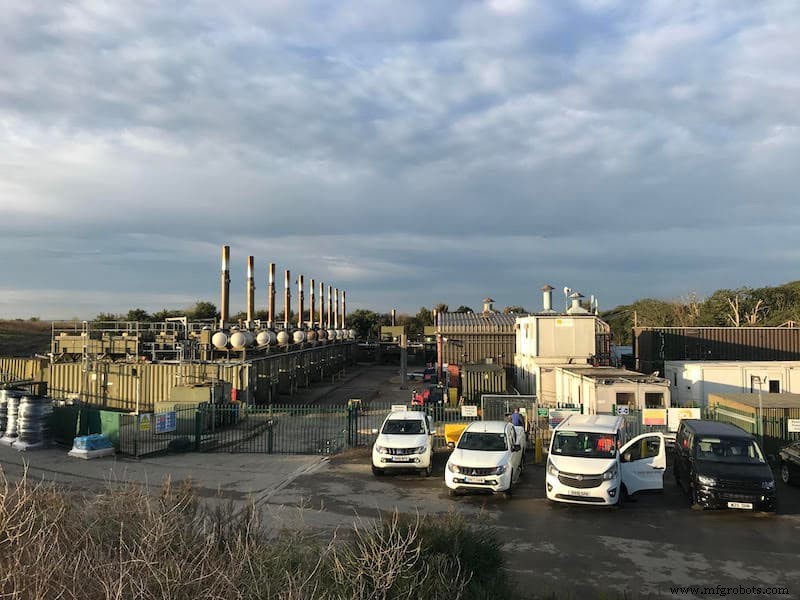
Located in Tilbury, Essex, the EDL Mucking landfill gas power station houses five operational engines: four 1.2 MW Deutz TCG620‑V16 models and a Caterpillar 3516. Four engines run continuously, with one serving as a reserve. In Spring 2021, Gen‑C upgraded four of the engines’ control panels to intelligent, open‑access Motortech versions and replaced the ignition systems on one engine (the fourth had been upgraded earlier). Gen‑C’s Managing Director, James Thompson, also supplied a supervisory common control platform to streamline management of all five engines.
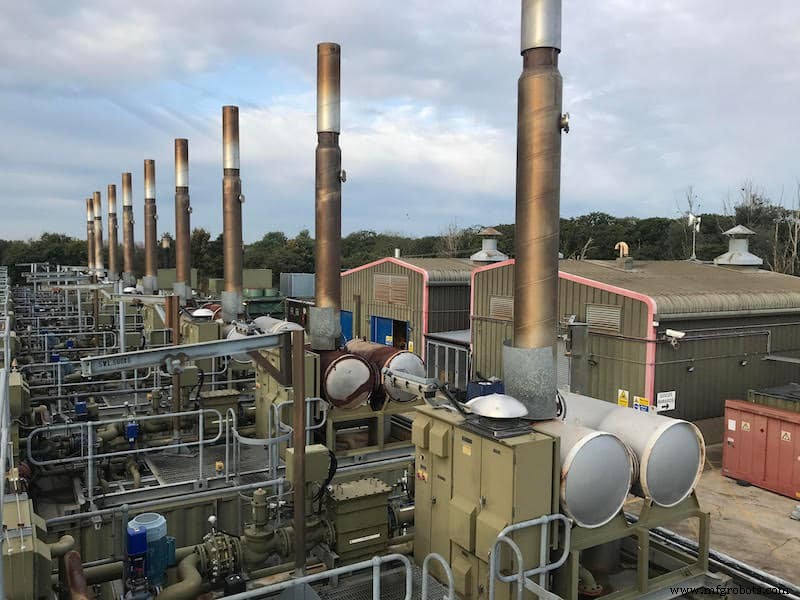
“Having worked with EDL on a number of projects – including upgrading the vandalised control panels at their Wellingborough site at the start of the pandemic – we were keen to optimise their engine management,” says James. “We knew that our common control platform would not only ease staffing pressures by reducing manual intervention but also increase gas production.”
Optimising gas production
EDL strives to use 100 % of the gas available at Mucking, but due to reliance on manual engine control, this was not always possible. Dave Dickson explains: “Before the common control platform was installed, we would regularly assess the suction limit – the volume of gas that’s available at any given time and is based on external factors such as atmospheric pressure; for example, during times of low pressure, gas availability increases. We would then manually adjust each engine’s load to meet the suction limit before repeating the process a few hours later, including throughout the night. However, this reactive response meant there was inevitably a lag in gas uptake; production was not being optimised, as the full amount of available gas was not always able to be utilised.”
Since automating the process via the Motortech common control panel, this lag has been eliminated. “Now, we set the parameters of the supervisory panel installed by Gen‑C according to the suction limit and it automatically adjusts the engines’ load to match it in real time,” says Dave. “As there is no lag, gas production is optimised, with no under‑utilisation. It enables a more agile use of our engine assets – the system reads how many engines are running, and at what capacity, and detects whether they need to flex up or down to match gas availability. It can stop or start individual engines as needed, and even bring the reserve engine online within just 15 minutes if necessary.”
Power with control
As James Thompson explains, the common control panel intelligently responds to real‑time information: “The system monitors the pressure of the gas coming in from the field to the various engines. We have translated that into how much load is required to run the engines, to ensure that each one is performing optimally.”
In addition to managing the full suite of engines, the supervisory platform can isolate and control individual machines: one engine can be set to act as a reserve or run to a maximum capacity of 80 %, for example; one or more engines can be given priority over the others; and engines can be brought in and out of service as required. If needed, a member of the team can even dial in remotely to access the panel or override it – something that previously required on‑site presence.
Superior asset protection
This precision control is essential for maximising gas production and protecting both the gas field and the engines. Extracting too much gas can create negative pressure, potentially pulling siloxanes and impurities that can imbalance the system and damage the engines. It can also damage the field, possibly igniting a fire and wasting valuable gas, while posing risks to people and property. Conversely, too little extraction can lead to field leaching. “These issues have been eliminated since the common control platform was installed,” confirms Dave.
Automatic engine handover
There are additional benefits. “Previously, if an engine shut down, we received an email alert prompting us to restart it manually,” outlines Dave. “If this happened at night, a member of staff would have to drive to site, find the cause of the fault, then physically restart the engine or activate the reserve. This sometimes incurred a delay of up to six or even eight hours, during which time the engine would be out of action and gas production would be reduced. Now, if any engine develops a fault, the common control panel automatically shuts it down and brings the spare online within just 15 minutes, meaning there is no great rush for personnel to attend site. An alarm list is automatically emailed to key staff informing them of the reason for the shut down; if it’s something simple like a fluctuation in gas quality, they can dial in remotely and restart the engine within minutes.”
Easing staffing pressures
With the supervisory control panel replacing manual intervention, EDL has been able to redeploy staff to more business‑critical areas. “One of the key benefits of the system is that it doesn’t require a person to be physically present in the control room, as was the case previously,” says Dave. “The number of nuisance trips to restart engines has been dramatically reduced and the system is so user‑friendly, even incorporating an app that we can access 24/7 to check engine performance remotely. Everything is visible on just one screen, so it’s easy to track what’s happening.”
This remote fingertip control has allowed EDL Mucking to become more personnel‑efficient, freeing up staff to be used where they are most needed. The facility has proved invaluable in recent months, as social distancing, pandemic pressures and a national labour squeeze have combined to make efficient use of staff more important than ever for businesses across the UK.
In addition, the system comprises a data log that records engine activity and enables the EDL team to spot trends over time, helping them make informed decisions regarding operational improvements.
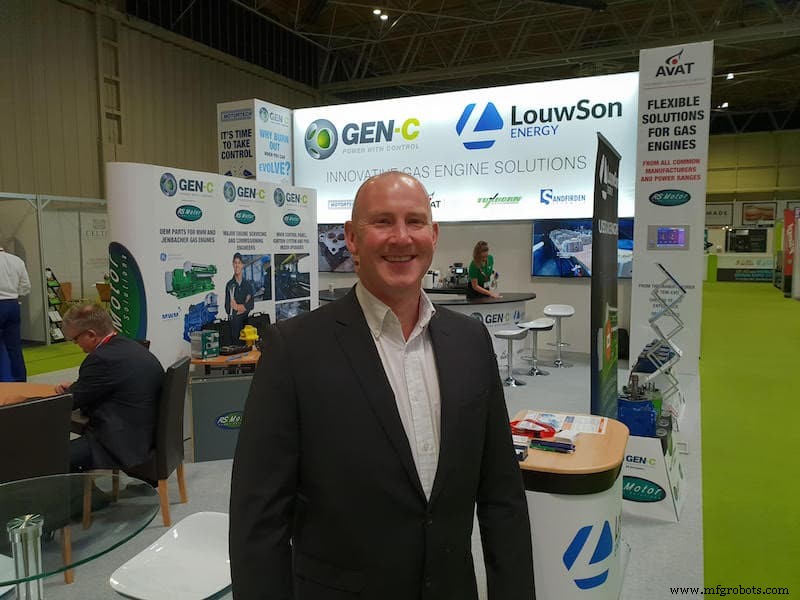
Gen‑C’s James Thompson is delighted that his client has seen such an uplift from the system: “The Motortech common control panel takes continuous live data from all five engines on the site and makes forward‑thinking, autonomous adjustments to ensure they are operating optimally. It’s not only a portal that talks to each engine; it is a fully autonomous power control platform that proactively manages the gas in the field and burns it through the assets on site in the most efficient way for the engines and the asset owner. As EDL have found, the benefits of this system for landfill gas operators are significant; however, its flexibility means it can also be used to great effect at other power generation sites, such as for monitoring gas bag levels at anaerobic digestion plants.”
For more information on the Motortech common engine control platform, contact
James Thompson, Managing Director
T: +44(0)1709 718 002
E: [email protected]
W: www.gen-c.co.uk
Automation Control System
- Qualcomm Unveils Snapdragon Wear 4100+ – 85% Performance Boost, 25% Longer Battery, and 16‑MP Cameras for Next‑Gen Smartwatches
- CNC Router Production: Precision Engineering & Quality Assurance
- Festo's VTEM Automation Platform Accelerates Tyre Production, Boosting Efficiency and Cutting Costs
- Yaskawa & Phoenix Contact Join Forces to Build Next-Gen PLC Platform
- Hexagon Launches HxGN Robotic Automation for Seamless Automated Quality Assurance
- 5 Key Benefits of Remote Production Control for Modern Industry
- TwinThread: Boost Competitiveness with Predictive Operations
- Emerson Boosts Sustainability with Azure-Hosted Zedi Cloud SCADA Platform
- Digitalization Drives 20% Increase in Auto Parts Cell Production
- Enhance Production Efficiency & Quality with Automated CNC Machine Control