



Which Materials Are Suitable for Waterjet Cutting?
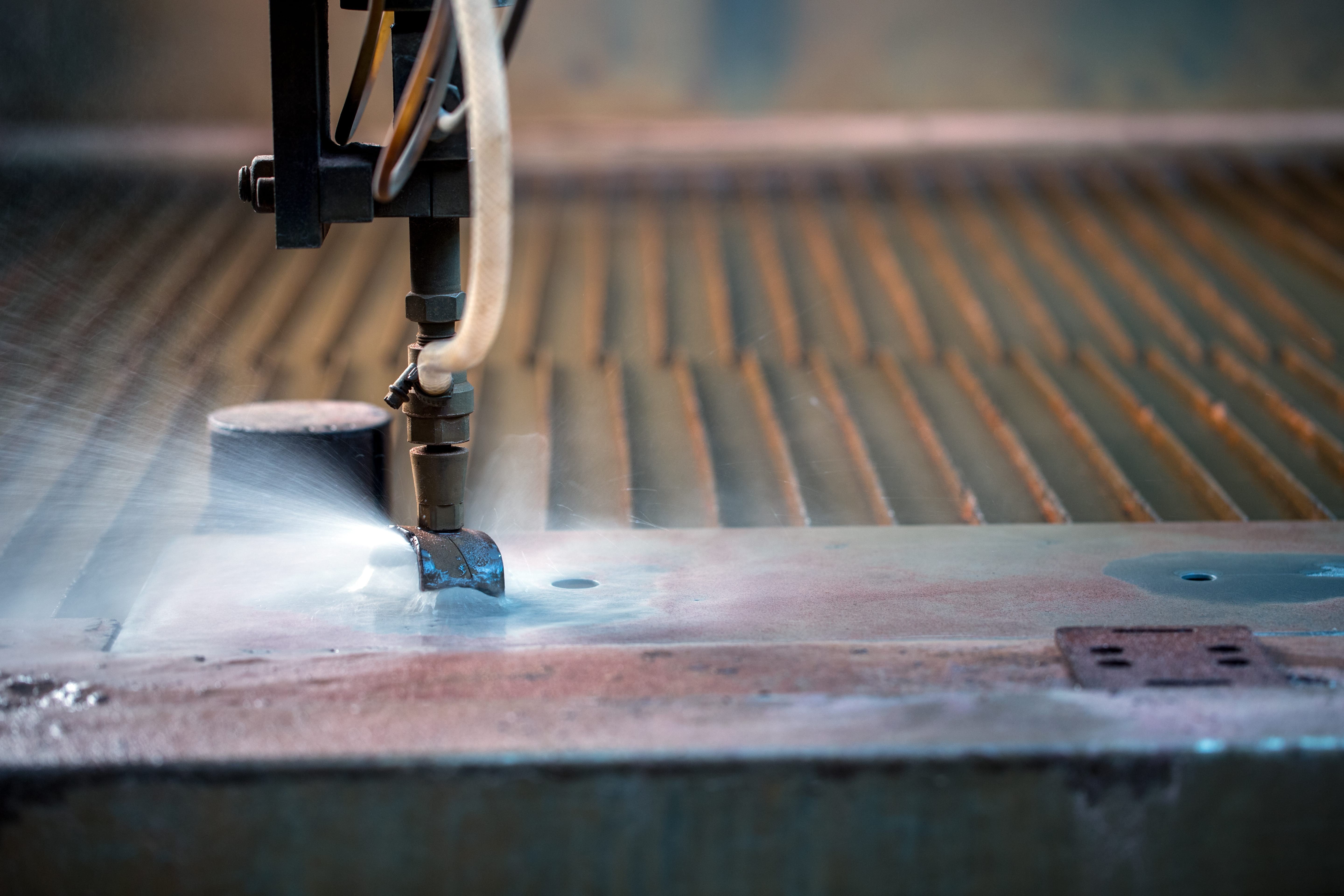 Waterjet cutting is a unique, highly effective process to produce clean cuts in various materials. Because there is no heat involved, it’s a great way to avoid heat damage and distortion while ensuring a smooth, clean cut. Although many people associate waterjets with metal, there are many different materials that can benefit from waterjet cutting. Here is an description of different materials that can be cut with a waterjet.
Composites
Many different combination materials, especially reinforced plastics, can be cut with a waterjet. Carbon fiber-reinforced plastics can be cut quickly and cleanly, making waterjets a great addition to the fabrication of aerospace components and racecars. Using a waterjet will ensure that there is no tool clogging or wear, no need to change tooling, no melting, and no hazardous fumes. When cutting glass-reinforced plastics, fiberglass can be cut quickly and cleanly. By submerging the material during the cutting process, you can ensure that no hazardous dust or fumes will be produced.
Steel
Cutting steel is one of the most common uses of waterjet cutting. Waterjets can cut all grades of steel, producing a smooth edge without burn marks, cracking, excess burr, or many other issues associated with heat-based cutting. Using heat methods can weaken the integrity of the part, making waterjet cutting more favorable. This lack of a heat affected zone makes waterjet cutting a great option for fabrication of food processing and handling parts as well as aerospace materials. Waterjets can even be used to cut hardened tool steel. It can be cut in a fully hardened state without any risk of change to the metal properties.
Other Metals
Metals other than steel can also be cut with a waterjet. Aluminum is probably the most common metal cut with a waterjet. Alloys are often difficult to machine without heat or distortion, but alloys of all types can be cut accurately with a waterjet. Waterjet cutting is a great option to cut titanium because its precision will reduce the amount of waste material. This reduction of waste is especially important in expensive metals like titanium. A waterjet is also a good option for more reflective metals like copper, as there will be no reflectivity issue like there is for laser cutting.
Other Materials
Beyond composites and metals, most materials can be cut using a waterjet. Stone and concrete can be cut with a waterjet, making the tool ideal for granite countertops, architectural features, and marble flooring. Ceramics can also be cut using a water jet, as long is their hardness is less than an 8.5 on the Mohs scale. Softer materials such as rubber and wood can even be cut with a waterjet, using the water-only nozzle without the abrasive.
Benefits of Choosing a Single Metal Fabrication Company for Your Project
Powder Coating vs. Painting Metal: Which Is the Superior Choice?
Industrial Technology
- CNC Router Materials Guide: What You Can Cut and Engrave
- What Materials Can Be Cut with a Fibre Laser?
- Beyond Prototypes: Real‑World Innovations Made with 3D Printing
- Metal 3D Printing: Revolutionizing Production with Speed, Cost Savings, and Design Freedom
- How to Use Dried Ginger Root: Tips, Health Benefits, and Culinary Ideas
- Maximum Cutting Thickness of Waterjet Machines: What You Need to Know
- What Products Can Be Created with CNC Machines
- Choosing the Right Materials for Metal Casting: A Professional Guide
- What Parts Can CNC Machining Produce? A Comprehensive Guide
- Meet Rick Comeau: Waterjet Expert and Innovation Leader at ICT