



Wood Grain Explained: A Comprehensive Guide to Patterns, Types, and Their Impact
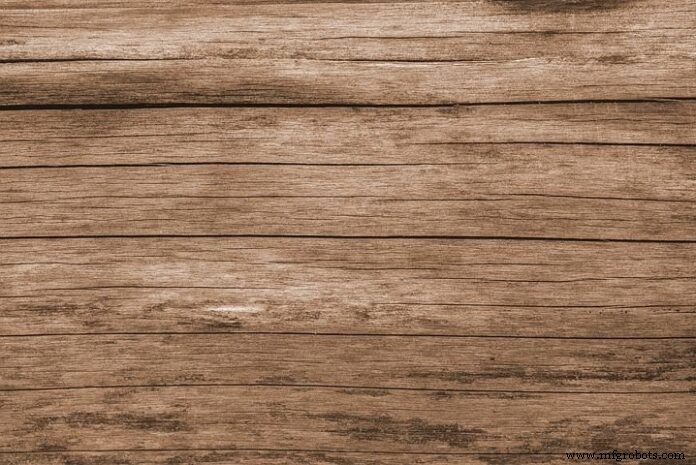
What is Wood Grain ?
The longitudinal arrangement of wood fibers or the pattern that results from such an arrangement is referred to as wood grain.
Definitions of Wood Grain
According to R. Bruce Hoadley, Grain is a “confusingly versatile term” with a wide range of applications, including the direction of the wood cells (e.g. straight grain, spiral grain), surface appearance or figure, growth-ring placement (e.g. vertical grain), plane of the cut (e.g. end grain), rate of growth (e.g., narrow grain), and relative cell size (e.g., open grain).
What is the grain of Wood?
The word grain as applied to wood is indeterminate in its meaning. Conversationally it refers to the appearance or pattern of the wood on any of its cut surfaces. The figure or pattern of a wood is due to variations of ring growth and of colour in the wood, together with the influence of knots.
Pattern of Wood Grain
An open-grained wood such as oak has minute pores its exposed surface. In standard wood-finishing methods, these pores are leveled with a coat of filler.
A close-grained wood such as fir or pine has no such pores in its surface.
Meaning of Wood Grain
The grain of the wood also refers to the direction of the cellular or fibrous structure of the wood, which is the longitudinal direction. Timbers for structure use must be so cut that the grain runs parallel to the length of the timber ; otherwise there is a marked reduction in strength.
In a traverse section the log of wood looks like a series of concentric circles due to annual rings. The tangential plane is a plane at a tangent to these circles ; the radial plane follows a diameter and passes through the center. Planks sawed tangentially to the annual rings are termed flatsawn.
Giving a flat grain, while radially cut planks are termed quarter-sawed, giving an edge grain. If the annual rings are approximately at 45° to the face of the plank, the condition is called angle grain. Cross grain refers to a plank whose fibers are not parallel to the long axis of the plank.
Physical Aspects
The grain direction or slope is perhaps the most important physical aspect of wood grain in woodworking (e.g. against the grain). Straight grain and cross grain are the two basic types of grain. Straight grain runs parallel to the piece’s longitudinal axis. Cross grain differs from the longitudinal axis in two ways: spiral grain and diagonal grain. The amount of deviation is referred to as the grain’s slope.
When describing the application of a woodworking technique to a specific piece of wood, the technique’s direction may be mentioned.
- with the grain (easy; giving a clean result)
- against the grain (heavy going; giving a poor result such as chipping or tear-out)
- across the grain (direction of cut is across the grain lines, but the plane of the cut is still aligned with them)
- end grain (at right angles to the grain, for example trimming the end of a plank)
When joining pieces of wood or designing wooden structures, grain alignment must be taken into account. A stressed span, for example, is less likely to fail if tension is applied along the grain rather than across the grain. The type of warping seen in the finished item is also affected by grain direction.
A distinction can be made when describing the alignment of the wood in the tree. Different tree species may have one or more of the basic grain descriptions and types listed below:
- Straight – grain which runs in a single direction, parallel to the axis of the tree. Woods with this grains are the easiest to work. Spiral – grain which spirals around the axis of the tree.
- Interlocked – grain which spirals around the axis of the tree, but reverses its direction for periods of years resulting in alternating directions of the spiral grain. On quartersawn surfaces the change in grain direction creates a ribbon stripe figure. These are the most difficult to work.
- Wavy – grain which grows in a wavy fashion up the trunk; seen best in flatsawn sections of wood.
- Irregular – grain that swirls or twists. It can be found in a number of different patterns. This can be caused by factors such as knots, burls or “crotch” wood – where large branches separate from the trunk.
Aesthetic Aspects
Wood grain, in its most basic aesthetic sense, is the alternating regions of relatively darker and lighter wood that result from differing growth parameters occurring in different seasons (i.e., growth rings) on a cut or split piece of wood.
Figure in wood can be caused by fungus, burls, stress, knots, special grain alignments, and other factors. Their scarcity frequently raises the value of both the raw material and the finished work it becomes a part of. Among these are:
- bird’s eye
- quilte
- fiddleback
- curly
The manner in which a piece of wood is sawn has an impact on both its appearance and physical properties.
- Flat-grain: flat-sawn, slab-sawn, plain sawn, bastard-sawn, or sawn “through and through”.
- Edge grain: quarter-sawn or rift-sawn or straight-grained, and
- End grain: the grain of wood seen when it is cut across the growth rings.
Grain and figure of wood are not always the same thing.
Burr wood or burl wood has irregular grain, but this is due to the large number of knots.
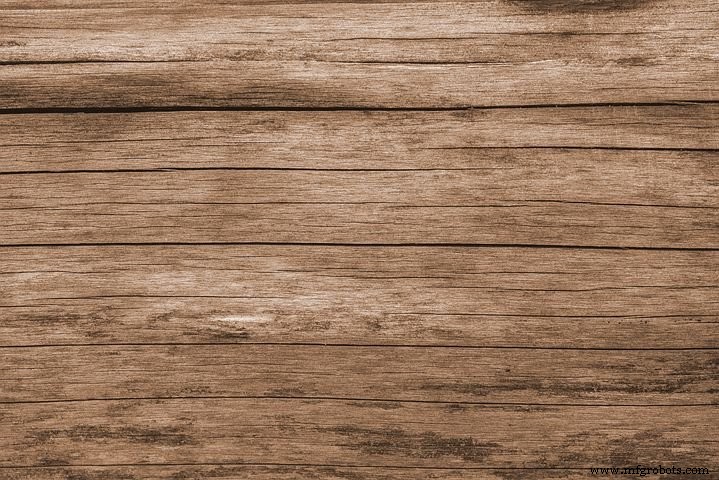
Picture of Wood Grain
Industrial Technology
- Mastering Wood Characteristics for Precision CNC Woodworking
- Paper Production: From Raw Materials to Finished Sheets – An Industry Overview
- Piezoelectric Circuits: Comprehensive Guide & Applications
- Metallization Explained: Benefits, Process, and Applications
- Comprehensive Guide to Equipment Tracking Systems: Boost Efficiency & Reduce Time Wastage
- The Crucial Role of Planned Maintenance in Asset Longevity and Business Success
- Mastering Boring Machining: Precision Techniques for Wide-Diameter Holes
- Wood Structural Panels: Definition, Types, and Applications
- Wood: Key Properties for Construction & Design
- The Essential Guide to Wood: Uses, History, and Modern Applications