



Metallization Explained: Benefits, Process, and Applications
Exposure of your products to harsh conditions, be it extreme weather or mechanical damage, can affect them. Therefore, having a suitable coating system can save your equipment in the long -term. There are two major coating systems, and that’s through galvanizing or metalizing. Generally, metallization is better, despite both of them being efficient.
What is Metallization?
Metallization/metalizing adds a metallic coating like aluminum, zinc, or a combination of metals onto a substrate’s surface.
The process results in a thin-film metal layer that can function as a conductive material for elements in a chip.

(car silver metallization)
What is the Metalizing Process?
The metalizing process goes through the following steps.
- First, manufacturers prepare the product’s surface through abrasive blasting to eradicate defects and imperfections.
- Next, they melt a metal wire in metalizing spray equipment.
- Then, they use compressed and clean air to atomize the now molten material.
- Finally, the air will transport the atomized metal onto the product’s surface, whereby it’ll form a metal coating.
Note;
We consider the metalizing process a cold process since manufacturers spray the metal material on the product’s surface. It is contrary to galvanizing and dipping the product or object.
Also, the process reduces any chances of damage that may occur when coating.
What Are the Benefits of the Metallizing Process?
Below, we give you several examples of how beneficial the metalizing process is.
- Improved durability
Metalized coatings can adhere to the surface of an underlying object or substrate. As such, they won’t easily crack, flake, peel, or blister in contrast to other finishes, thus making them more durable.
- Low maintenance cost
Metallization doesn’t need upkeep or repainting, unlike usually painted surfaces that require periodic repainting for maintenance and preservation. Ultimately, you’ll also have fewer maintenance costs.
- Better weather resistance
Metals like steel are prone to damage due to harsh weather like sun, snow, or rain over time. The protective coating achieved through metallization thus creates a barrier between the weather elements and the underlying structure.
- Enhanced corrosion protection
Most metals, like steel, get white or red rust after a while. When you, however, have the metal(s) obtained through the metallization process, they’ll have protection against corrosive materials. Often, the protective coating can enhance its lifespan by 20 or more years.
- Presence of electrical conductivity
Metallization also deals with plastic materials. As we all know, plastic isn’t a conductive material and doesn’t conduct electricity. But, with metallization, there’s the transfer of electric current, a factor that favors the electronics industry.
What Are the Various Metallization Processes?
There are some processes you can employ to achieve metalized products. For instance:
Cold spraying
The cold spraying technique is the best option if you need long-lasting corrosion protection for your materials. The spray is a composite that contains a hardening agent, metal powder, and water-based binder.
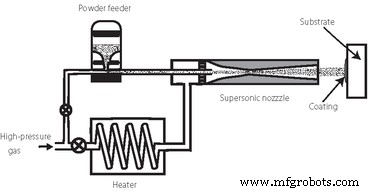
A cold spraying schematic
- The process starts by spraying the mixture onto your object (often at room temperature).
- Then, you’ll leave the items for an hour at most.
- Finish up by drying the product at a temperature between 70°F and 150°F for approximately six to twelve hours.
Vacuum metalizing
Vacuum metallization comprises boiling the metal for coating in a special vacuum chamber. Afterward, it’ll end sense and form a deposit on the surface of the substrate. Vaporizing techniques for the coating metal include resistance and plasma heating.
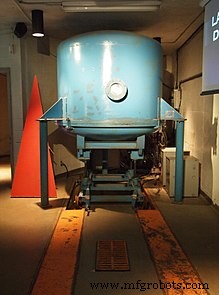
An aluminizing vacuum chamber
Thermal spraying
The metallization process here involves spraying melted or heated micro-sized particles of metal on the surface of the substrate. But first, the metal gets fed into a machine in a wire or powder form. Then, it’s eaten to a semi-molten or molten state.
Further, it’s efficient for thick coating applications and accounts for a high metal deposition rate.
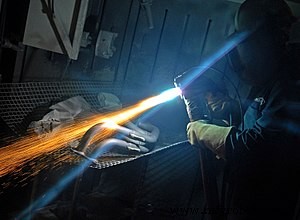
Thermal spraying
Zinc spraying
The zinc metal is cheap and versatile and can offer protection by preventing corrosion from getting to a substrate surface. WhWhat’sore, it can work on any steel, just that it might not reach crevices of recessed areas. Metallizing using a zinc spray enables a slightly porous coating, which is less dense than a hot-dip galvanization.
Hot-dip galvanizing (HDG)
The last metallization process involves immersing a substrate (steel) into molten zinc. Later on, the iron in steel and zinc will react to form an alloy coating with increased corrosion resistance.
After removing the substrate from your zinc bath, it goes through a vibrating or draining process to clear excess zinc. Galvanization is the final process, and it continues after removing the substrate till it cools.
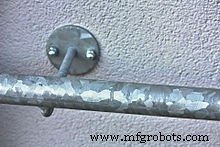
A galvanized handrail
Equipment and Experience Required for Metallization Processes
Another way you can classify the metallization process is through the two types below;
- Physical vapor deposition
- CVD (Chemical vapor deposition)
Notably, the two processes above have the same methods.
- It starts with converting the condensed phase/material, which is solid, into a vapor or gaseous phase.
- Secondly, there’s the transfer of the vapor phase to the substrate (from the source)
- Finally, the gaseous phase will settle on the substrate and form a coating.
What Materials Do You Use for Metallization?
Generally, the metalizing system can spray a wide variety of metals including, stainless steel, tungsten, chrome, bronze, nickel, and others. However, manufacturers commonly use aluminum, zinc, and aluminum/zinc in the metalizing process.
What are the Common Industries That use Metallization Equipment?
The following industries often use metalizing equipment;
- Bridges,
- Wind towers,
- Automotive,
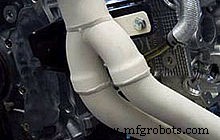
An automotive exhaust system with plasma-sprayed ceramic coating
- Oil and gas (refineries and off-shore structures),
- Printed circuit boards,
- Power generation,
- Municipal water towers,
- Facilities maintenance,
Vacuum Coating and Metallization Process
Metallization is the general process of adding a thin metal film of metals like aluminum to a product or material.
Vacuum coating, contrarily, is one of the metalizing processes. Its working starts by evaporating a metal coating in a vacuum chamber. Then, the evaporated material will condense on the object and settle on the surface.
Conclusion
All in all, metallization improves the physical properties of products/substrates making them durable and less expensive to maintain. For that reason, you’ll mostly find them in applications like in PCBs or power generation for overall protection.
We do hope that you’ve learned a thing or two from this post. If, however, you still need to address a burning issue, reach out to us.
Industrial Technology
- The Casting Process: From Ancient Origins to Modern Manufacturing
- Wood Grain Explained: A Comprehensive Guide to Patterns, Types, and Their Impact
- Aluminum Extrusion Explained: From Fundamentals to Industry Applications
- Paper Production: From Raw Materials to Finished Sheets – An Industry Overview
- The Modern Manufacturing Process: Key Techniques and Innovations
- Choosing the Right Sand: Key Types for Superior Sand Casting
- Understanding Plastic Machining: Techniques, Tooling, and Material Considerations
- Mastering Boring Machining: Precision Techniques for Wide-Diameter Holes
- CNC Milling Explained: The Ultimate Guide to Precision Machining
- Streamlined Powder Coating Lines: Efficient, Durable, High-Quality Finishes