



How to Get a Precise, Reliable Estimate for Your Metal Fabrication Project
To acquire an accurate estimate for your project requires a good degree of collaborative effort between you and your metal fabrication shop. It also requires proper attention to planning and responsibility from the shop. Without a thorough consideration of the factors laid out below it’s impossible to offer accurate estimates, which in turn means any estimate you do get will be flawed and subject to unfavorable adjustments down the line. To avoid costly missed deadlines and change orders, make sure each of these is properly accounted for:
Material Costs
The simplest factor to account for in any estimate, yet one which in less attentive shops will nonetheless fail to properly assess. Accurate estimates of material costs need to take into account the materials involved, what they will cost to acquire at the time of the project, what it will cost to store those materials safely throughout, and a few others. As material costs fluctuate regularly, any accurate project estimate should note a time frame for that estimate.
Understanding of the Drawings and Scope of Work
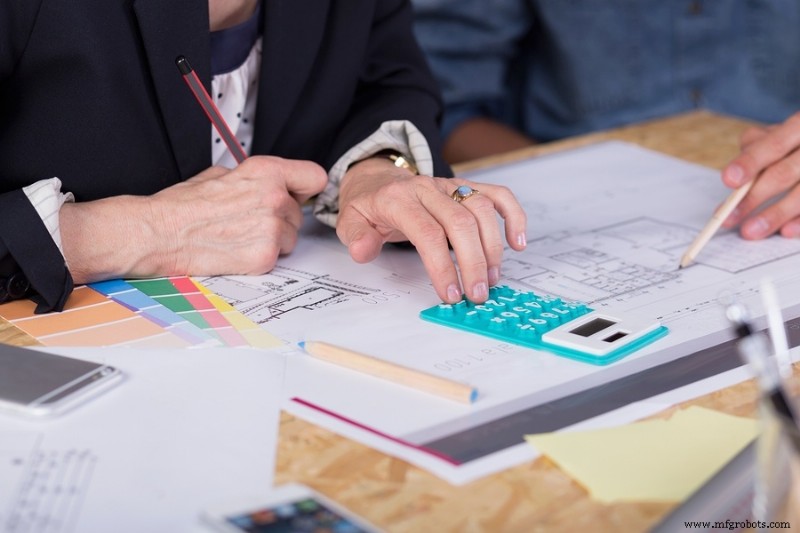
A metal fabricator can’t properly estimate the expense of a job if they don’t understand the full scope of the project. Make certain they understand the full extent of what’s conveyed in the drawings and aren’t guessing with incomplete knowledge. Of particular importance will be their past experience with similar projects—if they have none to draw on, any estimate is more a guess than a thorough assessment. It’s also important that they be able to identify at an early stage whether the project as drawn is workable. If there needs to be adjustments to complete your project, those need to be identified early in the process, not at mid-fabrication.
Finishing Options
Finishing makes up a remarkable portion of price fluctuation in many metal fabrication projects, so it’s important to understand how the finish for your project will be handled to better understand the estimate—and its accuracy. If finishing will be sub-contracted out rather than completed in-house, you may see problems with deadlines, change orders, quality, or costs which render your original estimate useless. When at all possible, work with shops which handle their finishing in-house to keep the process predictable.
Appropriate Welding Standards
The ability to identify and adhere to appropriate welding standards for your project plays a crucial role in both the pricing stage and the manufacturing stage. Ask whether the shop has a CWI employed, and whether they played any role in the estimate process. If a shop presents a price without understanding the full requirements of the project, that price isn’t going to hold up in the face of the actual project unless they’re opening with a high quote.
Delivery of Finished Product
Make sure you get a clear understanding of what if any shipping and handling is included in the estimate you’re presented with. Small details of logistics can result in major expenses and headaches for you down the line, completely undermining the accuracy of the estimate you’re given. Make sure you know exactly what is going where and at whose expense.
A Final Step: Analyzing Their Analysis
You can avert most of the headaches inherent in the estimate process by asking questions. If you ask about how a shop develops its estimates and get a vague or unsatisfactory answer, you should adjust your expectations of the accuracy of that estimate accordingly. A good estimate system goes through multiple people and passes through multiple layers of review. Do your homework, and make sure you’re getting an actual estimate instead of a salesperson’s best guess.
Industrial Technology
- The 5 Essential Goals Every Project Manager Should Achieve
- Additive Manufacturing Explained: From Design to Finished Part
- Mastering the Discovery Phase: Why It Drives Success in Development Projects
- The Modern Manufacturing Process: Key Techniques and Innovations
- Metallization Explained: Benefits, Process, and Applications
- Choosing the Right Sand: Key Types for Superior Sand Casting
- How Detailed Do Your Drawings Need to Be for Accurate Fabrication Estimates?
- Streamlined Powder Coating Lines: Efficient, Durable, High-Quality Finishes
- Understanding the Structural Steel Fabrication Process: From Ideation to Completion
- Why Sandblasting Enhances Custom Metal Fabrication Projects