



Industrial IoT: Advancing Smart Warehousing Trends
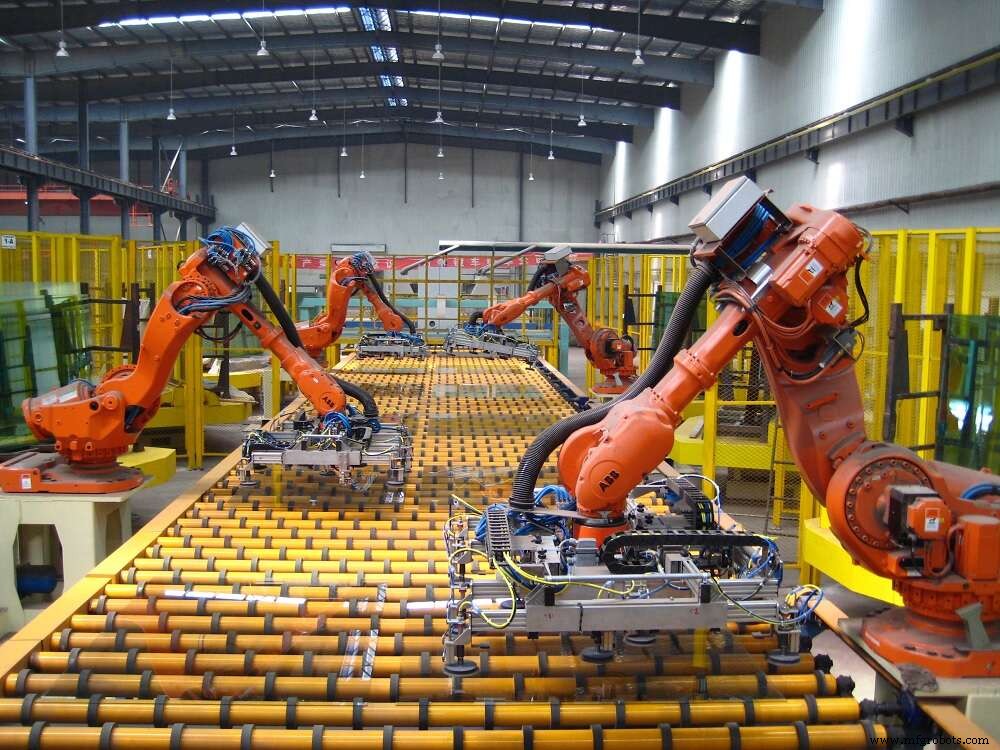
The Industrial Internet of Things (IIoT) can turn smart warehousing initiatives into realities. But, before many of the technologies appeared in real-world applications, there was abundant speculation about what’s possible and what could be too far-fetched.
So, what kind of progress has happened regarding smart warehousing and IIoT? Here’s a look at six of the top trends.
1. The Smart Warehousing Market Is Growing
Statistics indicate that the market segment that includes software for smart warehousing and IIoT solutions is rising. MarketsAndMarkets looked at the connected logistics sector and estimated a 32.7% combined annual growth rate from 2016-2021. The analysts that published the report also mentioned that the software within that segment helps users get more visibility within their warehouses, especially as they use connected devices to get things done.
For example, software can confirm if production rates are up or down for a given period, plus track the number of orders or shipments processed within a timeframe. The data in this market report suggests companies are embracing the IIoT and willing to invest in it.
2. More Companies Are Making Progress With Smart Factory Initiatives
Another crucial indicator of what’s happening in the IIoT market involves whether companies progress with their smart factory plans after committing to making changes. Capgemini published a 2019 report to check the progress of companies trying to scale up smart factories.
The data showed that, compared to two years ago, more companies are moving forward with smart factory initiatives. Plus, one-third of facilities with such improvements underway have already been turned into smart factories. Organizations plan to make 40% more smart factories over the next five years, and they’ll boost investments to a level that’s 1.7 times higher than it had been over the last three years.
However, one of the downsides mentioned in the report was that only 14% of organizations describe their existing initiatives as successful. That could indicate a problem whereby companies set their hopes too high and don’t have the budgets or other resources to make them realities.
3. The IIoT Is Helping Material Handling Methods Evolve
Managing material handling needs is crucial in any warehouse. People started using forklifts to aid with material handling in the 20th century, and both sit-down and stand-up varieties are widely used. The IIoT certainly won’t make traditional options like the forklift obsolete. But newer, connected technologies can complement the machines that are more familiar to warehouse workers.
For example, self-driven vehicles can recognize objects in their path and steer around them, bringing contents directly to the correct places in a warehouse. Using robots to assist with material handling methods also has positive impacts on employees. In one instance, Ryder, a top-down supply chain solutions provider, deployed robots in a warehouse managed by the brand.
Finalizing that change resulted in a 25% productivity increase and a 20% reduction in operating costs. These benefits came about because the robots let the workers avoid making unnecessary movements that could become time-consuming.
4. Artificial Intelligence Will Continue to Enhance the IIoT’s Capabilities
Artificial intelligence (AI) is no longer a far-flung concept. It has broken into the mainstream and amazed people in various industries with what it can do. People should expect to see more instances of AI being applied to smart warehousing and IIoT soon.
One area of potential is improving worker safety. Warehouses can be dangerous, with the most recent statistics citing that injuries happen at a rate of 5.1 per 100 workers. Some AI solutions already being rolled out in smart warehouses relate to wearables that employees use while on the clock. In one example, algorithms calculate a risk score based on a worker’s actions during a task.
AI could also reduce supply chain disruptions that impact a smart warehouse. IBM recently unveiled an anomaly-detection system that learns to detect deviations that could hinder a warehouse’s operations. Then, leaders can take action and prevent shutdowns before it’s too late.
Vendors will likely continue offering products that combine the IIoT with AI. As more companies start to recognize the benefits of depending on the IIoT, many will become curious about how AI may maximize those advantages.
5. Companies Using IIoT Technologies Must Prioritize Cybersecurity
It’s well-known that the connected devices consumers use — such as security cameras and smart speakers — are vulnerable to cyberattacks. But, not surprisingly, hackers didn’t overlook industrial equipment. A survey published in 2019 polled decision-makers about IIoT cyberattacks, and the conclusions were startling. The results showed that 80% of those polled had already experienced attacks targeting their connected devices.
Fortunately, companies have spotted a need in the marketplace and developed IIoT security products to fill it. For example, Keysight Technologies and Nozomi Networks teamed up to build a solution that collects data and analyzes it in real-time to screen for possible issues.
A smart warehouse could be a prime target for cybercriminals, especially if the perpetrators know they could cause substantial damage to operations or seize significant amounts of valuable or sensitive information. As warehouse managers continue to explore what the IIoT can do, they must not forget to take precautions for keeping their networks and devices safe from intrusion.
6. Smart Warehouses Let Companies Use Data Differently
Although companies now have a wealth of tools that let them analyze data, many still have room for improvement. One compelling statistic suggests that companies fail to use up to 73% of their available data that could otherwise generate insights.
JD.com, China’s largest e-commerce retailer, recently opened a smart warehouse with 5G connectivity that can track the real-time locations of pallets, guide incoming vehicles to the most appropriate parking spaces, and more. Indeed, companies have drawn conclusions from data for decades.
What’s different now is that information arrives to decision-makers almost immediately. In contrast, companies may have only looked at data on a quarterly basis before or avoided doing so at all unless problems became apparent. Many IIoT offerings on the market have data collection capabilities. They also often can evaluate the data to find trends that humans may not see.
People should expect that smart warehouses utilizing IIoT technologies will more frequently seek ways to benefit from their data. The compiled information could spotlight inefficiencies and techniques for improvement, helping the facility’s workers meet their targets and adjust to changing demands.
Exciting Developments on the Horizon
The six areas covered here are not the extent of what’s happening regarding smart warehousing and IIoT tech. However, they provide a glimpse of things to keep an eye on moving forward.
Industrial Technology
- How IIoT & Industrial Robotics Drive Factory Transformation
- Revolutionizing Manufacturing: AR & IIoT Empower Workers & Boost Efficiency
- Discover ISA's 2021 IIoT & Smart Manufacturing Virtual Conference: Industry Insights & Best Practices
- Revolutionizing Hydraulics: How Industry 4.0 Drives Smart Manufacturing
- Industrial IoT & Smart Manufacturing: Transforming Plant Operations
- Japan’s Path to Industrial IoT: Bridging Knowledge and Adoption
- Industrial Digital Transformation: Current Status and Future Outlook
- Equipping Technicians & Engineers with Smart Industry Tools for Future Success
- Assessing Manufacturing Companies' Progress in Industry 4.0 Implementation
- Master the ADS1115: Features, Pinouts, and Arduino Integration Guide