



Industry 4.0 and Distributed Manufacturing Drive Sustainable Production
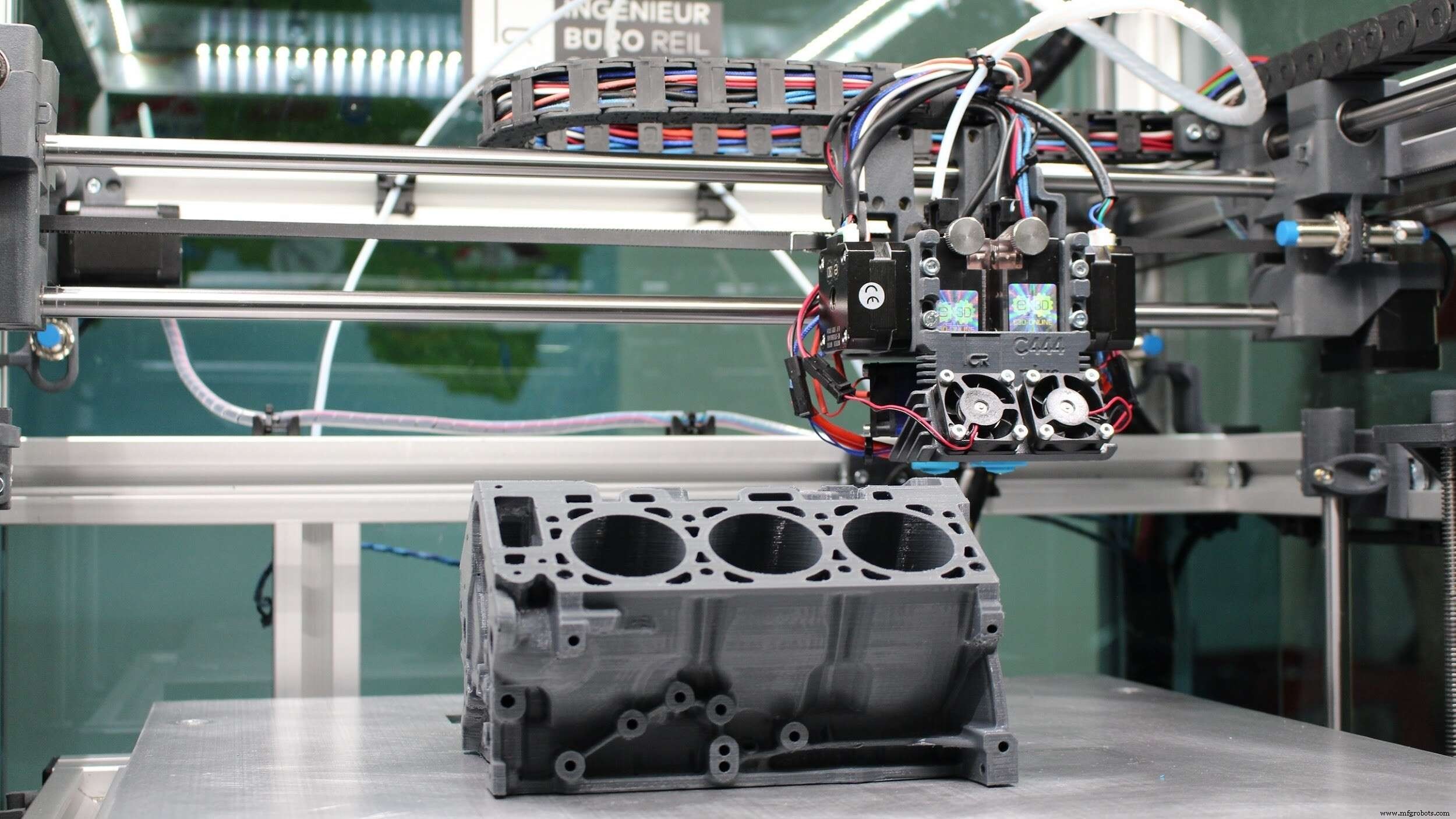
Manufacturers embrace technologies such as 3D printing to move some production locally, use more sustainable materials, and reduce waste.
The current pandemic has shown many new and existing challenges in the worldwide supply chain, from factories that had to close because of lockdowns, the need to retool many production lines, to worldwide disruptions of air freight and marine shipping supply lines.
While most factories have resumed normal operations in many countries, especially in Asia, the changes in distribution required to deliver the necessary protection equipment have left empty shipping containers in unusual locations. Collecting those containers is costly, and now manufacturers face additional shipping costs and delays in sending their products to their customers and distribution centers.
Manufacturers were happy moving production elsewhere, but now they want it back home
In 2010, the late Andy Grove, former Intel CEO, wrote in Businessweek: “American companies discovered that they could have their manufacturing and even their engineering done more cheaply overseas. When they did so, margins improved. Management was happy, and so were stockholders. Growth continued, even more profitably. But the job machine began sputtering.”
Asian manufacturers learned fast and started their industry in key components such as LCDs, injection molding (a result of the massive investment in toy manufacturing in China), lithium-ion batteries, wireless cards, controller boards, flex circuitry, etc. US firms were only too happy to oblige, thinking they still had the high-end design and engineering of innovative products in their hands.
Now that many factories are scrambling to get the components they need, many OEMs are currently looking for innovative technologies to bring production closer to their markets.
Technologies such as 3D printing and laser cutting enable local production of limited series at prices that can compete with injection molding and waterjet manufacturing.
In the past decade, 3D printing has evolved from an experimental technology only used for very limited productions to a technology to produce large quantities of specialized parts for several industries.
Large corporations, especially those in the consumer electronics market, have been outsourcing some new product development tasks for years, especially for prototype design and packaging. Now, smaller companies, initially reluctant to let outsiders collaborate in new products, are asking for things such as 3D print code developing, product validation, and outdoor testing of new products to be done by external suppliers.
“Since the early lockdowns, there has been a shift in the work we do for several clients, especially on medium to big sized companies. Now that it is recommended for people to avoid traveling and going to the usual workplace, teleworking employees and developing teams from abroad are asking us to develop designs and prototypes,” says David Tena, owner of the FabCafe in Barcelona. “For example, for a Chicago-based company, we are designing a case for an electronic device, coordinating with their electronic development team, sharing the changes and improvements that we are both doing and 3D printing the iterations to test them physically.”
New materials allow for more sustainable production and waste reduction
3D printing for industry allows the production of many geometric structures and simplifies the product design process. It is also relatively environmentally friendly. In low-to-medium volume production, it can also decrease lead times and total production costs.
In 3D printing, unlike traditional manufacturing, the cost per unit is not dependent on volume. 3D printing also allows the same parts to be produced with exactly the same specs anywhere in the world, thus saving the additional cost of transportation and making production more sustainable. Also, as industrial 3D printers become cheaper and faster, the need for storage and large inventories becomes less critical, as parts can be manufactured on demand.
Currently, most industrial 3D printers are using polyamides such as PA11 and PA12. These high-end plastics are the materials of choice for applications where safety, durability, or reliability is critical. They are used to manufacture reliable parts for industries such as automotive, medical, sports, and aeronautics. PA11 is a bio-polyamide that is 100% made of recycled materials, essential to support circular economy initiatives. Until recently, their high price made these materials too expensive for low-cost consumer goods.
HP and other manufacturers are now using other materials such as high-temperature glass and some metals.
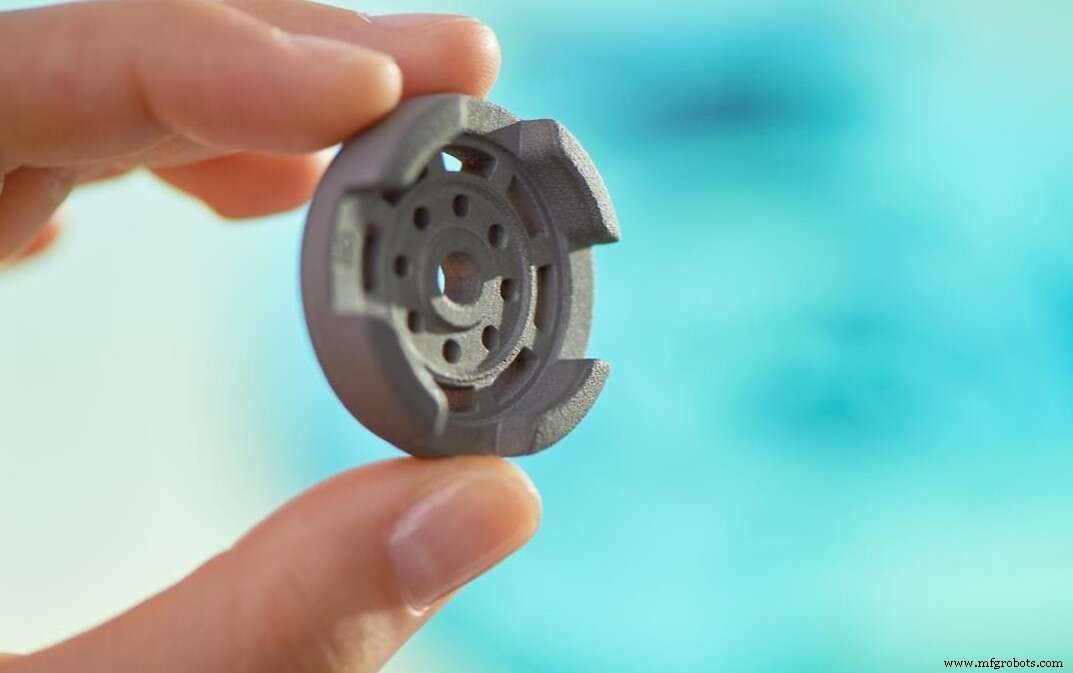
Furthermore, it is now possible to print basic electronic circuits on 3D-printed parts. The novelty here is printing 3D electronics embedded in objects. Therefore, for almost zero-marginal incremental cost, you can build in sensors. Every item can have power lines, signal lines, and sensors embedded in the 3D printed part.
“The fact that Industry 4.0 economically enables distributed manufacturing means that you can change the way that you build and distribute products,” said Ramón Pastor, Vice President and General Manager, 3D Printing, HP, in an interview with IoT Times. “There are some estimates that up to half of the fuel, fossil fuel, in this case, consumed in the world is used to transport products from where they’re produced to where they’re consumed. In this sense, the combination of Industry 4.0, digital manufacturing, and 3D printing enable us to change this paradigm and go to distributed manufacturing, which is basically, you manufacture what you need at the moment that you need next to where the demand is.”
Industrial Technology
- How Industry 4.0 Transforms Modern Manufacturing: Benefits, Practices, and ROI
- Marc Schnadinger: Building a New Career Path in Industry 4.0
- 3 Proven Strategies to Accelerate Manufacturing
- Maximizing Manufacturing Efficiency: Proven Production & Process Optimization Techniques
- The Manufacturing Industry Unveiled: Definition, Process, and Key Types
- Manufacturing 2012: Anticipated Job Recovery in the U.S. as China Costs Rise
- Streamline Your Manufacturing & Shipping: Proven Strategies to Cut Costs & Boost Efficiency
- Distributed Manufacturing: The Future of Production Efficiency
- Strategic Material Selection for Sustainable Manufacturing
- Crafting a Sustainable Tomorrow: Lessons from the Post-Pandemic Era