



Understanding Cast Molding vs Reaction Injection Molding: Key Differences in Thermoset PU Production
Cast molding and Reaction Injection Molding (RIM) are manufacturing processes that are commonly used with thermoset polyurethanes. So, what differentiates these two, you may ask? In this post, we will uncover both methods and their differences.
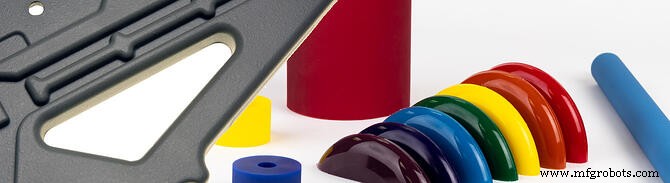
What is Cast Molding?
Cast molding can introduce liquid materials into open and closed molds to set and cure. This flexible process can be as simple as hand pouring materials into a mold or as complex as a fully automated process. Unlike other methods, cast molding can offer a significant amount of customization to meet specific design and performance requirements. Due to their unique chemical structure, thermoset polyurethanes can be engineered into a solid or foam and portray a wide range of physical properties and surface finishes. Because of this, several molding techniques can be utilized, such as open molds, close molds, and centrifugal molds to name a few. To learn more about the tooling options for thermoset polyurethanes, click here. In general, cast molding can be a great solution to develop rapid prototypes for validation to small and large volumes.
What is Reaction Injection Molding?
Reaction Injection Molding (RIM) combines the superior properties of thermoset polyurethanes with the adaptability of injection molding techniques. RIM introduces thermoset materials into a closed, metal mold under heat and pressure, allowing for a chemical reaction to occur. Despite employing similar chemistries as cast molding, RIM offers a more limited material set, such as elastomeric, structural, and rigid foams. This controlled process is often ideal for manufacturing large, intricate geometries that may be otherwise difficult to achieve from a casting process. For this reason, RIM is generally best used for structural parts, enclosures, and housings that can be found in medical, robotic, and fitness & recreation applications to name a few.
Benefits of Cast Molding & Reaction Injection Molding
| Cast Molding | Reaction Injection Molding |
|
|
|
|
|
|
|
|
Which process is best for you?
While both processes employ the superior properties of thermoset polyurethanes, cast and RIM have their own unique advantages. For instance, cast molding can employ a very wide range of custom formulations while RIM offers the ability to manufacture products with more complex geometries. When evaluating a manufacturing method, it is critical to consider the design requirements, volume, and tools needed to achieve efficient products.
If you believe cast or RIM may be the right manufacturing process for your product design, complete our design tool, here, or download our material data sheets below to begin your custom product or component!
Industrial Technology
- Metal Injection Molding: Process, Applications & Advantages
- Low‑Volume Injection Molding: A Proven 3‑D Printing Guide for Cost‑Effective Prototypes
- Reaction Injection Molding (RIM): Process, Benefits, and Applications
- Injection Molding vs Casting: Choosing the Right Process for Your Product
- Thermoforming vs Reaction Injection Molding (RIM): Choosing the Right Process for Custom Molded Products
- Injection Molding vs RIM: Choosing the Right Process for Complex Designs
- Top RIM Materials: Five Essential Types for Superior Product Design
- Understanding Cast Molding: Process, Materials, and Applications
- Proven Design Strategies for Cast Molding with Thermoset Polyurethanes
- Choosing Between 3D Printing and Injection Molding: Which Method Delivers Best Value?