



Injection Molding vs RIM: Choosing the Right Process for Complex Designs
During the product development process when intricate geometries are required, designers tend to consider injection molding. While this process may be one of the most known methods for molded parts, this is certainly not the only efficient solution. Instead, reaction injection molding (RIM) provides designers complete freedom to design what they envision without compromising the product's structural integrity. In this post, we will further explore RIM as an alternative option and how it compares to injection molding.

What is Injection Molding?
As the name implies, injection molding is a process used to inject a type of thermoplastic material liquefied by heat and solidified in a closed-metal mold once cooled. Thermoplastics, such as acrylonitrile butadiene styrene (ABS), nylon, and polyethylene are commonly used materials, instead of thermosets, for their incredibly low viscosities. This enables the material to easily flow through mold cavities before it takes shape. For more information on thermoplastics compared to thermosets, click here. While this process may be designed to suit a wide variety of shapes and size products, high production volumes are typically required to accommodate high tooling costs. Depending on the elected material and design requirements, molds can require significant machining and finishing steps to regulate temperature and material flow. Without adequate tooling, parts are more susceptible to flash, sink marks, and material variations to name a few common risks. Though injection molding has its advantages for small to medium-sized parts, reaction injection molding (RIM) offers a more economical process, especially for larger, intricate geometries. Generally, RIM is preferred over injection molding due to its inexpensive mold options, superior physical properties, and design freedom for both small and large production runs.
Alternatives to Injection Molding. RIM?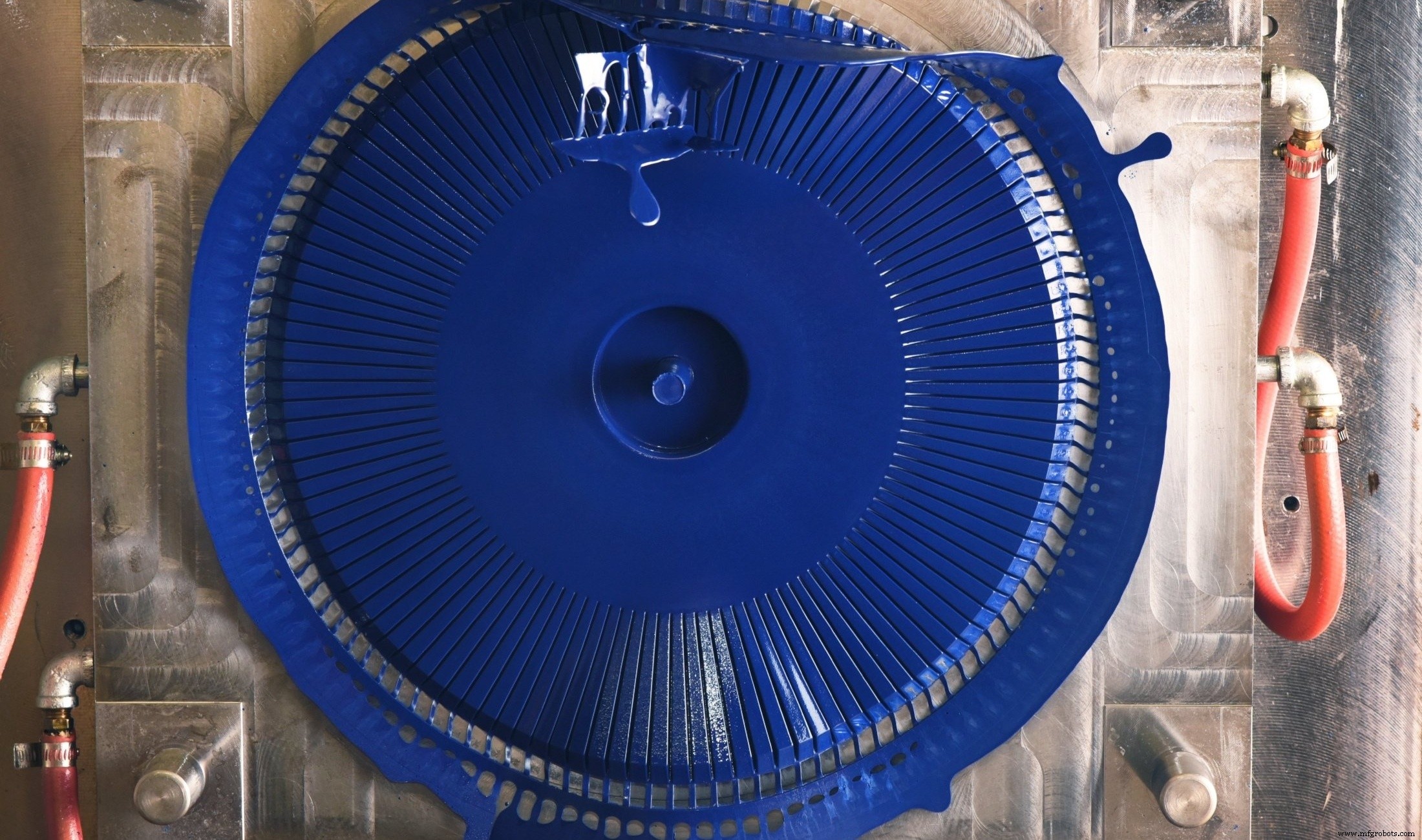 While there are several molding methods to consider for large, complex parts, reaction injection molding (RIM) offers designers more design, economic, and processing flexibility. Unlike injection molding, RIM is used in combination with thermosets and never thermoplastics, allowing for a two-part liquid system to chemically react rather than a heating and cooling process, previously described above. Because of this, thermoset polyurethanes, in particular, can produce rigid, elastomeric, and foam products with a broader range of hardnesses and improved properties. This controlled process enables RIM to offer lower in-mold temperatures and pressure to accommodate various design needs efficiently than conventional injection molding. Due to the urethane's unique chemical structure mixed with some of the advantages of injection molding, designers can achieve stronger, lightweight, tailored products with unique surface finishes and intricate geometries. For this reason, RIM is often used for structural parts, enclosures, and cabinets found in fitness & recreation, military & defense, medical, and heavy machinery applications to name a few. For additional information on the various types of products RIM has to offer your product design, click here.
Benefits of Injection Molding vs Reaction Injection Molding
| Injection Molding | Reaction Injection Molding |
|
|
|
|
|
|
|
|
Conclusion
Depending on your design needs, injection molding and reaction injection molding both have their own set of benefits. While evaluating different manufacturing methods, it is important to determine material requirements, production costs, and the best process that can meet your design needs over time. If you are seeking material assistance, complete our design tool, here, or download our material data sheet below:
Industrial Technology
- Metal Injection Molding: Process, Applications & Advantages
- Low‑Volume Injection Molding: A Proven 3‑D Printing Guide for Cost‑Effective Prototypes
- Reaction Injection Molding (RIM): Process, Benefits, and Applications
- Injection Molding vs Casting: Choosing the Right Process for Your Product
- Modern RIM Products: From Automotive to Advanced Design
- Thermoforming vs Reaction Injection Molding (RIM): Choosing the Right Process for Custom Molded Products
- Top RIM Materials: Five Essential Types for Superior Product Design
- Understanding Cast Molding vs Reaction Injection Molding: Key Differences in Thermoset PU Production
- Die Casting vs. Injection Molding: Choosing the Right Process for Your Product
- Choosing Between 3D Printing and Injection Molding: Which Method Delivers Best Value?