



5G & eSIM Propel Industrial IoT Connections to 37 Billion by 2025
GSMA Intelligence and Juniper Research argue that 5G and Embedded SIMs (eSIM) will play a significant role in industrial IoT
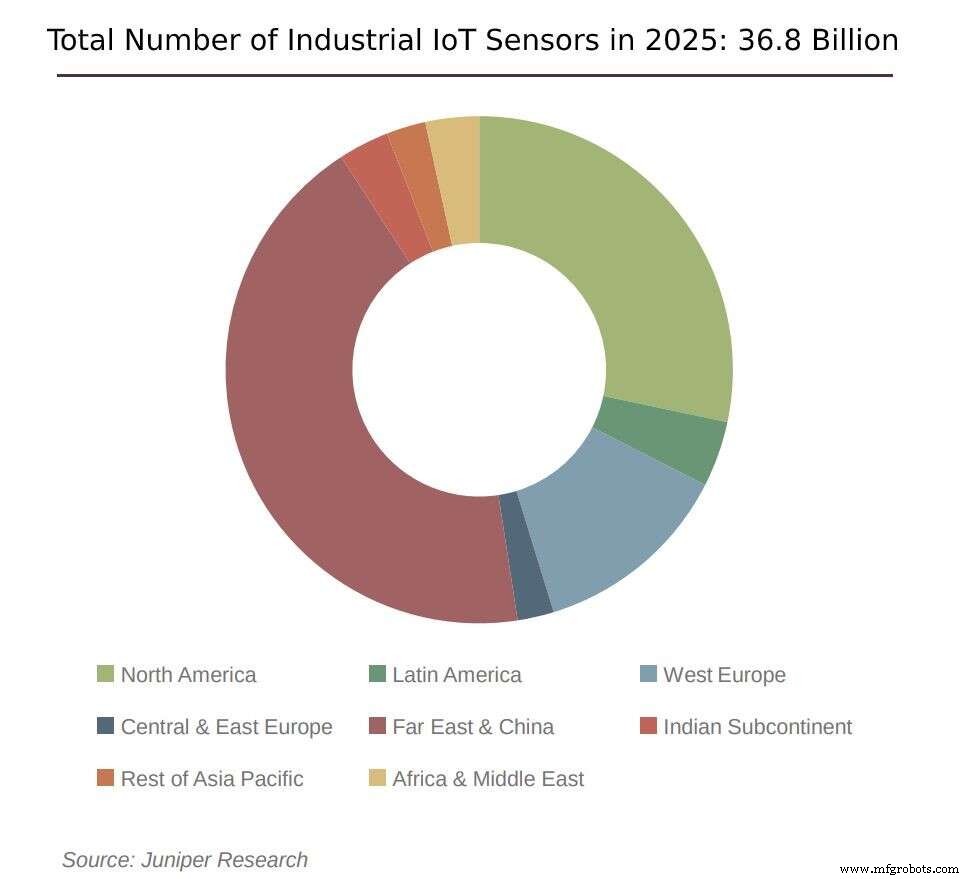
Despite some initial slowdown in adoption during this year’s healthcare crisis, the number of connected IoT devices keeps growing. The latest figures released by Juniper Research indicate that in just five years, industrial IoT connections will more than double, going from 17.7 billion in 2020 to 36.8 billion in 2025.
This year’s pandemic has sped up the desire to automate more industrial processes further, as factories need to prepare for more restrictions and potential lockdowns. Additionally, many of the current processes requiring a machine operator’s presence could be automated or remotely controlled, allowing some factory workers to work from home or in a more protected environment.
Additionally, two new cellular technologies can further penetrate the industrial IoT market: the fifth generation of cellular networks (5G) and embedded subscriber identity module (eSIM).
Initially adopted for connected cars and wearables, eSIMs are now entering the industrial space, especially for massive IoT deployments. The ability to deploy thousands of IoT devices, especially sensors, perform secure onboarding, and provision cellular credentials over the air, makes eSIMs a key technology for adoption in several industries.
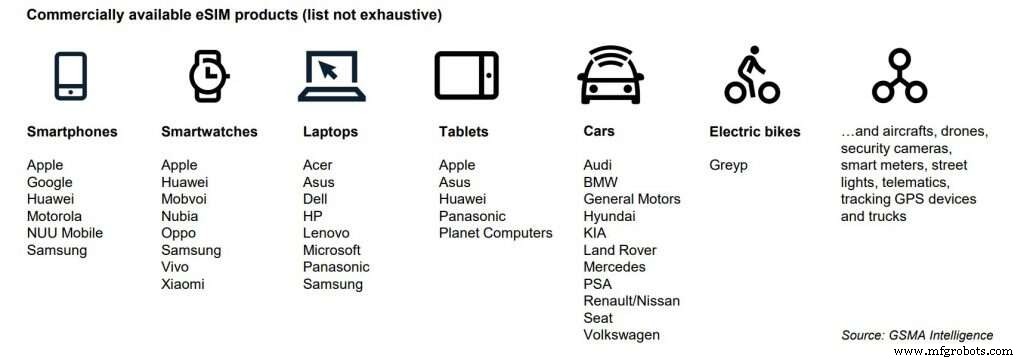
According to GSMA Intelligence, “eSIM adoption in the IoT market is still low relative to its long-term potential. Automotive is an exception and a benchmark for other verticals. Connected cars account for a significant share of eSIM connections today. […] Beyond connected vehicles and wearables, eSIM could become the primary means of cellular network authentication in other use cases such as consumer electronics, utilities, and smart manufacturing, especially if 5G adoption reaches scale in the enterprise market.”
Juniper Research suggests that 5G roll-out has the potential to introduce next-generation functionalities to industrial IoT, including:
- Video data processing to drive real-time quality testing of output from smart factories and machines.
- The ability to remotely manage and diagnose connected machinery.
- The introduction of industrial robots using real-time latency; enabling machines to work safely alongside humans.
- Data processing in the cloud or at the edge.
- Deployment of AI within connected networks; allowing for advanced analysis of machine functionality and potential threats.
Network slicing and ultra-low latency are crucial for 5G IoT adoption
Another key technology supported by 5G is Network Slicing. By creating different slices of the spectrum for critical use, specific services can enjoy secure, continuous connectivity and low latency. Some critical applications such as healthcare, autonomous vehicles, and remote machine operation require this reliability level.
Additionally, the ultra-low latency that the 5G New Radio (5G NR) provides will enable industries to perform critical tasks such as remote machine operation, autonomous driving, secure monitoring, and emergency shutdowns.
As the new 5G networks are deployed, the availability of these and other new capabilities are beginning to catch many industries’ attention. It will take several years, however, for the full capabilities of 5G to be widely available.
GSMA Intelligence report says that “Covid-19 reduces car sales, but also drives stronger-than-ever urgency for digital transformation.” Adding that “while cellular networks currently serve 15% of total IoT connections, the explosion of the IoT market provides significant room for growth in the cellular IoT space and, within it, eSIM adoption.”
Juniper Research author Scarlett Woodford noted: “Manufacturers must exercise caution when implementing IoT technology; resisting the temptation to introduce connectivity to all aspects of operations. Instead, manufacturers must focus on the collection of data on the most valuable areas to drive efficiency gains.”
Industrial Technology
- How 5G Will Transform Industrial IoT: Boosting Automation, Reliability, and Connectivity
- Will IoT Finally Mature? Insights from Industry Leaders
- Effective Advertising & Growth Tactics for Industrial Cleaning Companies
- Enhancing Industrial Safety Through IoT and IIoT Integration
- 5 Key Distinctions Between Industrial IoT and Consumer IoT
- Industrial IoT Security: Overcoming Challenges and Implementing Robust Solutions
- How IoT & Industrial Automation are Powering Manufacturing Innovation
- Integrating Total Productive Maintenance with Industrial IoT for Optimal Manufacturing Efficiency
- Top 7 Industrial IoT Applications Powering Market Growth
- Industrial IoT Connections Set to Hit 46 Billion by 2023: A Proven Shift from GSM M2M