



Build a High-Performance Warehouse: Expert Layout Design & Launch Checklist
The large size and operational complexity of a modern warehouse present a unique challenge for builders and management when establishing a new facility. Choosing an efficient warehouse layout and creating a clear plan can help prevent major issues down the road. As you explore specific options for your own facilities, there are some excellent and practical tips that can help you along the way.
In this post, we’ll explain the major steps that go into setting up a new warehouse. Many of these tips can also be applied in the case of a warehouse renovation or rework of existing building spaces. The advice is general enough to apply to nearly any basic layout, and these reminders should help ensure that you do not miss a major consideration during your planning. Ready to get started? Download our interactive How to Set Up a Warehouse Checklist to guide you through the process step-by-step.
Develop a Warehouse Strategy

Before getting to work on the details of your warehouse layout and operation, it’s important to start with clearly defined goals and business objectives. Since each warehouse plays an important role within a larger supply chain, you’ll want to review the expected product types, customer base, and suppliers that will create the scope of work at each facility. Additional requirements and goals that may be important for a warehouse include:
- Safety requirements and product accessibility
- Efficiency and minimizing handling time for key workflows
- Maximizing the amount of usable warehouse space
- Prioritizing inventory flow and high-turnover items
- Defining important metrics and control systems
- Setting up automation with hardware and software solutions
In many cases, a business plan may already have been developed to justify the purchase or lease of the warehouse space. Defining clear goals and a vision for the facility makes it much easier to make informed decisions later in the process.
Select Warehouse Equipment
This step is often done concurrently while creating a warehouse layout. All equipment should be accounted for in your layout, including a defined storage location and travel lanes. Storage equipment can include pallet racks, shelving, and bins. There may also be a need for material handling equipment (MHE) including pallet jacks, forklifts, and conveyor belts. Other common equipment found in a typical warehouse includes work tables, scales, wrappers, and packing stations.
Choose a Starting Layout
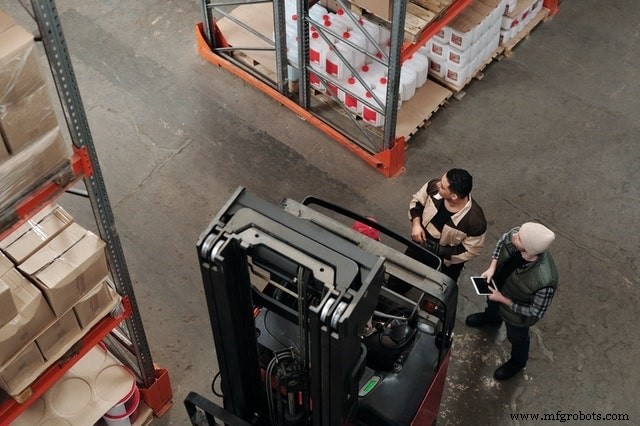
The layout of a warehouse is one of the most important decisions that can be made to ensure a smooth and efficient operation. Since each building will have a unique blueprint, the chosen layout must take into account facility measurements and obstructions such as sprinklers and HVAC equipment. A warehouse layout can be broken down into six major areas:
- Receiving – This is the area where all incoming shipments and materials are received and staged. It is important to make sure that this area is large enough to handle the forecasted volume of shipments as it will often be difficult to expand at a later time.
- Storage – The vast majority of warehouse space is typically taken up by storage areas that can include racks and shelving. Always account for the storage of palletized products, individual items, and tools or equipment that will be used in the warehouse.
- Picking – Picking areas are typically defined as travel lanes that will be used to locate and move products in the warehouse. Time should be taken to optimize these routes for maximum efficiency.
- Packing and Shipping – This space is dedicated to packing equipment and additional staging for items that are prepared for shipment from the facility.
- Offices and Facilities – Other parts of the same building may also be reserved for offices, bathrooms, and other staff areas. These should be accounted for within your layout, especially for areas that are adjacent to planned warehouse zones.
- Open Space – Whenever possible, some zones of the facility should also be reserved for future expansion and to accommodate unplanned operations. This can include extra space adjacent to production or other work areas. Space should also be designated to house and process dead stock and returns.
When designing your warehouse layout, the central reference point should be the expected product flow through the building. One of the best ways to validate your layout assumptions is to place tape on the warehouse floor to designate the areas above. Then a walkthrough can be performed, and it may even be possible to bring forklifts or other equipment into the space to test the flow of work activities.
Finalize your Warehouse Setup
With a warehouse layout selected, it is possible to define some final preparations for the setup. This can include selecting barcode labels, warehouse signage, and safety notifications that can be placed throughout the building. There are a variety of warehouse barcode labels and signage options to suit every warehouse application, including warehouse floor labels to hanging labels, rack labels, cold storage labels, pallet and container labels, and even custom warehouse signs and outdoor signs and labels. It is always worth performing a thorough review of relevant regulations to ensure that all requirements are being met.
Setting up a modern warehouse can be challenging, but it is made far easier with proper planning and close collaboration with subject matter experts. Implementing automation technologies, such as barcode scanners, is far more likely to succeed when it is done to support robust warehouse workflows. Staying organized and committing to an efficient warehouse layout can help ensure that your project is a success.
When you’re ready to get started setting up your warehouse, download our interactive How to Set Up a Warehouse Checklist to ensure you’re taking all the essential steps.
Industrial Technology
- Automating Warehousing: Three Key Solutions to Overcome Common Challenges
- Quick & Reliable Fixes for Common Warehouse Door Issues
- Accurate Battery Testing: How to Use a Test Meter Effectively
- Build an Automated Warehouse: A Step-by-Step Guide to Modernizing Operations
- Optimizing Warehouse Space Utilization: A Practical Guide
- 10 Proven Warehouse Organization Charts for Maximum Efficiency
- Master Warehouse Racking: 10 Expert Steps for Optimal Layout and Efficiency
- Master Warehouse Inventory Audits: A Practical Checklist for Accurate Results
- Essential Warehouse Safety Checklist: Protect Workers & Boost Productivity
- Enhance Warehouse Safety with Effective Floor Signage